
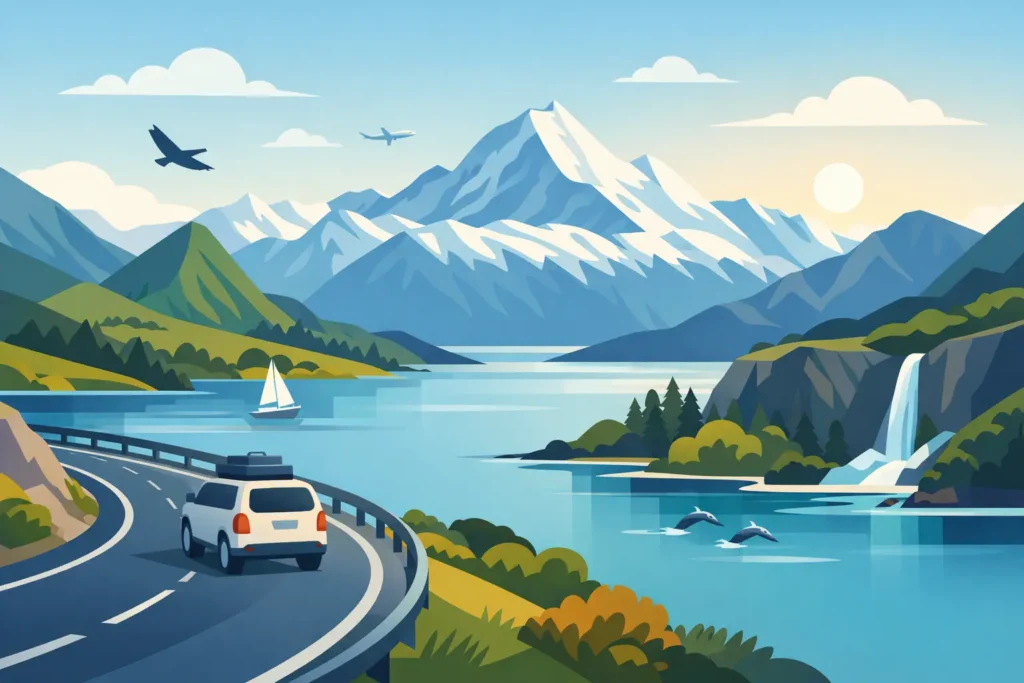
If you try to cram the South Island into a week, you’ll spend more time chasing the next stop than enjoying the one you’re in. A good south island road trip itinerary is less about ticking off every famous lake and more about building a route you can actually enjoy from the driver’s seat.
That matters here. Roads are slower than many visitors expect, weather changes fast, and some of the best parts of the trip are the unscripted ones – a quiet lakefront camp, an empty beach at sunset, a bakery stop in a town you didn’t plan for. If you’re traveling by campervan, the best itinerary is one with enough structure to keep moving and enough space to stay flexible.
A south island road trip itinerary that fits real travel days
For most travelers, 10 to 14 days is the sweet spot. Less than that, and the trip starts to feel rushed. More than that, and you can slow down properly, take side roads, and wait out bad weather without feeling like the plan is falling apart.
If you’re picking up in Christchurch, a loop works well because it keeps logistics simple and gives you a good mix of coast, mountains, lakes, and alpine roads. If you’re starting in Queenstown, you can still follow most of this route in reverse. There isn’t one perfect direction, but there is a practical one based on the season, your flight plans, and how comfortable you are with longer driving days.
Day 1-2: Christchurch to Lake Tekapo
Christchurch is an easy place to start. Stock up, get settled in the van, and don’t try to do too much on day one. The drive to Lake Tekapo is manageable and gives you a gentle introduction to South Island roads.
Tekapo is popular for a reason. The lake color looks almost unreal on a clear day, and the wide-open basin makes a nice contrast to the denser towns later in the trip. If the weather is good, stay the night and enjoy the dark sky atmosphere. If it’s peak season, book ahead where you can. This is one of those places where spontaneity is great until everyone else has the same idea.
Day 3: Tekapo to Mount Cook or Twizel
This is a short drive, which is exactly the point. One of the easiest mistakes on a road trip is stringing together too many medium-length days until the whole trip becomes a blur.
Head toward Aoraki / Mount Cook National Park if you want the big mountain scenery early. The hooker valley area is one of the most accessible places to get that classic South Island feeling without committing to a serious backcountry trip. If weather closes in or camping options are tight, Twizel is a practical fallback. It’s not the dramatic stop people post photos of, but it works well as a base and often makes life easier.
Day 4-5: Mount Cook or Twizel to Wanaka
The drive to Wanaka is one of the stronger stretches of this itinerary. You’re getting into the kind of landscape that makes a campervan trip make sense – big views, regular pullovers, and enough freedom to take the day at your own pace.
Wanaka suits travelers who want a laid-back stop without losing access to hikes, lake views, and good food. Some people breeze through in half a day. That’s usually a mistake. Give it at least one night, preferably two, especially if you want a slower morning, a swim in summer, or time to reset before Queenstown.
Day 6-7: Wanaka to Queenstown
Queenstown is close enough to Wanaka that this section doesn’t need to become a full mission. The town is busy, more expensive than many other stops, and not always the easiest place to wing it in a campervan. Still, it earns its spot because the setting is hard to beat and there’s a lot to do if you want a break from pure driving.
This is also where itinerary trade-offs become real. If you love nightlife, adventure activities, and a stronger social scene, spend two nights here. If you prefer quieter places, one night may be enough before heading on. There’s no point pretending every traveler wants the same version of Queenstown.
The classic swing west
Day 8: Queenstown to Te Anau
Te Anau is often treated as just the stop before Milford Sound, but it’s worth more than that. It’s calmer than Queenstown, easier to base yourself in, and gives you time to set up an early start for the next day.
Keep this day light if possible. Milford is better when you’re not arriving tired, late, and trying to do everything in a rush.
Day 9: Milford Sound day trip
You can do Milford as a long day from Te Anau, and for most travelers that’s the sensible option. The road itself is a big part of the experience, so leave early and treat the journey as more than transport.
Weather changes everything here. On a clear day, it’s spectacular. In rain, it can be even more dramatic with waterfalls appearing everywhere. The trade-off is road conditions and slower travel, so this is one of the days where flexibility matters more than a rigid schedule.
Day 10: Te Anau to the West Coast via Haast or break it up
This is the point where many itineraries become too ambitious. Going from Fiordland all the way up the West Coast in one push is possible, but not always enjoyable. If you have 14 days, break this section up. If you only have 10, you may need to choose between Milford and the West Coast rather than forcing both.
For a balanced trip, work your way toward Haast and then continue north with an overnight stop based on energy and weather. This part of the South Island is less polished and more remote, which is exactly why many road trippers end up loving it.
Day 11-12: Fox Glacier or Franz Josef, then Hokitika
Glacier access changes over time, so don’t build your whole trip around a specific glacier walk unless you’ve checked current conditions. Even without that, the West Coast has its own appeal – dense forest, moody weather, black-sand beaches, and a rougher, less curated feel than the lake towns.
Hokitika makes a solid stop because it breaks up the coast nicely and has enough going on without becoming stressful. If you’ve been moving fast, this is a good place to take a slower evening and stop planning every hour.
Finishing the loop without burning out
Day 13: Hokitika to Arthur’s Pass
Arthur’s Pass is one of the best route choices if you’re looping back to Christchurch. The drive feels distinctly alpine and gives the last part of the trip some weight instead of turning into a plain return run.
This is another section where road confidence matters. In poor weather, take your time. Distances on the map rarely tell the full story in New Zealand. A shorter route can still be a full day once you add photo stops, one-lane bridges, roadworks, and the fact that you’ll want to pull over often.
Day 14: Arthur’s Pass to Christchurch
The final leg is straightforward enough, which is exactly what most people want at the end of a longer trip. Get back with time to clean out the van, sort your gear, and avoid the last-day scramble that makes good trips end badly.
If you’re renting from a smaller operator like Kim Campers, that final handoff tends to feel more human and less like dropping keys into a system. That fits this kind of trip. The South Island is better when it feels personal.
How to adjust this south island road trip itinerary
The best route depends on season and travel style. In summer, you’ll get longer days and better odds for hiking, but also more competition for campsites and busier towns. In winter, you’ll have quieter roads in some regions and snow risk in others, especially on alpine passes.
If you only have 7 to 9 days, shrink the loop. Christchurch, Tekapo, Mount Cook, Wanaka, and Queenstown is a cleaner trip than trying to force in Fiordland and the West Coast too. If you have two full weeks, the loop above works well. If you have three, add time rather than distance. Stay longer in Wanaka. Take an extra night on the coast. Build in weather days.
Campervan travel changes the equation too. You’re not checking in and out of hotels every night, which gives you freedom, but you still need to respect fatigue. A simple van that’s easy to park, easy to sleep in, and easy to live out of usually beats a larger setup if your plan involves moving often and fitting into smaller towns.
A few practical mistakes to avoid
The first is overestimating how much ground you can cover. The second is assuming every famous stop deserves equal time. Some places are perfect for a short stop and a coffee. Others are worth staying put for two nights even if they look less dramatic on paper.
The third mistake is planning for perfect weather. Don’t. Build a route with options. If Mount Cook is socked in, move on and enjoy Wanaka. If Milford gets hit with bad conditions, shift the day if you can. Road trips here work best when the itinerary supports decisions instead of fighting them.
A good South Island trip doesn’t need to be complicated. Pick a realistic loop, leave room for weather and detours, and let the road do some of the work. You’ll remember the places, sure, but just as much, you’ll remember how easy the days felt when the plan finally matched the trip.