
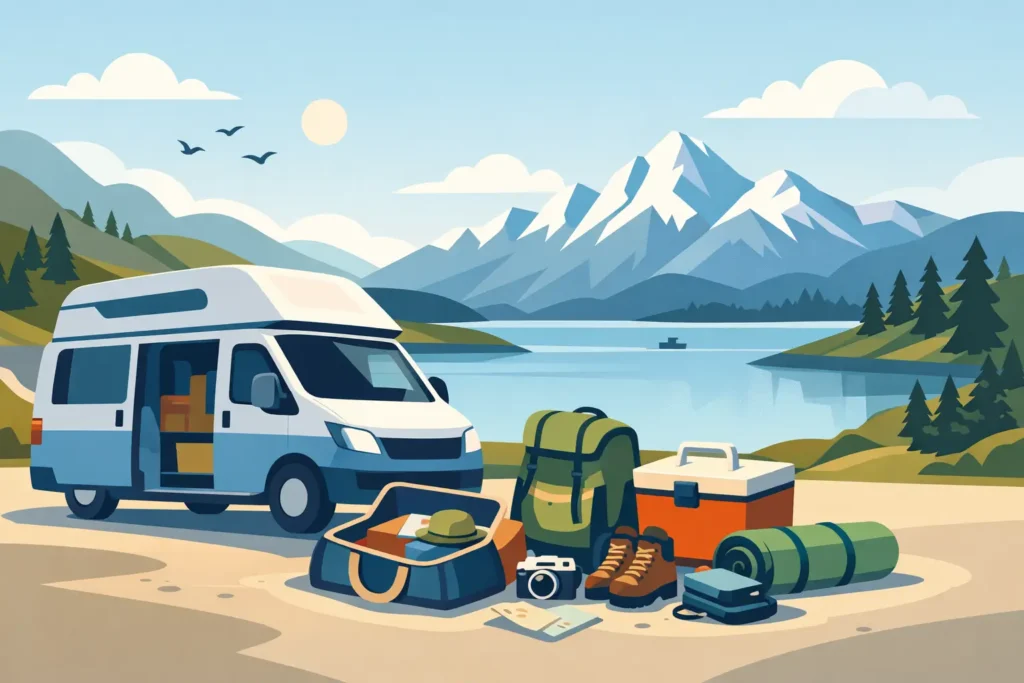
You notice it fast on a South Island road trip – the less extra stuff you bring, the easier everything gets. A good south island campervan packing guide is not about stuffing a van with every just-in-case item. It is about bringing the right gear for changing weather, small-space living, and days that can start with a city coffee and end at a cold lakeside campsite.
The South Island rewards travelers who pack with some restraint. Roads are scenic, campsites can be simple, and weather changes quickly. If your van is compact and practical, your bag should be too. The goal is comfort without clutter.
What this south island campervan packing guide gets right
Most people overpack for campervan travel because they picture the trip like a regular vacation. It is not. You are not unpacking into a hotel room and spreading out for a week. You are living out of a small, mobile space where every jacket, charger, snack bag, and pair of shoes needs a place.
That is why soft bags usually work better than hard-shell suitcases. They are easier to stash, easier to shift around, and less annoying when you need to reach bedding or cooking gear. If you are traveling as a couple, two medium duffels beat two giant suitcases every time.
It also helps to pack for layers, not outfits. South Island weather can swing hard in one day, especially if you are moving between the coast, the mountains, and higher inland areas. A sunny morning in Christchurch does not tell you much about what that evening will feel like near Lake Tekapo or on the West Coast.
Clothing for a South Island road trip
If you get clothing right, the rest is easy. You do not need a huge wardrobe. You need pieces that handle repeated wear, quick weather changes, and occasional laundry stops.
Start with layers you can mix without thinking too much. A few T-shirts, one or two long-sleeve tops, a fleece or warm mid-layer, and a waterproof outer shell will cover most trips. Even in summer, nights can turn cold. In spring and fall, that temperature drop is even more noticeable.
For bottoms, keep it simple. Two pairs of pants or leggings and one pair of shorts is enough for most travelers. If you are planning a lot of hiking, bring clothes that dry reasonably fast. Denim is fine for city days, but not always the best choice if you get caught in rain or need something that dries overnight.
Shoes are where people often go overboard. In a compact campervan, three pairs per person is usually plenty: comfortable walking shoes, sandals or slip-ons, and hiking shoes if your trip includes trails. More than that starts taking up space you will want later.
Do not forget sleepwear you are actually warm enough in. South Island mornings can be cold, and getting dressed in a van feels much less dramatic if you slept comfortably in the first place.
The stuff that matters more than people expect
There are a few items that make campervan travel easier in a very real way, even if they do not sound exciting when you are packing at home.
A small daypack is one of them. You will use it for short hikes, groceries, lake stops, and all the daily bits you do not want rolling around the van. Reusable water bottles matter too, especially on driving days when it is easy to get dehydrated without noticing.
A compact toiletry setup also helps more than people think. Bring only what you use regularly, and keep liquids contained. A simple hanging toiletry bag or one zip pouch per person can save a lot of morning frustration.
Quick-dry towels are worth bringing if they are not already part of your setup. Same goes for a headlamp or small flashlight. Campsites are not always brightly lit, and using your phone flashlight every night gets old fast.
Then there is laundry. You do not need enough clothes for the entire trip if you are traveling for more than a week. You need enough to comfortably make it between wash days. That usually means packing for five or six days and planning to wash once you are low.
Food, cooking, and the trap of overbuying
A campervan gives you freedom, but it also gives you limited kitchen space. That means your food plan should be realistic.
Bring a few basics if you want, but avoid arriving with half a pantry in your luggage. It is usually easier to buy groceries after pickup based on your route and how often you expect to pass through towns. Fresh food is great, but only if you are actually going to cook it before it goes soft in a storage bin.
Keep meals simple. Breakfasts that need minimal cleanup, easy lunches, and dinners with a short ingredient list work best on the road. Pasta, wraps, eggs, rice, pre-cut vegetables, and a few solid snacks go a long way.
What people regret is not usually bringing too little food. It is buying too much at once, then dealing with clutter, waste, and a van full of loose items shifting around every time they drive.
Electronics and power without the mess
You do not need your entire home charging setup. You need the basics and a bit of discipline.
Bring your phone, camera if you use one, charging cables, and a power bank. If you are coming from the US, make sure you have the right plug adapter for New Zealand. That is one of those boring details that becomes very important at the end of a long day.
Try to keep all electronics in one small pouch. Loose cables have a way of taking over tiny spaces. If you are working remotely for part of the trip, pack with that in mind, but be honest about what you really need. A South Island campervan trip is easier when your setup stays light.
Weather and season change what you should bring
This is where any south island campervan packing guide needs some nuance. There is no one perfect list because January and July are two very different trips.
In summer, pack lighter clothing but still keep warm layers and rain protection. The sun can feel strong during the day, so sunglasses, sunscreen, and a hat matter. Even then, evenings can cool down quickly.
In shoulder season, layering becomes more important. You may get beautiful quiet roads and fewer crowds, but you are more likely to deal with cold mornings, wind, and rain. Waterproof shoes become much more useful here.
In winter, bring proper warm clothing and do not treat it like a mild cold-weather trip. Thermal layers, a warm jacket, gloves, and a beanie make a real difference, especially if you are heading inland or toward alpine areas. The van can be cozy, but stepping out at sunrise is another story.
What to leave behind
The best packing decision is often what you decide not to bring.
Leave behind bulky luggage, too many outfits, full-size toiletries, and kitchen gadgets you will not use. Skip valuables you would worry about constantly. Avoid packing for a fantasy version of your trip where you somehow wear nice dinner clothes every night and cook elaborate meals after long driving days.
Most road trips settle into a rhythm pretty quickly. You wear your comfortable layers, repeat your favorite meals, and realize half the extras were never needed. That is normal.
If you are renting from a small, traveler-built operation like Kim Campers, the van is already set up around practical use. That means you do not need to compensate by bringing your whole house with you. A simpler setup usually makes for a better trip.
A smart final check before pickup
Before you leave for the airport, do one last pass through your bags. Ask yourself if each item earns its space. If it is heavy, awkward, or only useful in a highly unlikely scenario, it probably stays home.
Make sure the essentials are easy to grab on day one: documents, wallet, phone, adapter, medication, a warm layer, and basic toiletries. After that, the goal is not perfection. It is being comfortable, organized enough, and ready to enjoy the drive.
The South Island is better when your van feels easy to live in. Pack for the road, not for the version of travel that lives in your head, and you will have more room for the part that actually matters once you get here.