
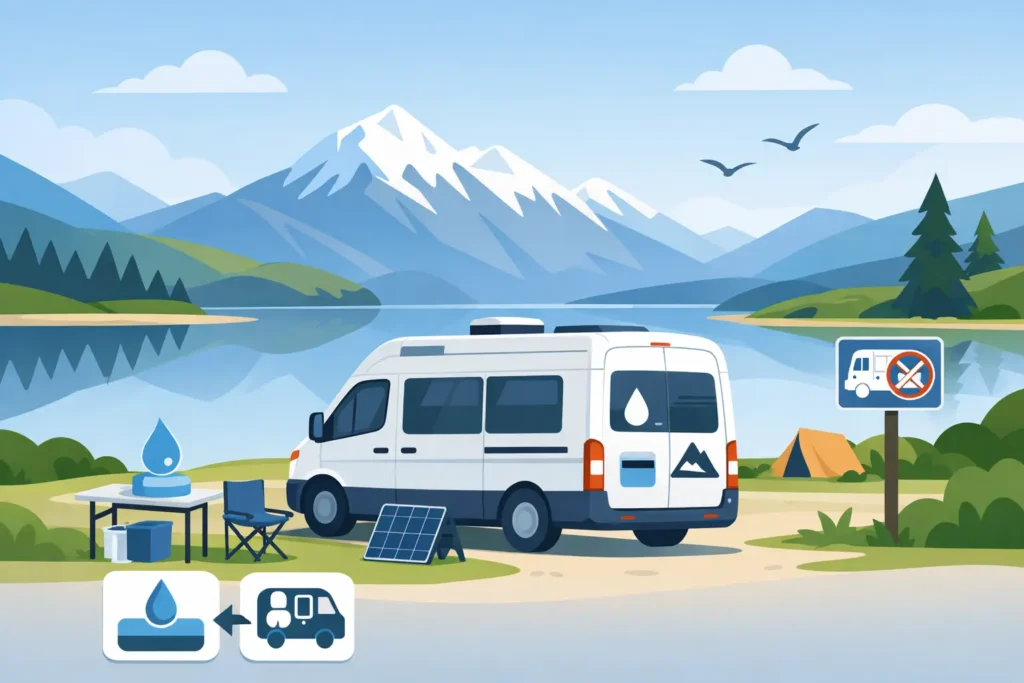
If you are planning a South Island road trip, the self contained campervan rules can shape where you sleep, how freely you move, and how much hassle you deal with on the road. This is one of those topics that sounds boring right up until you roll into a freedom camping spot and realize the signs, permits, and vehicle requirements actually matter.
The good news is that the rules are not impossible to understand. The less fun news is that they have changed in recent years, and a lot of older advice online is now patchy, oversimplified, or flat-out wrong. If you want a straightforward version, start here.
What self contained campervan rules actually mean
In New Zealand, a self-contained campervan is a vehicle set up so people can live in it for a short period without needing outside facilities every few hours. In practice, that usually means the van has essential gear for water, wastewater, and a toilet.
That matters because many freedom camping areas either prefer or require vehicles that meet the official self-contained standard. It is not a gold pass to park anywhere you want, but it does affect your options.
A lot of travelers assume self-contained means large motorhome. It does not. A compact campervan can still qualify if it is built and equipped to meet the standard. That is good news if you want something simple, easy to drive, and not wildly expensive to rent.
Why the rules changed
The tighter focus on self contained campervan rules came from a pretty obvious issue – too many people were camping in vehicles that were not really set up for overnight living, especially when it came to toilets and waste. Local communities got fed up with mess, overcrowding, and vehicles treating public spaces like free campgrounds with no responsibilities attached.
So the rules moved toward clearer definitions and stronger enforcement. The main idea is simple enough: if you want the freedom to stay in more places, your vehicle needs to be able to handle basic waste and sanitation properly.
That shift has made things better in some areas, but it has also created confusion for travelers. Some people hear self-contained and think every overnight stop in New Zealand requires certification. That is not true. Others think a sink and a mattress are enough. Also not true.
The big requirement – a fixed toilet
One of the most important changes is the expectation around toilets. Under current self contained campervan rules, a fixed toilet is central to certification for many vehicles.
That word fixed is where people get tripped up. A portable toilet that slides around loose in the back is not the same thing as a toilet installed as part of the vehicle setup. The details matter because certification is based on whether the van genuinely supports self-contained use, not whether a few items can be tossed in before inspection.
For travelers, the practical takeaway is this: if you want to rely on self-contained status for freedom camping access, make sure the campervan is properly certified under the current rules. Do not assume older stickers or vague booking descriptions tell the full story.
Certification and the green warrant card
If a campervan meets the required standard, it receives formal certification. That certification is usually displayed on the vehicle, often with a warrant card or label showing that it has been approved as self-contained.
This is what campground hosts, enforcement officers, or local councils may look for if you are parked in an area with self-contained-only rules. If the certification is expired, missing, or no longer valid under updated standards, that can be a problem even if the van looks the part.
For renters, this is one area where it pays to ask direct questions before booking. Is the vehicle certified? Is the certification current? What exactly is installed in the van? A decent rental operator should be able to answer that quickly and plainly.
Self contained campervan rules do not override local camping laws
This is the part a lot of people miss. Self-contained certification helps, but it does not cancel out local rules.
New Zealand councils can set their own freedom camping restrictions in many areas. Some places allow overnight stays only in marked spaces. Some ban camping entirely in certain zones. Some allow only certified self-contained vehicles. Others limit the number of nights or the times of year when camping is allowed.
So even if your van is fully certified, you still need to read signs and check local conditions. Think of self-contained status as access to more options, not unlimited access.
That trade-off is fair enough. The whole point is to balance traveler freedom with keeping popular places usable for everyone.
What this means for South Island travel
On the South Island, the difference between a certified and non-certified van can be pretty significant. If you are moving through smaller towns, lakeside areas, or popular scenic routes, having a properly set up campervan often gives you more flexibility.
That does not mean you should expect empty beach parking lots and total freedom every night. Many of the best-known places have tighter controls because they get hammered during peak travel periods. Queenstown, Wanaka, Tekapo, and other high-traffic areas can be especially strict.
Still, a self-contained campervan generally makes the trip smoother. You have more legitimate overnight choices, less need to rely on full-service campgrounds every night, and fewer last-minute scrambles trying to work out where you are allowed to stop.
Renting a van – what to check before you book
If you are renting rather than building your own van, you do not need to become an expert in certification law. But you do need to ask the right questions.
First, confirm whether the campervan is currently certified as self-contained under the applicable New Zealand standard. Second, ask what is actually included in the setup – especially the toilet and water system. Third, ask how the rental company explains overnight parking rules to travelers.
This is one reason smaller owner-led rental businesses can be easier to deal with. You are more likely to get a straight answer from someone who knows the van, uses the van, and understands how people actually travel in it. With Kim Campers, for example, that practical side matters more than flashy branding or oversized vehicle specs.
Common mistakes travelers make
The most common mistake is assuming self-contained means free camping anywhere. It does not. The second is relying on outdated blog posts or social media comments from travelers who visited before the latest rule changes.
Another mistake is booking a van based on price alone, then finding out it is not certified for the kind of trip you had in mind. A cheaper rental can get expensive fast if you end up paying for campgrounds every night because your van does not meet local requirements.
And finally, some travelers treat the toilet requirement like a technicality. It is not. The rules are built around waste management for a reason, and enforcement is more likely in places where bad behavior has been a recurring issue.
How to stay on the right side of the rules
The easiest approach is also the least glamorous. Rent a properly certified campervan, check local signs when you arrive, and have a backup overnight option in mind if a site is full or restricted.
It also helps to travel with a bit of flexibility. If you are trying to visit the South Island in peak season, the best spots can fill up quickly. A self-contained van gives you more breathing room, but not infinite freedom. The travelers who have the easiest trips are usually the ones who plan just enough and stay adaptable.
There is also a basic respect piece to this. Empty wastewater where you are supposed to. Use dump stations properly. Do not leave trash. Keep noise down. The rules exist because too many people treated great places badly. If you travel well, you help keep those options open.
The short version is that self contained campervan rules are worth understanding before you land, not after your first parking ticket or awkward knock on the window. Get the right van, read the signs, and keep your trip flexible enough to work with local rules instead of fighting them. That is usually how the best road trips go.