
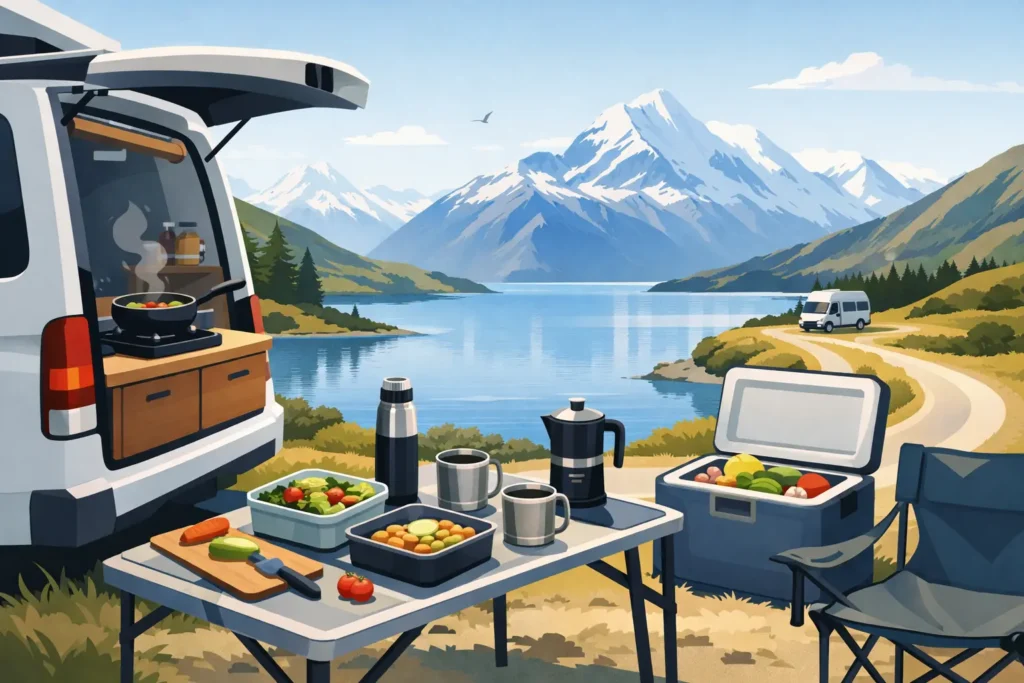
A van meal plan should make the road trip easier, not turn it into a mobile kitchen project. When you are driving the South Island, plans change with the weather, a track takes longer than expected, or you find a beach you want to stay near for the night. Knowing how to plan van meals means packing a few reliable ingredients, leaving room for local stops, and keeping dinner possible even when you are tired.
The best approach is simple: plan a handful of meals that share ingredients, shop as you go, and do not rely on a large fridge or a perfectly stocked supermarket every day. You are here to see New Zealand, not spend each evening washing six pans.
How to plan van meals without overpacking
Start by planning for three days, rather than the entire trip. This is long enough to get away from Christchurch, settle into the van, and find your rhythm. It also stops you from filling every cupboard with food you may not feel like eating by day five.
For a couple, choose two or three breakfasts, two easy lunches, and three dinners that use overlapping basics. Oats can become breakfast, wraps can cover lunch, and rice or pasta can work with several different dinners. A small set of ingredients goes a long way when the meals are flexible.
Think in building blocks rather than strict recipes. Bring a carb, a protein, vegetables that keep well, and a few items that add flavor. Rice, pasta, couscous, wraps, canned beans, tuna, eggs, cheese, onions, carrots, spinach, tomatoes, curry paste, pesto, and a good hot sauce can cover a surprising number of meals.
This gives you options without asking much of the van. One night, make pasta with pesto, spinach, and tomatoes. The next, cook rice with beans, vegetables, and curry paste. If the day has been full, turn the same ingredients into wraps. Nothing needs to be precious.
Shop for the road, not for your kitchen at home
A full supermarket shop before leaving town is useful, but it is easy to overdo it. Fresh food takes up space, creates waste, and can become annoying when the weather is warm or your plans involve long days away from the van.
Buy pantry food and a few dependable fresh items at the start. Then top up every few days in larger towns. The South Island has plenty of places to shop, but store choice can be limited in smaller communities and prices can be higher in remote areas. If your route includes the West Coast, Aoraki/Mount Cook, or a long stretch between destinations, stock up before you leave the larger centers.
Produce with a longer life is usually worth the space. Onions, carrots, potatoes, apples, oranges, and cabbage handle van travel better than delicate salad leaves. Bananas and avocados are great early in the shop cycle, but buy only what you will realistically eat in a day or two.
For proteins, it depends on your fridge space and how often you want to cook. Eggs are versatile and easy. Canned beans, lentils, tuna, and chickpeas are reliable backups. Fresh chicken, mince, or fish can be good for the first night after shopping, but do not buy several days’ worth unless you know it can stay properly chilled.
A few small extras make basic food feel far less basic. Coffee you actually enjoy, salt, oil, garlic, a favorite sauce, and a little chocolate for the end of a wet day are all good use of limited storage. Skip the oversized bottles and family packs. In a compact camper, small containers win.
Make breakfasts and lunches almost automatic
Mornings on the road are better when breakfast requires very little thought. Overnight oats, yogurt with fruit and granola, eggs on toast, or peanut butter and banana wraps are all quick and filling. Choose two options and repeat them. Variety is nice, but not before an early hike or a long drive.
Lunch should work wherever you pull over. Wraps are especially useful because they store well, need little preparation, and can use leftovers from dinner. Fill them with hummus, cheese, greens, beans, cooked chicken, or roasted vegetables. Sandwiches are fine too, though bread can get squashed quickly in a moving van.
Keep a few no-cook foods for days when you are walking, driving, or simply not near a good place to cook. Fruit, nuts, crackers, cheese, trail mix, canned fish, and protein bars can bridge the gap between a late lunch and dinner. They also help when a café stop is not in the budget.
Plan dinners around one pot and one burner
Simple meals are not a compromise on a road trip. They are what lets you eat well without turning camp setup into a chore. Aim for dinners that use one pot or pan, take 15 to 25 minutes, and leave minimal washing up.
Pasta is an obvious choice because it is quick and adaptable. Add jarred sauce, pesto, vegetables, cheese, or canned tuna. Couscous is even faster, as it only needs hot water and a few minutes to sit. It works well with chickpeas, chopped vegetables, herbs, and lemon.
Rice bowls are another reliable option. Cook rice, then add whatever is on hand: sautéed vegetables, eggs, beans, leftover meat, or a sauce. Fried rice is particularly useful on the second night after a shop because it makes leftovers feel intentional.
When the weather turns cold, make something warmer and more filling. A basic curry with canned coconut milk, vegetables, and chickpeas is easy in a single pot. Soup with bread is also a good call after a wet walk, especially when you have little energy left. The trade-off is that soup takes up more storage space, so buy it when you are ready to use it rather than carrying several cans from the start.
Keep one emergency dinner in the cupboard. Instant noodles improved with an egg and greens, canned soup, or mac and cheese may not be the meal you planned, but it beats driving back into town hungry after dark.
Use your fridge and water with a little discipline
A compact fridge works best when it is not crammed full. Cold air needs room to move, and packed food is harder to find before it gets forgotten. Keep raw meat sealed and separate from ready-to-eat food, and use it first after each grocery run.
Open the fridge only when you know what you need. That sounds obvious, but frequent searching lets cold air out and makes a small fridge work harder. Put snacks, drinks, and ingredients you use often where they are easy to reach.
Water matters just as much as food. Fill up whenever you have access to safe drinking water, especially before heading into more remote areas. Use a separate bottle for hikes and save the van’s supply for drinking, cooking, and washing up. A small basin of hot soapy water and a quick rinse uses far less water than letting the tap run.
Let local food be part of the plan
Planning meals does not mean promising to cook every night. South Island road trips are full of reasons to make room for a bakery pie, fresh fish and chips, a small-town café, or a meal out after a big hike. Set aside some budget for those moments instead of treating them as a failure of the grocery plan.
A good balance is cooking most breakfasts and dinners, packing lunch on driving days, and choosing a few local stops you genuinely want to try. This keeps costs sensible while still making the trip feel like a trip.
If you are renting with Kim Campers, the compact, practical setup is part of the point. You have what you need to cook a proper meal, but not so much gear that every stop feels like operating a tiny apartment. Keep your meals in the same spirit: uncomplicated, adaptable, and ready for wherever you park up next.
The best van meals are rarely the ones you planned down to the gram. They are the warm bowl of curry after rain at the campground, the wrap eaten beside a lake, or the easy pasta that gives you time to watch the sunset instead of clean the kitchen.