
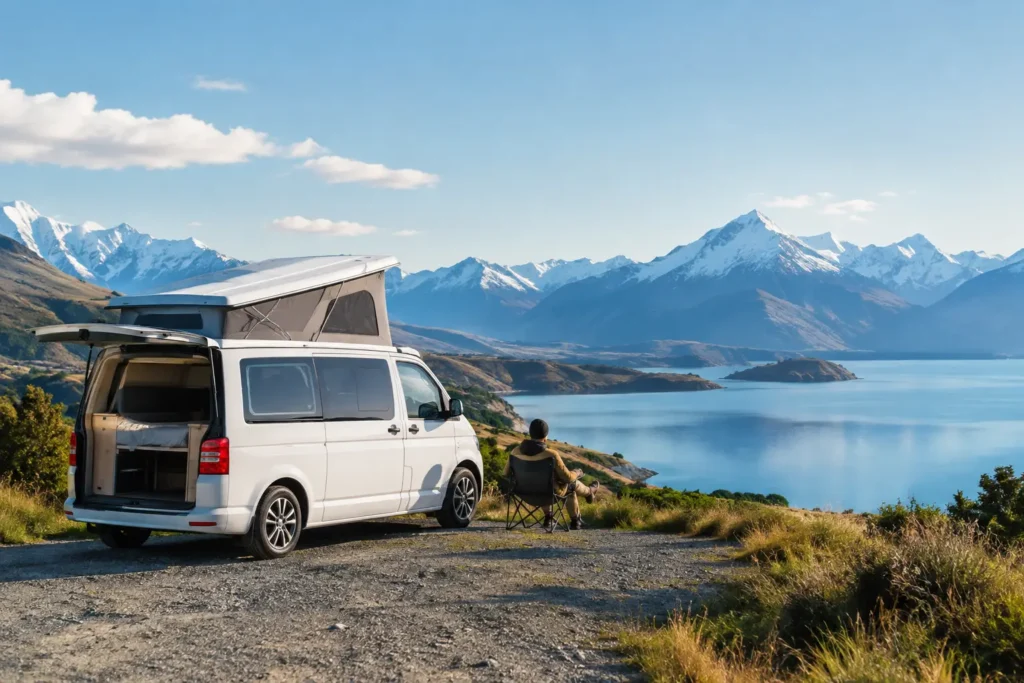
Landing in Christchurch with a loose route, a weather app, and no fixed checkout time is a good way to see the South Island. The right campervan rental gives you room to follow a clear forecast west, stay an extra night by a lake, or skip a crowded town without turning the trip into a logistics exercise.
That does not mean you need the biggest vehicle on the lot. For most couples and independent travelers, a compact, well-planned van is easier to drive, cheaper to run, and more useful day to day than a large motorhome. The best choice is the one that lets you spend less time managing your vehicle and more time outside it.
Why a compact campervan rental makes sense
South Island roads reward a simple setup. You will encounter narrow mountain passes, single-lane bridges, gravel access roads, busy parking areas, and towns where a standard-sized van is simply less stressful to maneuver. A compact campervan can fit into more ordinary parking spaces, turns more easily, and feels familiar if you are used to driving a car or SUV.
Inside, good design matters more than sheer size. You need a comfortable bed, a practical kitchen, storage for clothes and food, charging options, and enough light and ventilation to make rainy evenings pleasant. You do not need a maze of cupboards, a complicated control panel, or extra seats that will never be used.
There is a trade-off. A compact van will not give you the indoor standing room or separate bathroom of a large motorhome. If you are traveling with children, carrying lots of sports gear, or need space to work indoors every day, larger may be worth it. But for two people traveling light, a smaller van often feels like the smarter kind of freedom.
A self-contained setup also gives you more overnight flexibility. It does not mean you can park anywhere or ignore local rules. It means your van has the basic facilities required for approved self-contained travel, so you can use suitable freedom camping areas where permitted and rely less on campgrounds every single night.
Choose your campervan around the trip you actually want
Before comparing daily rates, think about how you want your days to run. A fast loop of Christchurch, Lake Tekapo, Queenstown, Wanaka, and the West Coast asks for something different than a slow three-week trip with long hikes and several rest days.
If you plan to move most days, prioritize fuel economy, easy driving, and a bed that is quick to set up. If you want to stay put for two or three nights at a time, look more closely at storage, battery capacity, and how comfortable the living area feels when the weather closes in.
Start with your route, not your wish list
The South Island is larger and slower than many visitors expect. A route that looks manageable on a map can include winding roads, photo stops, trailheads, roadworks, and a ferry queue. Keep driving days realistic. Four hours behind the wheel can become six once you stop for coffee, groceries, viewpoints, and the places you did not know you wanted to see.
Christchurch is a practical pickup point because it puts you close to several directions of travel. Head inland toward Tekapo and Aoraki Mount Cook, south to the Catlins and Dunedin, or west through Arthur’s Pass. Queenstown works well for travelers finishing or beginning around Central Otago, Fiordland, and Wanaka, though availability and pickup arrangements can vary by vehicle.
Build in blank days. The best road-trip stories usually come from having the option to stay when a beach is empty, a hike deserves more time, or the rain makes a long drive a bad idea.
Check what is included, clearly
A low daily price is useful only when you know what it covers. Ask about insurance terms, security deposits, roadside support, mileage limits, cleaning expectations, and any one-way or airport-related fees before you book. Straight answers are more valuable than a flashy booking page.
Also check the useful basics. Does the van include bedding, cooking gear, a fridge, a water tank, USB charging, and a proper self-contained certification? Are there simple instructions for using everything? A van should not require a technical manual before you can make dinner on the first night.
With a small owner-led fleet such as Kim Campers, direct communication can be a real advantage. The person answering your question may know the van, the route, and the practical details that a call center cannot provide. That is especially helpful when your flight runs late, your plans shift, or you want an honest answer about whether a particular route suits the season.
Questions worth asking before you book
A good campervan rental should be simple to understand. If something feels vague before payment, it will not become clearer when you are tired after a long flight. Confirm these details in advance:
- Is the van certified self-contained, and what equipment is included for waste and water?
- What insurance excess applies, and are there exclusions for gravel roads, windscreens, or specific roads?
- Where exactly is pickup, how long does the handover take, and what happens if your flight is delayed?
- Is there a minimum driver age, an extra-driver fee, or a restriction on the type of license you can use?
You do not need to hunt for the cheapest possible deal. You need a fair price, a reliable vehicle, and terms you can understand without squinting at fine print. For a long trip, a few dollars saved each day can disappear quickly if the van is uncomfortable, poorly equipped, or hard to get support for.
The South Island realities that shape a good trip
New Zealand weather can change fast, particularly on the West Coast, in Fiordland, and through alpine areas. Carry layers even in summer, keep drinking water topped up, and do not assume a sunny morning means an easy afternoon drive. Check road conditions when heading through mountain passes or toward remote trailheads.
Fuel is another practical detail. Fill up before longer stretches, especially in less populated areas. Small towns may have limited options or higher prices, and not every scenic route has a gas station exactly when you want one. A compact van generally uses less fuel than a full-size motorhome, which adds up over a multi-week loop.
Respecting local camping rules is part of traveling well. Use designated campgrounds when they make sense, choose approved freedom camping sites where allowed, and leave no trace. Empty waste at proper stations, never leave rubbish behind, and avoid treating quiet residential areas as overnight parking. Discreet travel is not just about avoiding big rental logos. It is about being a good guest in the places you visit.
Do not rush the driving. Many South Island roads are beautiful because they are not built like freeways. Pull over only where it is safe, let faster traffic pass, and expect the journey itself to take time. The point is not to collect place names. It is to have enough energy left to enjoy them.
Pack for the van, not for a hotel room
Soft bags are easier to store than hard-shell suitcases. Bring a small daypack, comfortable walking shoes, a rain jacket, warm layers, swimwear, sunscreen, and a reusable water bottle. Add a headlamp for late arrivals and a compact grocery bag for quick stops in town.
Buy food in smaller amounts at first. Van fridges are practical, not endless, and fresh food is easy to pick up as you go. Keep a few simple meals on hand for remote nights, then enjoy the flexibility of stopping at farm stands, local bakeries, and small-town supermarkets.
The best campervan trip usually looks less polished than the itinerary you planned at home. It includes a changed route, a damp pair of hiking boots, and at least one night where the view makes you forget to check your phone. Choose a van that makes those moments easy, then leave enough room in the plan for them to happen.