
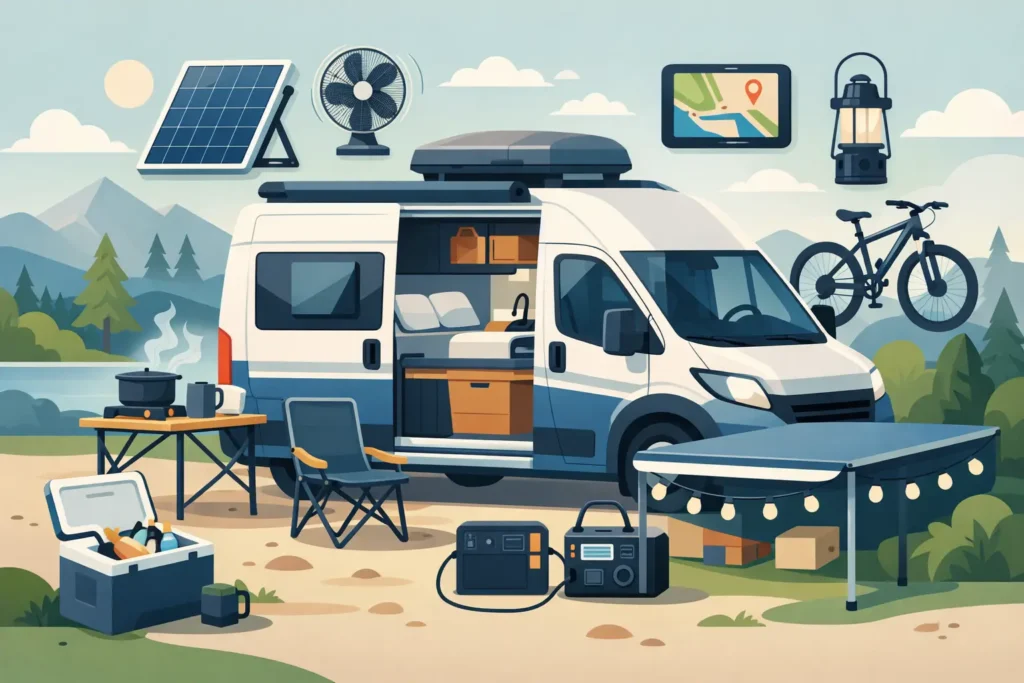
You notice a good campervan setup about 20 minutes after leaving town. That’s usually when someone asks where the water is, the charger cable disappears, and the snack bag gets buried under a jacket. The best things in campervan setup are not flashy extras. They’re the details that make life on the road feel easy when you’re parked by a lake, cooking dinner in the rain, or getting ready before sunrise.
For South Island road trips especially, the right setup matters more than a long features list. You want a van that is simple to use, comfortable to sleep in, and organized enough that you’re not constantly moving gear around. A smaller, well-planned campervan often works better than a bigger van packed with stuff you’ll barely touch.
What the best things in campervan setup actually do
A good setup solves ordinary problems before they become annoying. Where do wet shoes go? Can you make coffee without unpacking half the van? Is there enough light to read at night without killing the battery? Can two people sleep without feeling like they’re in a storage closet?
That’s the real test. The best campervan layouts are built around daily use, not showroom appeal. They help you cook, sleep, store your gear, and keep the van livable when the weather turns or you’ve been on the road for a week already.
A proper bed changes everything
If there’s one feature that deserves top billing, it’s the bed. Not just any bed – a bed that is long enough, flat enough, and quick enough to use without turning bedtime into a project. You can forgive a lot on a road trip, but bad sleep catches up fast.
The best campervan setups make the sleeping area feel settled and ready. That might mean a fixed bed in a larger van or a simple bed conversion that doesn’t require ten steps and a puzzle of cushions. For couples, width matters just as much as length. If you’re both waking up every time the other person rolls over, the setup is working against you.
Good ventilation matters here too. Even a comfortable mattress feels rough after a damp night with fogged-up windows. A bed works best when it’s paired with airflow and enough room to keep basic things like layers, phones, and water within reach.
Smart storage beats more storage
Storage is where a lot of vans get overcomplicated. More compartments don’t always mean a better trip. What matters is whether the space makes sense. The best things in a campervan setup include storage you can actually use without emptying half the van to reach one pan or your toothbrush bag.
Good storage is easy to access, easy to understand, and built around real travel gear. You need a place for clothes, food, cooking gear, shoes, and the random small items that always show up on the road. Overhead shelves can be useful, but only if they don’t make the van feel cramped. Under-bed storage is great, but only if it’s reachable without a full unpack.
This is where simple design usually wins. A few well-sized storage zones are better than a dozen tiny compartments. You want to know where things belong after day one.
A kitchen that is simple enough to use daily
A lot of people imagine they’ll cook every meal outside with a mountain view. Sometimes that happens. Sometimes it’s cold, windy, and you just want pasta fast. The kitchen setup needs to work for both versions of the trip.
That usually means a reliable stove, enough bench space to prep something basic, and storage that keeps food and cookware separate from everything else. It does not need to feel like a tiny luxury apartment. It needs to make breakfast easy and dinner realistic.
A sink can be useful, but it depends on the van and how the water system is set up. For some travelers, a simple water container and straightforward dishwashing routine is more practical than a more complex plumbing system. The trade-off is convenience versus simplicity. In compact vans, simpler often means fewer issues and more usable space.
Power that covers the basics
Most travelers do not need a rolling tech hub. They need enough power to charge phones, run lights, and maybe keep a few small essentials going without stress. That’s why one of the best things in campervan setup is a straightforward electrical system that covers normal use and is easy to understand.
Good lighting matters more than people think. Soft interior lights make the van usable at night without feeling harsh. Charging points matter too, especially if you’re using your phone for maps, bookings, and music every day. What you don’t want is a setup so complicated that you need a manual every time you use it.
This is another area where honest design beats feature overload. If the power system is dependable and clear, it does its job.
Ventilation is not optional
Ventilation sounds boring until you spend a damp night in a sealed van. Then it becomes one of the most important parts of the entire build. Airflow helps with sleep, reduces condensation, and makes the van feel fresher during longer trips.
The best things in a campervan setup are often the least glamorous, and this is a perfect example. Cracked windows, vents, or a fan setup can make a huge difference. If you’re traveling around New Zealand’s South Island, where conditions can swing from warm afternoons to cold nights, airflow helps keep the space comfortable.
It also helps when cooking. Even a quick meal adds heat and moisture. A van that clears that out fast is much nicer to live in.
Seats and living space still matter in a small van
People focus on sleeping and cooking, but the in-between time matters too. You need somewhere to sit while drinking coffee, checking the weather, or waiting out a shower. In a compact campervan, that space might be modest, but it should still feel usable.
A good setup gives you more than one mode. Driving mode, sleeping mode, and hanging-out mode should all be easy to switch between. If every transition takes too long, the van starts to feel cramped even if the design looks clever on paper.
This is where hand-built vans often have an edge. When someone has actually spent time living on the road, they tend to design for the moments between destinations, not just the brochure photos.
Privacy and low-key travel make a real difference
This part gets overlooked, but it shapes the whole experience. Privacy screens or curtains help with sleep, changing clothes, and feeling settled once you park up. A discreet exterior matters too. Not everyone wants to travel in a giant rolling billboard that screams rental van.
Low-key travel has practical value. A simple, unbranded-looking van blends in better, feels less touristy, and often suits the kind of independent trip people actually want. That’s one reason smaller self-built rentals, like the kind Kim Campers focuses on, appeal to travelers who care more about function than flashy branding.
Easy water access and everyday cleanup
Water setup does not need to be fancy, but it does need to be usable. You’ll notice this fast when brushing your teeth, filling a kettle, rinsing dishes, or washing your hands after a hike. One of the best things in campervan setup is having water stored in a way that is easy to refill, easy to pour, and easy to monitor.
The same goes for cleanup. Trash storage, a simple place for dirty dishes, and a routine for wet gear all make the van easier to live in. None of this is glamorous, but these are the details that stop a small space from turning chaotic by day three.
Warmth matters, but insulation matters more than hype
People often ask about heaters first, and fair enough. Cold nights are part of the deal in many parts of the South Island. But warmth in a campervan starts with the basics – insulation, ventilation, bedding, and how well the space holds heat overnight.
A heater can be great, depending on the van and season. But it’s not the only answer, and in smaller campervans, a well-thought-out sleeping setup with proper bedding can go a long way. The key is being realistic about when and where you’re traveling. Summer trips have different needs than shoulder-season mountain routes.
The best campervan setup feels obvious once you use it
That’s usually the sign of a good van. You’re not thinking about the design all day because it just works. You know where your stuff goes. Cooking is easy. Sleeping is comfortable. Packing up in the morning takes minutes, not half an hour.
The best things in campervan setup are rarely the showy features people talk about first. They’re the practical choices that save time, reduce clutter, and make a small space feel calm instead of cramped. If you’re choosing a van for a real road trip, look for the setup that feels honest, simple, and ready to use. That kind of design keeps you focused on the trip itself, which is the whole point.