
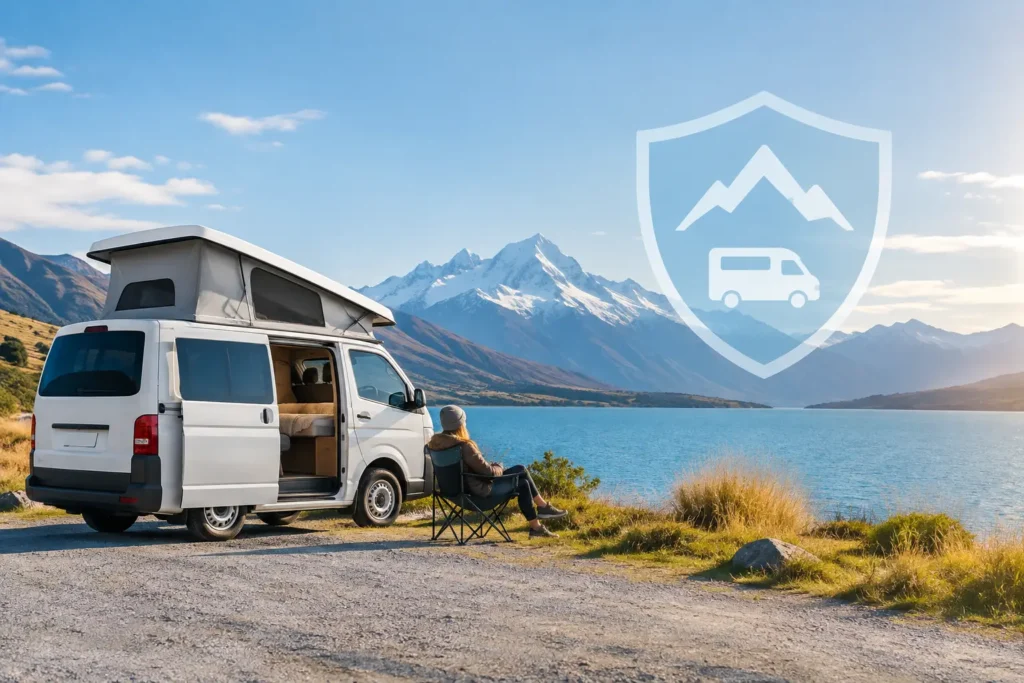
A cheap daily rental rate can stop looking cheap fast if you do not understand the excess attached to it. This campervan insurance excess guide breaks down what you may need to pay after damage, how a bond differs from an excess, and the questions worth asking before setting off around New Zealand’s South Island.
For most travelers, insurance is not the exciting part of planning a road trip. You are thinking about a quiet night near Lake Pukaki, a morning walk in Fiordland, or finding the next good coffee in a small town. Still, a few minutes spent reading the insurance terms can prevent a stressful surprise when you pick up the keys.
What campervan insurance excess actually means
An insurance excess is the amount you can be responsible for if the campervan is damaged, stolen, or involved in an incident covered by the rental agreement. Think of it as your share of the risk before the insurer pays the remaining eligible costs.
For example, if your excess is $3,000 and a covered repair costs $1,200, you could be liable for the full $1,200. If a covered repair costs $5,000, your liability may be capped at the $3,000 excess. The exact outcome depends on the rental company’s agreement, the type of incident, and whether you followed its terms.
The excess is not usually an automatic charge. It is the maximum amount the company may claim from you for a covered event, subject to the contract. That distinction matters. A minor scratch does not necessarily mean you lose the entire excess, but it can still be expensive if repair costs add up.
Excess versus security bond
These terms are often used together, but they are not identical. A security bond, sometimes called a deposit, is an amount held or authorized on your card at pickup. It gives the rental company a way to recover costs if there is damage, cleaning beyond normal use, missing equipment, traffic fines, or a breach of the agreement.
The insurance excess is the level of financial responsibility that may apply following a covered claim. In many rentals, the bond amount and excess amount are similar. In others, they differ. Ask how the bond is taken, whether it is a card hold or charge, when it is released, and what deductions can be made.
Card holds can also affect your available credit while you travel. If you plan to use the same credit card for accommodation, activities, and fuel, make sure there is enough room for the bond as well.
Why excess amounts vary between campervan rentals
There is no one standard excess for a New Zealand campervan. The amount can change based on the vehicle, driver age, rental length, insurance option selected, and where the vehicle is permitted to go.
A compact, practical van may have a different risk profile from a large motorhome. So can a rental with unrestricted additional drivers compared with one that limits who can drive. Lowering the excess through an optional protection package may cost more per day, but it can make sense if a large bond would put pressure on your travel budget.
The best option depends on your comfort level. Some travelers prefer the lowest daily rate and are comfortable carrying a higher excess. Others would rather pay more upfront for a lower potential bill if something goes wrong. Neither choice is automatically better. The useful question is whether you could comfortably cover the excess if needed.
What insurance may not cover
Insurance is designed for accidents and unforeseen events, not every loss or bad decision. Rental agreements commonly set out exclusions, and these are where travelers need to pay close attention.
Damage can be excluded or your liability can increase if an unauthorized person drives, a driver is impaired, the van is used illegally, or the vehicle is driven on roads not allowed by the agreement. Some routes, beaches, river crossings, ski access roads, or unsealed roads may have restrictions. New Zealand’s scenery invites detours, but “it looks drivable” is not the same as “it is permitted and insured.”
Roof damage is another common issue. Low branches, car park barriers, and drive-through awnings can be easy to miss in an unfamiliar vehicle. So can reversing damage, particularly at crowded trailheads or campsites after dark. Windscreens, tires, keys, and the camper interior may also have separate conditions, limits, or exclusions.
Do not assume personal belongings are covered by the campervan policy either. Your luggage, camera, phone, and hiking gear may fall under your travel insurance or credit card coverage instead. Check that policy before relying on it, especially for theft from a vehicle.
How to choose an excess option without overpaying
Start with the rental agreement, not the headline price. Look for the standard excess, bond amount, daily cost of any excess-reduction option, and the remaining excess after you purchase it. “Reduced excess” does not always mean zero excess.
Then consider the length and shape of your trip. On a two-night drive between Christchurch and Queenstown, paying for the highest protection package may not suit your budget. On a three-week loop with mountain passes, busy towns, changing weather, and frequent campsite stops, more protection may feel worthwhile.
It also helps to check your existing cover. Some premium credit cards and travel insurance plans offer rental vehicle excess reimbursement. The catch is that they may require you to decline the rental company’s extra cover, pay with a specific card, or provide detailed paperwork after an incident. Reimbursement is not the same as having no liability at the rental counter. You may still need to pay the rental company first and claim it back later.
Before booking, get clear answers to these practical questions:
- What is the standard excess, and what is the bond amount?
- How is the bond processed, and how long can release take after drop-off?
- What does each protection option reduce, and what excess remains?
- Are windscreen, tire, roof, interior, and underbody damage treated differently?
- Which roads or driving situations are excluded from cover?
A straightforward operator should be able to explain these points in plain language. At Kim Campers, the point of a smaller, owner-led rental experience is that you can ask the real questions before arrival rather than trying to decode a call-center script.
Your pickup inspection matters more than you think
Insurance works best when the vehicle’s condition is clear from the start. At pickup, slow down and inspect the campervan before loading your bags. Take timestamped photos and short videos of every side, the roofline where visible, wheels, windscreen, bumpers, mirrors, and interior.
Make sure existing marks are recorded on the condition report. Check that you know how the doors, windows, awning if fitted, gas equipment, power system, and any camping gear work. This is not about looking for trouble. It is about beginning the trip with a shared, accurate record.
If you notice a new issue on the road, report it promptly. A small crack in a windscreen or a warning light is easier to manage early than after several days of driving. Continuing to drive with known damage can create bigger problems and may affect cover.
Small habits that protect your excess
Most claims are not dramatic crashes. They are low-speed, avoidable moments: clipping a post while reversing, scraping a branch, misjudging a tight fuel station exit, or parking too close to another vehicle.
Give yourself extra time in unfamiliar places. Use a spotter when reversing if you are traveling with someone. Avoid late arrivals at campsites when possible, because setting up in the dark makes hazards harder to see. In wet or icy conditions, slow down well before corners and leave more space than you would at home.
New Zealand roads can be narrow, winding, and slower than they look on a map. A compact campervan is easier to handle than a large motorhome, but it is still taller and wider than a regular car. Drive for the road in front of you, not the arrival time shown on your phone.
If something happens during your trip
First, keep everyone safe. Move out of danger if you can, call emergency services when required, and gather the other driver’s details if another vehicle is involved. Take photos of the scene, damage, road conditions, and relevant signs. Do not admit fault or agree privately to pay someone without speaking to the rental company.
Contact the rental provider as soon as practical and follow their instructions. Honest, early communication gives everyone the best chance of sorting out repairs, replacement transport, or a claim without unnecessary confusion. Keep receipts and documentation, particularly if you plan to claim through travel insurance or a credit card provider.
A campervan road trip should feel free, not fragile. Read the excess terms, choose cover that fits your budget, take care in the small moments, and then get back to the reason you came: quiet roads, big landscapes, and the freedom to stop when the view tells you to.