
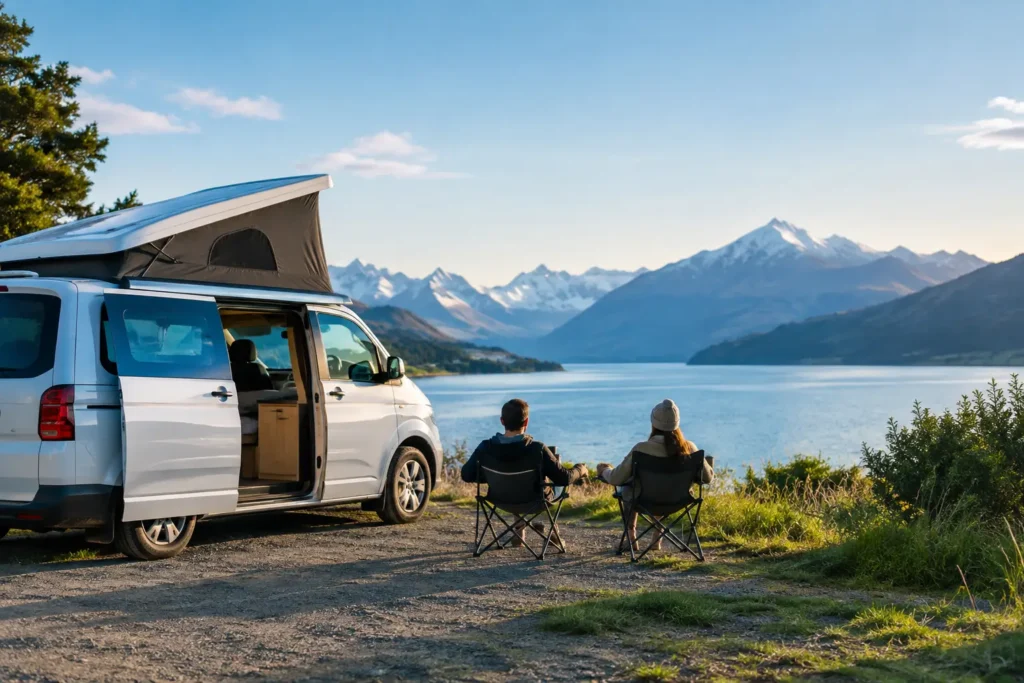
A compact campervan can make a South Island trip feel much simpler – right up until two people are trying to make coffee, find a jacket, and get ready for bed at the same time. This compact campervan for two review looks at the part that matters beyond the photos: whether a smaller van gives a couple enough comfort and freedom for a real New Zealand road trip.
The short answer is yes, for the right travelers. A compact van is not a tiny hotel room on wheels, and it does not pretend to be. It is a practical base for people who would rather spend their days hiking, swimming, driving coastal roads, and stopping at small towns than sitting inside a large motorhome.
Compact campervan for two review: the real fit
For a couple, the appeal starts with the driving. New Zealand’s South Island is full of narrow roads, winding mountain passes, small parking areas, and towns where an oversized vehicle can feel like work. A compact campervan is far less intimidating than a full-size motorhome. It is easier to reverse, easier to park at trailheads, and generally less stressful on roads that deserve your full attention.
A Nissan NV350-based campervan sits in a useful middle ground. It has enough interior room to sleep two adults comfortably and carry the basics for the road, without becoming a bus. That matters when you are pulling into a crowded lookout near Lake Pukaki, navigating a supermarket parking lot in Wanaka, or looking for a place to stop after a long day on the West Coast.
The trade-off is simple: space is limited. You will be sharing a compact living area, so the van works best when you travel with a sensible amount of luggage and accept that a little organization is part of campervan life. Soft bags are easier to store than large hard-shell suitcases. A jacket hook, a packing cube, and putting things back after use go a long way.
For most couples, this is not a deal-breaker. It is part of the point. A smaller setup asks less of you and gives you more freedom to move.
Sleeping: simple, flat, and genuinely important
A good night’s sleep decides whether a campervan feels like freedom or a bad idea by day three. In a compact van, the bed needs to be easy to use, wide enough for two, and supported by a straightforward layout that does not require an engineering degree every evening.
The practical advantage of a purpose-built compact campervan is that the sleeping setup is already thought through. You are not trying to turn a rental car into a bedroom with loose camping gear. You have a proper place to sleep, ventilation, privacy, and the basic comfort needed to wake up ready for the next drive.
Still, expectations matter. Two people sharing a campervan bed will be close together. If one person needs a large amount of personal space, gets up repeatedly during the night, or is much taller than average, inspect the bed dimensions and layout before booking. There is no universal answer because comfort is personal.
For couples who normally share a bed and spend most of the day outdoors, a compact setup is usually more than enough. The best test is not, “Could we live in this forever?” It is, “Will we sleep well enough after a full day on the road?”
Cooking and daily life on the road
A compact campervan kitchen is designed for useful meals, not elaborate dinner parties. That is a strength if you treat it that way. You can make coffee before an early hike, cook pasta after a rainy day in Fiordland, prepare breakfast by a lake, and avoid paying for every meal out.
The key is keeping meals simple. Buy ingredients that work across a few days, use one-pan recipes, and avoid filling every cupboard with food on day one. South Island towns have plenty of places to restock, so there is no need to shop as if you are heading into the wilderness for a month.
Weather changes the equation. On a bright evening, cooking outside or with the doors open feels like part of the trip. In heavy rain, compact interiors feel smaller. That is not a fault unique to smaller vans – bad weather makes any campervan less spacious – but it is worth planning for. Keep a few easy meals on hand, carry rain layers where you can reach them, and use rainy days as a reason to find a hot pool, cafe, museum, or short scenic drive.
Storage is also about habits. One person can handle food while the other packs up bedding or organizes day gear. Couples who communicate well about small jobs tend to find campervan travel easy. Couples who leave everything out until morning tend to have a less relaxed start.
Why smaller often works better in the South Island
Big rental motorhomes promise room, but they also bring more bulk, higher fuel use, and a more noticeable presence on the road. If you are traveling as a pair, much of that extra space may go unused.
A compact campervan lets you travel more discreetly. It does not announce that you are part of a rental fleet from half a mile away. That lower-profile feel suits travelers who want to blend into the rhythm of the road, stop where it makes sense, and keep the trip focused on the country rather than the vehicle.
It also helps with spontaneous travel. A smaller van is easier to fit into standard parking spaces and less awkward in busy areas around Christchurch, Queenstown, Tekapo, and popular trailheads. You still need to follow local parking rules and use approved overnight locations, but the day-to-day driving experience is simply calmer.
This is especially useful for first-time campervan travelers. You do not need previous RV experience to handle a compact van confidently. Take the first hour slowly, learn the mirrors, get comfortable with the driving position, and remember that New Zealand drives on the left. After a day or two, the van often feels surprisingly normal.
What you give up – and what you get instead
A fair review should be honest about what compact living does not provide. You will not have separate rooms. You will not have a full bathroom. You will not have endless storage for clothing, sports gear, and large suitcases. If you expect to spend several hours inside every day, a larger camper may be a better match.
A compact campervan is also less ideal for travelers carrying bulky equipment. Ski gear, several large backpacks, a stroller, or a lot of camera cases can make the cabin feel crowded. The same goes for people who need a dedicated indoor workspace for long remote-work days.
But those limitations buy you something valuable: a van that is easier to drive, simpler to operate, more fuel-conscious, and often more affordable than a larger option. Daily rental costs matter, but so does the total cost of a trip. A smaller van can leave more room in the budget for activities, local food, campsites, and an extra day on the road.
That is why compact campers suit a certain kind of trip so well. They are built around movement. You sleep, eat, recharge, and head back out.
Who should choose a compact campervan for two?
Choose a compact campervan if you are an independent couple, pack reasonably light, and want a practical way to see the South Island without managing a large motorhome. It is a strong choice for a week-long loop from Christchurch, a longer route through Mount Cook, Wanaka, Queenstown, and the West Coast, or a flexible itinerary where the plan changes with the weather.
It is also a good fit if you value direct help over a call center. With a small, owner-led operator such as Kim Campers, the van is part of a more personal rental experience. You are dealing with people who know the roads, understand the vehicle, and have built the setup around real travel rather than a generic fleet specification.
Consider a larger vehicle if indoor space is your top priority, if you are bringing a lot of gear, or if you know that close quarters will create tension. There is no prize for choosing the smallest van possible. The right choice is the one that lets both of you enjoy the trip.
A compact campervan works best when you let the South Island be your living room. Pack light, keep meals easy, stay flexible when the weather turns, and save the extra space in your budget for the places you came to see.