
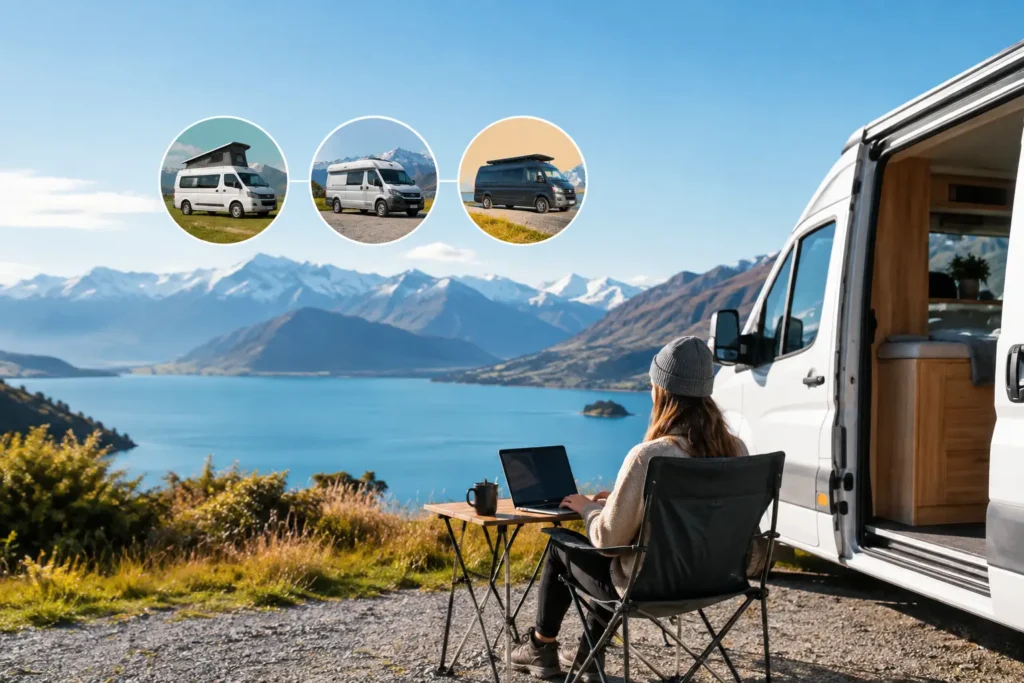
A cheap daily rate can look great until the booking page adds insurance, a one-way fee, bedding, a second driver, and a long list of conditions. Knowing how to compare campervan rental options properly means looking past the first number and asking a simpler question: which van will make your South Island trip easier, more comfortable, and better value when you are actually on the road?
For most couples and independent travelers, the best rental is not the biggest or flashiest vehicle. It is the one that suits the roads you plan to drive, the way you want to sleep, and the amount of gear you actually need.
Start with the real trip, not the rental listing
Before comparing vans, sketch out the trip you want. A week based around Christchurch, Lake Tekapo, Wanaka, and Queenstown has different needs from a three-week loop that includes remote beaches, ski fields, and long stretches on the West Coast.
Think about where you will start and finish, how many people are traveling, and whether you want to move every day or stay put for two or three nights at a time. If you are planning to spend most daylight hours hiking, swimming, or exploring small towns, a compact campervan can be all you need. If you expect to work from the road, travel with children, or spend rainy days inside, interior space matters more.
New Zealand’s South Island rewards a smaller, easy-to-drive vehicle. Roads can be narrow, winding, and busy in summer. Parking in town, pulling into trailheads, and backing into a campsite are usually simpler in a compact van than a large motorhome. Bigger is not automatically better when the best part of the day is outside.
Compare the total trip cost, not the advertised rate
Daily pricing is only useful when you know what sits around it. One company may show a low starting price but charge separately for essentials. Another may cost more per day while including the practical items that make a road trip work.
As you compare options, price the same trip dates and build a like-for-like total. Check the rental rate, insurance or excess-reduction options, bond amount, cleaning expectations, one-way charges, airport or after-hours fees, and extra-driver costs. Also look at what is included in the kitchen and sleeping setup. Paying for a low daily rate and then needing to hire bedding, chairs, a camp table, or cooking gear can change the equation quickly.
Fuel matters, too. A larger motorhome may give you more room, but it will generally use more fuel and can be less pleasant on steep or twisty roads. A compact van is often the more sensible choice for two people who want to cover ground without turning every grocery stop into a parking challenge.
The cheapest option is not always poor value, and the most expensive option is not always more comfortable. What matters is whether the final price matches what is actually included and whether the van fits your plans.
Watch the bond and insurance excess
A bond is the amount held or authorized against your card in case of damage, while the insurance excess is the amount you may be responsible for after an incident. The terms vary between operators, so do not assume two similarly priced insurance packages offer the same protection.
Read what is excluded. Windscreens, tires, roof damage, single-vehicle accidents, water damage, and driving on unsealed roads can all be treated differently. You do not need to expect the worst, but you should understand the financial risk before collecting the keys.
Also check the payment method required for the bond. A large hold on a credit card can affect the funds available for the rest of your trip.
How to compare campervan rental options by layout
Photos can make almost any campervan look spacious. The useful question is how it works at 7 a.m., when you are making coffee in the rain, or at 10 p.m. after a long hike.
Look for clear information about the bed size and whether it stays made up. Converting a bed every evening is not necessarily a deal-breaker, but it is worth knowing. A straightforward fixed or quick-fold bed can make a short stop feel easy, while a complicated setup gets old on a two-week trip.
Check where bags go once the bed is made. Two travelers with backpacks, jackets, hiking boots, groceries, and camera gear can fill a small van quickly. Good storage does not need to be elaborate. It just needs to keep everyday items accessible without forcing you to unload the whole van each morning.
Kitchen basics matter more than a long equipment list. You want a usable stove, a working cooler or fridge, water storage, cookware, plates, cups, utensils, and enough bench space to prepare a simple meal. A well-thought-out compact kitchen beats a fancy-looking one with nowhere to put a cutting board.
Finally, consider ventilation, window coverings, and warmth. South Island nights can be cold even outside winter, especially around the Mackenzie Country, Arthur’s Pass, or alpine areas. Ask what heating is provided, whether it can be used safely overnight, and what bedding is included. These details have more impact on sleep than decorative finishes.
Check that the van suits the roads and rules
Most South Island routes do not require a huge vehicle or specialized four-wheel drive. In fact, a standard compact campervan is often ideal for sealed highways, coastal routes, towns, and established campgrounds. But every rental has its own rules about gravel roads, river crossings, snow, beach driving, and restricted areas.
Do not book a van based on a photo of it parked beside a remote lake and assume it is approved for every backroad. Ask where it can legally and safely go. If a particular route is central to your plans, confirm it before paying.
If you plan to use freedom camping, make sure you understand the current local rules and whether the vehicle has the required certification. Rules can differ by area and change over time. Even with a suitable vehicle, freedom camping is not a free pass to park anywhere. Use designated sites, respect signs, and leave places cleaner than you found them.
A vehicle that is simple to drive is a real advantage. Look for details on transmission, vehicle dimensions, driver-license requirements, and roadside assistance. International visitors should check that their license is accepted and arrange an approved translation or International Driving Permit if needed.
Compare the company as carefully as the campervan
A van can be well equipped and still be a frustrating rental if help is hard to reach. Small issues happen on road trips: a warning light appears, you cannot find a campsite, or you need to adjust a pickup time after a delayed flight. The question is whether there is a real person who can help.
Look for clear pickup instructions, honest condition details, an explanation of what happens if there is a breakdown, and a direct way to contact the operator. A smaller owner-led business can be especially appealing if you value straightforward communication over call centers and scripted answers.
This is where a curated fleet can have an advantage over a large rental depot. At Kim Campers, the focus is on hand-built, practical vans and direct contact with the people who know them. That approach will not suit someone looking for a full-sized motorhome with every possible feature. For travelers who want a discreet, easygoing base for a South Island road trip, it can be a better fit.
Reviews are useful, but read them for specifics rather than star ratings alone. Pay attention to comments about cleanliness, pickup experience, vehicle reliability, comfort in bad weather, transparency around charges, and how problems were handled. A perfect photo gallery tells you less than a traveler explaining that the owner answered the phone when they needed help.
Use a simple comparison sheet before you book
When several options look similar, put them side by side. A quick note on your phone is enough. Compare these five things for the exact same dates:
- Final booking price, including likely insurance and mandatory fees
- Bond amount, excess, exclusions, and payment requirements
- Bed, storage, kitchen, heating, and included camping equipment
- Vehicle size, transmission, road restrictions, and fuel use
- Pickup location, support, cancellation terms, and review patterns
This small exercise stops the comparison from becoming a collection of screenshots and half-remembered promises. It also makes your priorities visible. A couple traveling light may choose the lower-cost compact van with a simple layout. Someone visiting in winter may happily pay more for stronger heating and a more protected sleeping setup.
Book the van you will enjoy living with
The right campervan should fade into the background once the trip begins. You should be thinking about the next trail, a swim in a cold lake, or where to catch sunset – not whether the bed is a hassle, the kitchen is missing a pan, or a surprise charge is waiting at drop-off.
Choose the option that is clear about costs, honest about its limits, and designed for the kind of travel you want to do. Then pack light, leave room for groceries and muddy boots, and give yourself enough time to take the slower roads.