
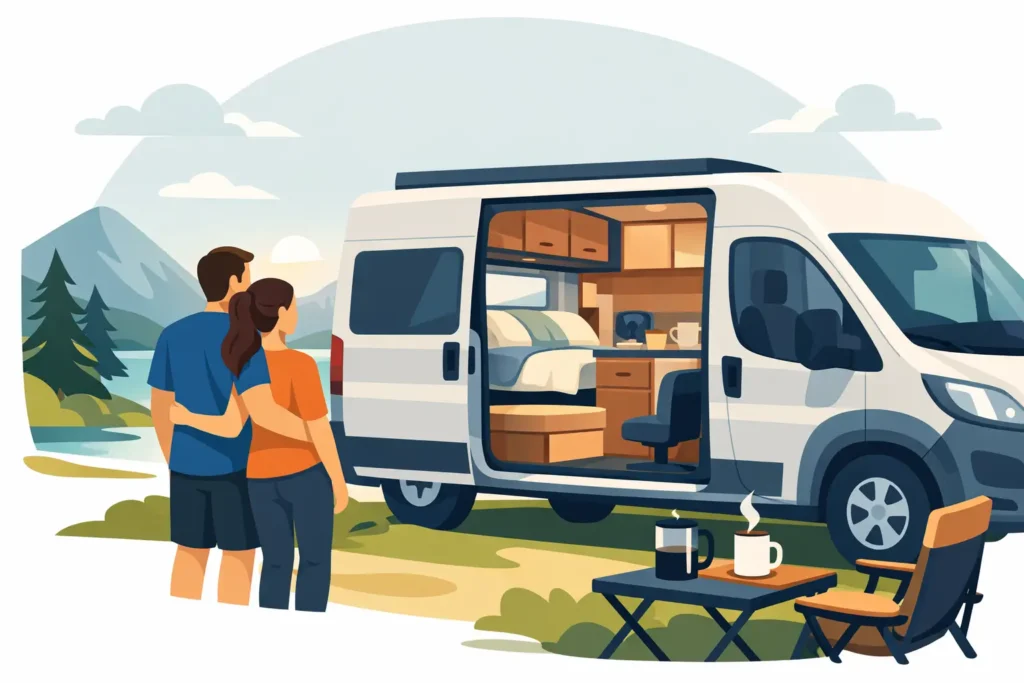
Two people can get along just fine in a small campervan – right up until one of you needs to cook, the other needs a jacket from the back, and the bed is still taking up the whole interior.
That is where a practical campervan layout for couples really matters. It is not about cramming in every possible feature. It is about making daily life on the road feel easy. In a compact van, good layout choices decide whether your trip feels relaxed or constantly cluttered.
For couples traveling around New Zealand’s South Island, that matters even more. You are often driving long scenic stretches, stopping often, cooking simple meals, and living out of the van for days or weeks at a time. A layout that looks clever in photos can feel frustrating fast if it does not work in real conditions.
What makes a practical campervan layout for couples work
The best layouts are built around the boring stuff you do every day. Sleeping, getting dressed, making coffee, grabbing gear, charging your phone, and finding a place for wet jackets all matter more than flashy add-ons.
A practical setup should let both people use the van without constantly negotiating space. That means enough room to sit comfortably, a bed that does not feel like a nightly engineering project, storage that is actually reachable, and a kitchen area that works without unpacking half the van.
There is always a trade-off in a compact camper. If you want a bigger bed, you usually lose open floor space. If you want more cabinetry, the van can start to feel cramped. If you want a full indoor setup for every weather scenario, weight and complexity go up fast. For most couples, the sweet spot is a simple layout that covers the essentials well instead of trying to do everything.
Start with the bed, not the extras
For couples, the bed is the center of the whole layout. If you sleep badly, the rest of the trip feels harder than it should.
A fixed bed is usually the easiest option for daily comfort. You do not have to rebuild the sleeping area every night, and there is often useful storage underneath. That said, fixed beds take up space all day. In a compact van, that can leave less room to sit inside when the weather turns bad.
A convertible bed gives you more daytime living space, but it needs to be quick to set up and quick to pack away. If it takes twenty minutes and a perfect mood to transform it every evening, it stops feeling practical. For couples, the best convertible designs are the ones that use a simple slide-out or fold-flat base with cushions that do not need a puzzle-solving session.
Bed width matters too. Plenty of vans claim to sleep two adults, but some are really built for two adults who are extremely patient and not carrying much gear. If you are spending more than a weekend in the van, a properly sized sleeping platform makes a real difference.
Seating should feel usable, not symbolic
A lot of campervan interiors technically include seating. That does not mean the seating is pleasant to use.
For couples, practical seating means both people can sit inside at the same time without one being stuck half on the bed. You want enough back support to read, eat, or wait out a rainy afternoon. A small bench setup often works better than trying to squeeze in a bulky dinette that overwhelms the van.
It also helps if the seating area connects naturally to the kitchen. If one person is making breakfast and the other can sit nearby with coffee, the van feels more livable. That sounds small, but these little daily moments are what shape the trip.
Kitchen layout matters more than kitchen size
Most couples do not need a huge kitchen in a campervan. They need one that works without stress.
The key is access. You should be able to reach the stove, utensils, pantry basics, and water easily. If cooking dinner means unloading bags, moving bedding, and opening three awkward compartments, you will end up eating takeout more than planned.
A side kitchen usually makes sense in a compact van because it keeps everything in one zone. It gives one person space to cook while the other moves around or gets organized. Rear kitchens can work too, especially for people who mostly cook outside, but they are less convenient in wind, cold, or rain. In the South Island, that weather trade-off is worth thinking about.
Counter space does not need to be large, but it does need to be real. Even a small clear prep area helps. Couples tend to feel the pain of bad kitchen design faster because there are simply more hands, more gear, and more movement inside the same footprint.
Storage should reduce friction
Good storage is not about how much you can hide. It is about how quickly you can find what you need.
For couples, divided storage works best. Separate clothing zones, easy-access spots for everyday items, and one or two larger spaces for shared gear keep the van from turning into a daily reshuffle. If all storage is pooled together, one person ends up digging through the other person’s stuff just to find a flashlight or socks.
Open shelves can be handy for small items you use often, but too many open spaces make the van feel messy. Closed storage looks tidier, though it can be annoying if every compartment needs two hands and a full stop to open. The most practical layouts mix both – quick access for essentials, enclosed storage for everything else.
Under-bed storage is especially useful in compact vans, but only if it is easy to reach. Top access can be fine for clothes and bedding. Rear access is better for bags, shoes, and outdoor gear. Ideally, you want both.
A practical campervan layout for couples needs clear zones
Even in a small van, separate zones make life easier. You do not need walls or doors. You just need the layout to create a sense that sleeping, cooking, and storing gear each have their place.
When everything overlaps too much, the van feels chaotic. Wet towels end up near the bed. Food gets mixed with chargers and hiking layers. One person tries to make lunch while the other is still rearranging the sleeping area. Clear zones reduce that kind of friction.
This is one reason simple layouts often beat feature-heavy ones. A clean, well-planned van with obvious places for daily tasks usually feels better than a packed interior with clever gadgets and no breathing room.
Keep the systems simple
The more complicated the setup, the more chances it has to slow you down.
For most couples on a road trip, simple power, lighting, water storage, and cooking equipment are enough. You want systems that are easy to understand on day one and still easy to use after a long drive. Overbuilt setups can sound appealing, but they often add weight, take up space, and create more points of failure.
This is especially true for rental travel. Most people do not want to spend the first afternoon learning a control panel that looks like it belongs on a boat. They want to pick up the van, throw in their bags, and get moving.
That is why smaller, traveler-built vans often make more sense than oversized motorhomes for couples. A compact layout with the essentials done well is usually easier to drive, easier to park, and easier to live in. That practical approach is a big part of why vans like those at Kim Campers suit South Island road trips so well.
What couples often get wrong when choosing a layout
The biggest mistake is choosing with a showroom mindset instead of a travel mindset.
A van can look spacious because the photos were taken with no luggage, no groceries, no jackets, and no second person standing inside. What matters is how the layout works at 7 a.m. in a campground, or in sideways rain, or after a long day when neither of you wants to reorganize the whole interior.
Another common mistake is overvaluing luxury features and undervaluing everyday comfort. Fancy finishes do not help much if the bed is annoying to set up or the storage is frustrating to use. Couples tend to be happiest in vans that feel intuitive, not impressive.
Finally, think honestly about how you travel. If you mostly eat simple meals and spend your days outside, you probably do not need a huge indoor kitchen. If one of you works remotely, seating and power become more important. If you are traveling in cooler months, indoor usability matters more than it does in peak summer.
A good layout is not the one with the longest feature list. It is the one that fits your actual habits.
The right campervan should fade into the background a bit. It should support the trip, not become the thing you are constantly managing. For couples, that usually means choosing a layout that is straightforward, comfortable, and honest about what small-space travel really requires. When a van gets that balance right, the days feel simpler, and that is usually when the trip gets better.