
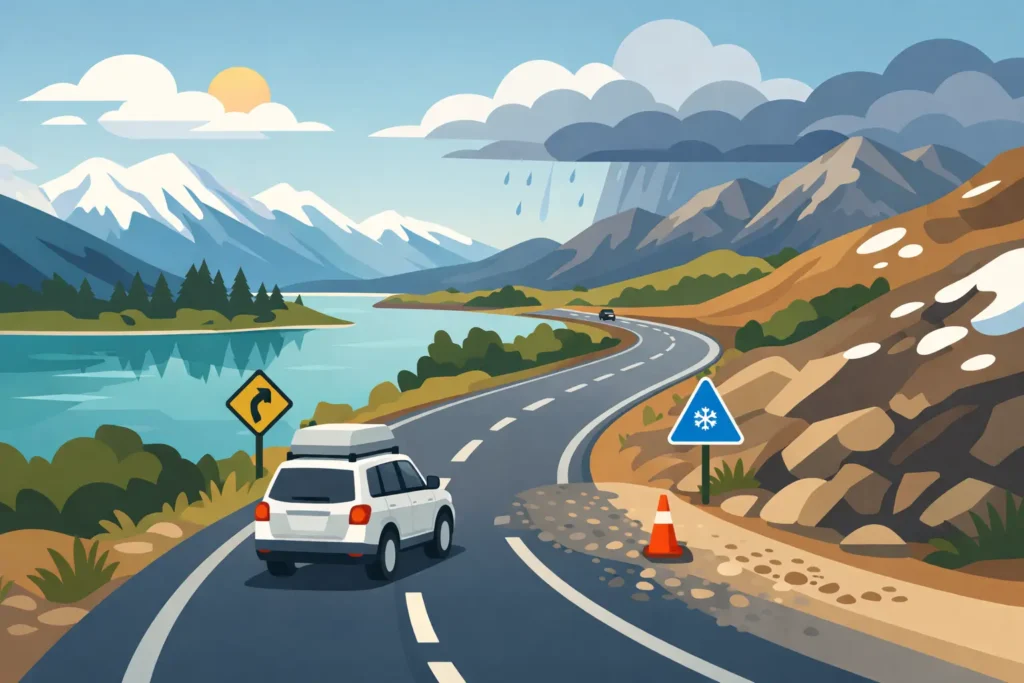
You can leave Christchurch in dry sun, hit crosswinds on the Canterbury Plains, climb into sleet near a pass, and finish the day under clear skies by the lake. That is how south island road conditions work. They are rarely dramatic for the sake of it, but they do change quickly enough that a relaxed trip depends on paying attention.
For most travelers, the South Island is very drivable. Roads are generally well maintained, signage is clear, and the distances that look short on a map can still be slow because the route twists, climbs, narrows, or passes through weather. If you are used to wide multi-lane highways in the US, that is usually the adjustment that matters most. The challenge is not extreme off-roading. It is understanding that road conditions here are often more about terrain, weather, and patience than raw mileage.
What south island road conditions are really like
A lot of visitors expect one simple answer – good or bad. The reality is more useful than that. Most South Island roads are sealed and accessible in a standard campervan, but many are two-lane rural roads with limited shoulders, frequent curves, and changing surfaces at the edges. You do not need a huge vehicle, but you do need to drive with a bit more margin.
On major routes between Christchurch, Queenstown, Wanaka, Tekapo, and Dunedin, conditions are usually straightforward in normal weather. You can still run into roadworks, temporary gravel sections, one-lane bridges, or stretches where speed needs to drop well below the posted limit. In mountain areas and on the West Coast, weather has a bigger say. Heavy rain, low cloud, ice, and slips can affect travel times more than the distance itself.
That is why the best drivers here are not the fastest ones. They are the ones who leave room in the day.
Road conditions change a lot by season
If you are planning a South Island trip from overseas, it helps to think in seasons instead of assuming the whole island behaves the same way year-round.
Summer
Summer is the easiest season for most road trips. Days are long, snow and ice are less of a factor, and the main risk is overconfidence. Roads are busier, popular towns are crowded, and tired drivers often pack too much into one day. You might have excellent driving conditions, but that does not mean every route will be quick.
Hot dry weather can also create glare, dust on unsealed turnoffs, and fatigue if you have been hiking or swimming before getting back behind the wheel. In peak season, the road may be fine while the traffic flow is not.
Fall and spring
These shoulder seasons are a sweet spot for many travelers, but they are less predictable. You can get crisp clear driving days and much lighter traffic, then wake up to frost, fog, or a cold front moving through. This is often when south island road conditions catch people out because it looks mild overall, yet early mornings and higher elevations can still be slippery.
If your route includes inland basins, alpine roads, or early starts, keep some flexibility. A beautiful quiet road trip is still possible. You just do better when you do not force the schedule.
Winter
Winter driving is completely manageable for many travelers, but it is the season where local advice matters most. Roads around Queenstown, Wanaka, Tekapo, Mt Cook, and the main alpine passes can see snow, black ice, and temporary closures. Sometimes the road opens later the same day. Sometimes conditions improve only after grit, plowing, or a full weather change.
This does not mean you need to avoid winter. It means you need to treat mountain driving as conditional, not guaranteed. If a route is central to your plan, have a backup day or alternate stop in mind.
Regional differences matter more than people expect
The South Island is not one driving environment. It is several.
Canterbury often feels open and simple at first. Around Christchurch and across the plains, roads can be straight and relatively easy, but wind is a real factor, especially in a taller vehicle. Head inland toward Lake Tekapo or Arthur’s Pass and the drive becomes more exposed, more scenic, and slower than the map suggests.
The West Coast is one of the most beautiful drives in New Zealand, but it is also one of the wettest regions. Rain can be intense, and road conditions there are often less about traffic and more about visibility, standing water, and occasional slips. You do not need to be nervous about it. You just need to respect the weather.
Central Otago and Mackenzie Country often feel dry, open, and calm, but winter cold bites hard. A road can look clear and still be icy in shaded sections, especially in the morning. Around Queenstown and Wanaka, roads are popular, scenic, and generally good, but they can be busy, winding, and affected by snow on nearby passes.
Fiordland is different again. The roads are sealed on the main tourist route, but distances are long, services are limited, and rain can quickly change the drive. If you are heading toward Milford Sound, conditions are often fine for regular vehicles, but this is not a route to rush.
Common road features that surprise overseas drivers
Some of the biggest adjustments have nothing to do with damage or closures. They are just part of driving here.
One-lane bridges are common in some regions, especially on scenic and rural routes. They are simple once you understand them, but they require attention and patience. The same goes for narrow shoulders and roads with very little room for correction if you drift wide.
Roadworks are also common, particularly in summer. Temporary traffic lights, pilot vehicles, and short gravel sections are normal. Usually they are not a big deal, but they can slow the day more than expected.
Then there are the corners. South Island roads can be winding for long stretches, especially near lakes, passes, and coastal sections. If you are in a compact campervan, that is a real advantage. A smaller van is easier to place on the road, easier to park, and less tiring over several hours.
How to check conditions without overcomplicating your trip
You do not need to become obsessive. You just need a basic habit.
Check the weather for your route, not just your destination. Look at whether you are crossing a pass, heading inland early, or driving through a rain-heavy area. If your day includes mountain roads, winter travel, or West Coast weather, do a quick condition check that morning as well.
The key is timing. A route that is perfectly fine at 1 p.m. may be icy at 8 a.m. A rainy day on the coast may still be manageable, while an overnight freeze inland can be the bigger issue. Broad forecasts do not always tell that story clearly.
If you are renting from a smaller owner-run company, this is one place where direct support helps. You are not dealing with a call center reading from a script. You can ask a practical question and get a practical answer.
Driving style matters more than vehicle size
A lot of people assume they need a bigger or more powerful vehicle for South Island travel. Usually they do not. For normal routes, what helps more is a van that is easy to drive, easy to park, and not tiring on narrow roads.
Good road-trip driving here is simple. Slow down before corners. Leave extra braking distance in the wet. Avoid stacking long drives after big activity days. Fill up earlier than you think you need to in remote areas. If a local driver wants to move faster, let them pass when it is safe.
The South Island rewards steady drivers. It punishes rushed ones.
When plans should change
Sometimes the smart move is not pushing through. If the forecast shows heavy snow on a pass, if rain is hammering the coast, or if you are simply worn out, adjusting the route is part of the trip, not a failure of it.
That is especially true in a campervan. You have more flexibility than travelers locked into fixed hotel stops. Use it. Stay an extra night somewhere good. Take the lower-stress route. Start later once frost has lifted. A simple setup and a bit of spare time often beat a rigid plan.
At Kim Campers, that is how we think about South Island travel in general. Keep it practical, stay flexible, and choose the kind of van that makes the driving feel easier, not more complicated.
South island road conditions are best handled the same way you would handle any good road trip – pay attention, leave room for the unexpected, and let the road set the pace when it needs to.