
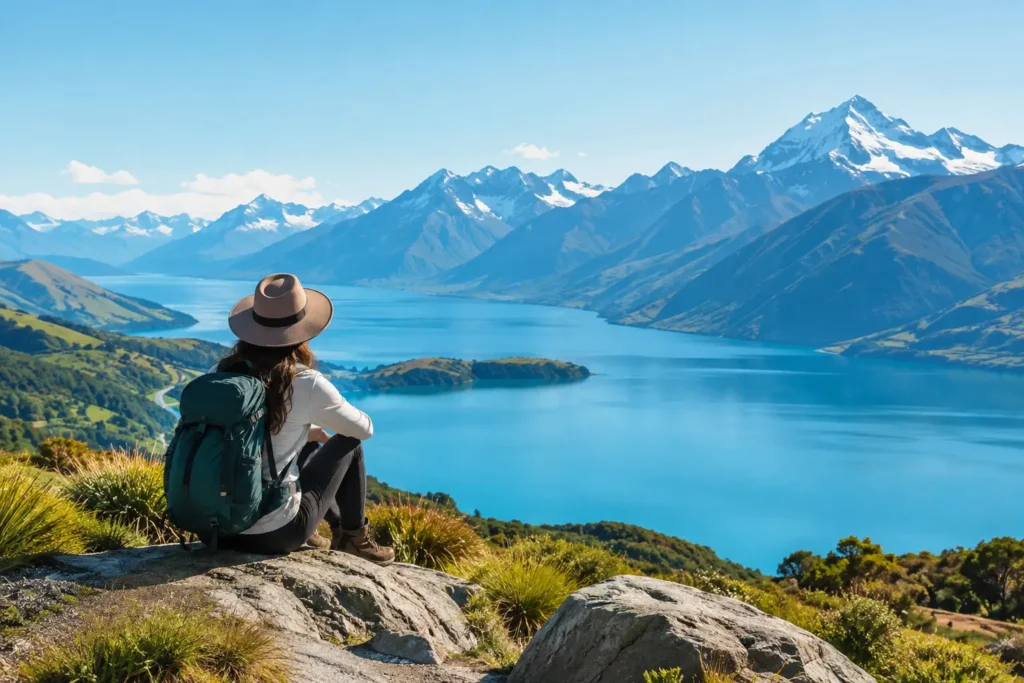
The South Island is not a place to conquer on a tight itinerary. A road that looks short on a map can take half a day once you factor in mountain passes, one-lane bridges, photo stops, coffee, and weather that changes its mind. Travelling South Island like a local means trading the highlight-reel rush for a little more time, a little more flexibility, and a better feel for the places between the famous stops.
Plan fewer stops and stay longer
A classic first-time mistake is trying to fit Christchurch, Lake Tekapo, Aoraki/Mount Cook, Queenstown, Milford Sound, the West Coast, and Abel Tasman into one week. You can technically do it, but much of the trip becomes driving, parking, checking in, and leaving again.
A better approach is to choose two or three regions and give each one room. Start in Christchurch, take the inland route through Mackenzie Country, then decide whether your next stretch leads to Central Otago and Queenstown or over to the West Coast. With 10 to 14 days, you can make a satisfying loop without treating every stop as a quick photo opportunity.
Build in blank days. They are useful when rain closes in around the mountains, a hike takes longer than expected, or a small town feels worth another night. The South Island rewards travelers who can change plans without feeling like they have lost something.
Let the weather choose the day
Weather is part of the trip, not a disruption to it. A clear morning around Aoraki/Mount Cook may be the day to walk, even if your original plan said to keep driving. If low cloud settles over the peaks, save the big viewpoint for later and visit a museum, soak in hot pools, or take a slower drive through the valley instead.
Check road and weather conditions before setting out, especially in winter and on alpine routes. Snow, high winds, slips, and heavy rain can change the sensible plan quickly. A local-style trip is not about pushing through bad conditions to keep a booking. It is about knowing when to wait.
Eat, shop, and stop outside the obvious places
The South Island has excellent restaurants in its bigger destinations, but some of the best road-trip moments are simpler: a bakery pie after a cold walk, fresh fruit from a roadside stall, fish and chips near the coast, or coffee in a town you had not planned to visit.
Shop in larger towns before heading into remote areas. Christchurch, Timaru, Queenstown, Wānaka, Nelson, and Hokitika are easier places to stock up on groceries, fuel, and essentials. Once you are on the West Coast, deep in Fiordland, or moving through smaller alpine towns, choices become more limited and prices can climb.
Make room for places such as Geraldine, Fairlie, Cromwell, Arrowtown, Māpua, or little settlements along the Southern Scenic Route. Do not arrive expecting every small town to entertain you for a full day. Instead, use them as they are: good places to slow down, buy something local, talk to people, and notice the landscape changing.
Camp with care, not entitlement
Campervan travel gives you independence, but it does not mean every beautiful roadside pull-off is a place to sleep. Camping rules vary by area, and signs are there for a reason. Some locations allow overnight stays only in designated spaces, some require a certified self-contained vehicle, and some do not allow camping at all.
Use official campgrounds regularly, especially when you need showers, laundry, a proper kitchen, or a reliable place to reset. Department of Conservation campgrounds can be a great middle ground: often scenic and straightforward, with facilities that range from basic to well equipped. Holiday parks cost more, but they make sense after several nights on the road or during wet weather.
If you stay in a free or low-cost site, arrive early enough to park properly, keep noise down, and avoid spreading out across more space than you need. Do not empty wastewater where it does not belong. Use dump stations, take all trash with you, and leave the site cleaner than you found it. Those small habits protect access for everyone traveling after you.
A compact, self-contained camper is often easier to place and easier to live with than a large motorhome. It fits more naturally into ordinary parking spaces, uses less fuel, and makes quick overnight stops less complicated. That practical, low-key setup is a big part of why a small van can suit the South Island so well.
Drive for the road you are on
Distances in New Zealand can be misleading, particularly for visitors used to wide highways and long straight interstates. South Island roads can be narrow, steep, winding, and busy with cyclists, livestock, roadworks, or slow-moving vehicles. The speed limit is not always the speed you should drive.
Take corners calmly, keep left, and allow faster local traffic to pass when it is safe. If a line forms behind you, use a passing bay or pull over at the next sensible opportunity. It is safer, less stressful, and simply more considerate than trying to maintain a pace that does not suit the road.
Give yourself extra time around Queenstown, Wānaka, and the roads into Fiordland during peak season. Parking can fill early, and a late arrival can turn a simple walk into a frustrating search for a space. Starting early also gives you quieter trails and better chances of seeing popular places before the crowds arrive.
Fuel up before remote stretches. This matters on routes such as the drive toward Milford Sound, through the Catlins, or sections of the West Coast. Do not run the tank close to empty because the next town looks near on the map. It may be farther, slower, or closed earlier than expected.
Traveling South Island like a local means sharing it well
No visitor becomes a local in a week or two, and that is fine. The useful part of the phrase is the mindset: pay attention, adapt to the conditions, and treat towns and landscapes as real places rather than backdrops.
Stay on marked tracks, especially in fragile alpine areas and near lakeshores. Keep a respectful distance from wildlife. Do not fly a drone where it is prohibited or assume a quiet beach is empty just because no one is standing beside you. Many places hold cultural, environmental, or personal importance that is not obvious from a parking lot.
Support small operators when it makes sense. Buy a meal in the town where you camp, book an activity with people who know the area, or choose the independent store over another rushed supermarket stop. You do not need to spend heavily to travel well. Spending thoughtfully helps keep small communities viable in places that rely heavily on seasonal visitors.
Pack for changing conditions, not just photos
Even in summer, bring a warm layer, rain jacket, sunscreen, insect repellent, and shoes you can walk in properly. Sun can be intense, temperatures can drop fast after dark, and sandflies are particularly determined on the West Coast and in Fiordland.
Keep a simple food supply in the van: breakfast basics, water, snacks, and one easy dinner for nights when the weather turns or a store is shut. A torch or headlamp, reusable water bottle, and a few dry bags also earn their place quickly. The goal is not to pack every possible item. It is to avoid being caught out by ordinary South Island conditions.
If you are collecting a camper in Christchurch, take the first hour to get comfortable with the layout, driving position, and basic systems. A simple van is a benefit when you understand it before you reach a rainy campsite after dark. Kim Campers keeps this part straightforward, with practical setups built around the things you actually use on the road.
Leave room for the unplanned stop
The road trip you remember may not be the one you mapped. It may be the lake you found because rain changed your hike, the bakery recommended by a stranger, or the quiet campground where you made dinner as the weather cleared. Keep the plan loose enough for those moments. That is how the South Island starts to feel less like a checklist and more like a place.