
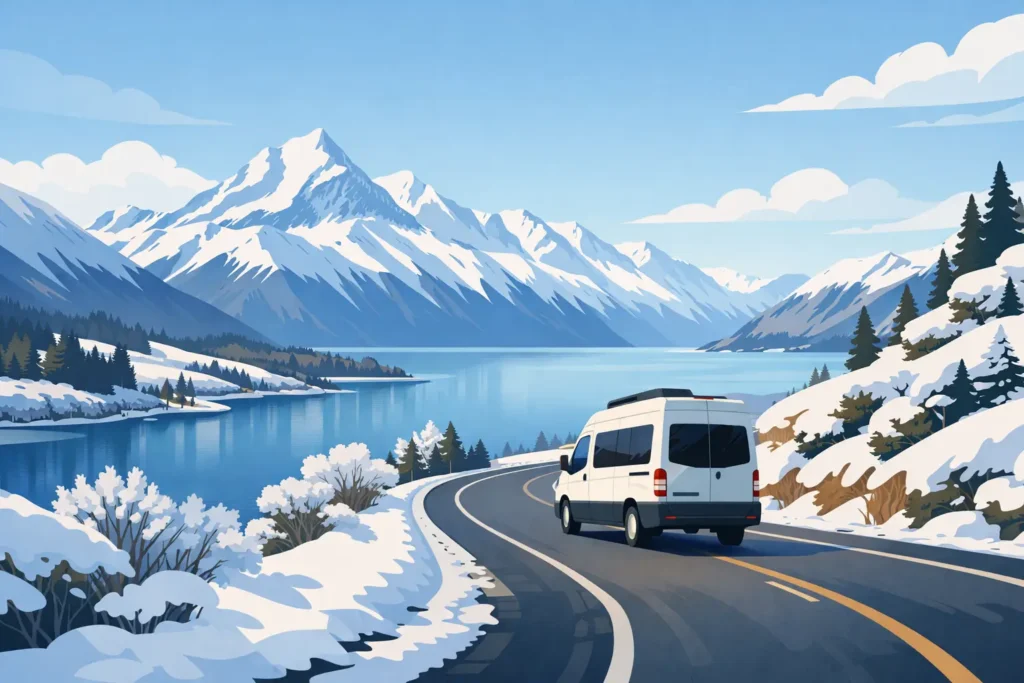
A clear blue morning in Queenstown can turn into snow on a mountain pass before lunch. That is the reality of winter campervan driving in New Zealand’s South Island: the roads are often quiet, the views are unreal, and the conditions ask you to slow down and pay attention.
Winter is a brilliant time to travel by campervan if you want fewer crowds, snowy peaks, and a little more room in popular places. It is not about chasing a packed itinerary or proving you can drive in every condition. It is about planning simply, leaving time in the day, and knowing when the sensible choice is to wait.
Winter campervan driving starts with the forecast
In summer, a road trip can feel fairly spontaneous. In winter, check the weather and road conditions before you leave each morning, especially when your route includes a pass, high country, or the road between Queenstown and Wanaka. Conditions can change quickly with altitude, and a sunny town forecast does not mean a dry road higher up.
Pay attention to overnight temperatures as much as snowfall. Black ice is common on shaded sections of road, bridges, and places where water runs across the pavement. You may not see it until the vehicle reacts, so treat dark, glossy-looking patches with caution on cold mornings.
If a road authority issues a closure, chain requirement, or warning, take it seriously. There is no prize for pushing through. A lower route, an extra night where you are, or a relaxed start the next day is usually a far better trade than getting stuck on a mountain road.
Know the roads that need more care
Most main South Island roads are perfectly manageable in winter when conditions are good. The key is not assuming every route will be the same. Mountain passes and elevated roads deserve extra time and a proper check before departure.
The Crown Range between Queenstown and Wanaka is the obvious example. It is scenic and convenient, but it is high, winding, and regularly affected by snow and ice. It can require chains or close altogether during winter weather. The Lindis Pass, Arthur’s Pass, and Lewis Pass also need close attention when a cold front moves through.
This does not mean you need to avoid these roads all winter. It means you should make decisions based on the actual conditions that day. If the forecast is poor, take an alternate route where one exists, or adjust your plans. A road trip works better when the route serves the weather, not the other way around.
Drive for the surface, not the speed limit
Speed limits are set for ideal conditions. On wet, icy, snowy, or gravelly roads, the safe speed may be much lower. Leave a generous gap to the vehicle ahead, brake early and gently, and make steering inputs smoothly. Sudden braking, hard acceleration, and sharp turns are what turn a small slip into a problem.
Use a lower gear on long descents where appropriate, rather than riding the brakes. If visibility drops in rain, fog, or snow, reduce speed further and use your headlights. Pull over somewhere safe if you are tired, stressed, or unable to see clearly. Do not stop in a narrow lane or on the blind side of a bend.
New Zealand driving is on the left. For visitors used to driving on the right, that takes concentration at first, particularly after breaks, at intersections, and on quiet rural roads. Say it out loud if you need to: left on exit, left on exit. It sounds basic, but it helps.
Snow chains: carry them, and learn them first
Snow chains are sometimes required on mountain roads, even if you are driving a compact campervan. Your rental provider can tell you whether chains are supplied, when they can be used, and which wheels they belong on. Do not guess. Chain fitment depends on the vehicle.
The worst place to learn how chains work is beside a snowy road with cold hands and traffic passing by. Before setting off, open the bag, read the instructions, and practice fitting them somewhere dry and flat. Make sure you know how to tighten and remove them too.
Chains are for snowy or icy sections where they are required or genuinely needed. They should not be left on bare pavement, where they can damage both the road and the vehicle. Drive slowly with chains fitted and remove them as soon as conditions allow.
Four-wheel drive can be useful, but it does not make a vehicle immune to ice. Good decisions, suitable tires, distance, and speed matter more than confidence. A two-wheel-drive van driven carefully in appropriate conditions is safer than any vehicle being rushed down an icy road.
Plan shorter days than you would in summer
Winter daylight is limited, and sunset comes early in the South Island. Build a route that gets you parked well before dark, especially if you are unfamiliar with the area or need to find a campground. Arriving in daylight makes parking, cooking, setting up your bed, and checking your surroundings much easier.
Give yourself a buffer for scenic stops, slow traffic, roadworks, and weather delays. The South Island can look compact on a map, but winding roads and frequent photo stops change the math quickly. A four-hour drive can become a full day if the weather turns or you are crossing a pass.
Fuel up before remote stretches rather than waiting until the warning light comes on. Small towns can have limited opening hours, and not every road has services exactly when you want them. Keep drinking water and easy food in the van in case conditions delay you.
A sensible winter kit includes:
- Warm layers, waterproof outerwear, gloves, and dry socks
- A charged phone, charging cable, and offline map access
- Drinking water, snacks, and any essential medication
- A flashlight or headlamp for early sunsets and dark campsites
- Ice scraper, snow chains if provided, and the vehicle’s rental information
You do not need to pack like you are heading into an expedition. You just need enough gear to stay comfortable if a simple drive takes longer than expected.
Keep the campervan comfortable overnight
A compact campervan is a good winter base because it is easy to drive, park, and turn around when plans change. But winter camping needs a little routine. Moisture from breathing and cooking builds up overnight, so crack a window slightly if it is safe to do so and use ventilation as your van instructions recommend. A drier van is a warmer-feeling van.
Choose your overnight spot with the morning in mind. Avoid low areas where cold air settles when possible, and think about whether your parking area could become muddy, icy, or difficult to leave after rain or frost. If snow is forecast, do not park somewhere that relies on a steep, untreated access road.
Keep wet jackets and boots organized instead of letting them spread through the living space. Use a towel to dry condensation in the morning, make breakfast before packing up, and give the engine time to warm as needed. Small habits make a winter trip feel easy rather than cramped.
Be cautious with any heating or cooking equipment. Never use a stove or other fuel-burning appliance for warmth inside a closed vehicle, and follow the instructions supplied with the van. Fresh air and a warm sleeping setup are a much better combination than trying to turn a campervan into a heated cabin.
Let flexibility be part of the trip
The best winter itineraries have room to move. Keep a backup plan for high passes, allow an extra night around places you really want to see, and do not book every day down to the hour. A weather day in Wanaka, Tekapo, or Christchurch can still be a good day.
Kim Campers is built around the kind of South Island travel where you can keep things simple: a practical van, direct support, and the freedom to take the better road when conditions change. Before pickup, ask any questions you have about the vehicle, chains, winter driving, and your proposed route. Clear answers before you leave make the road feel much more relaxed.
Winter rewards travelers who leave a little space around their plans. Take the dry road when it is there, wait out the storm when it is not, and you may find the South Island at its quietest and most memorable.