
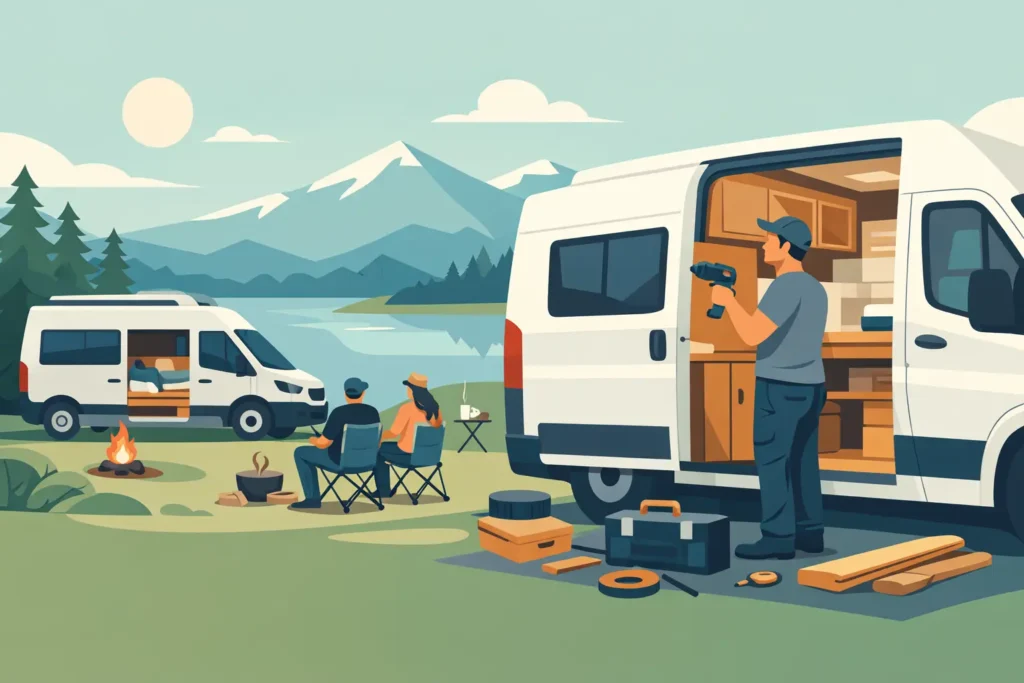
You notice the difference with self built campervans the minute you open the door. They usually feel less like a rental product and more like something made to be used properly – because they were. The layout tends to be simpler, the storage makes more sense, and there is less filler pretending to be luxury.
That matters on a South Island road trip. When you are moving between Christchurch, Lake Tekapo, Wanaka, or the West Coast, you do not need a van packed with gadgets you will never touch. You need something easy to drive, easy to sleep in, and easy to live with for days or weeks at a time.
What self built campervans do better
A good self-build usually starts with a real travel problem. Someone has spent time on the road, figured out what gets annoying fast, and built around that. That is why these vans often feel more practical than bigger fleet vehicles designed to appeal to everyone at once.
The biggest advantage is focus. Self built campervans are often built for actual road trips, not showroom impressions. That means better use of space, straightforward setups, and fewer overcomplicated systems. A compact van with a solid bed platform, useful storage, basic cooking gear, and room for your bags can be a better travel companion than a larger motorhome with a long feature list and a clumsy layout.
There is also the driving side of it. In New Zealand, smaller roads, tighter parking, and changing weather make compact vans easier to live with. If you are not used to driving a large RV on the left side of the road, simpler is usually better. You spend less time stressing about width and clearance and more time getting where you want to go.
Why self built campervans appeal to independent travelers
A lot of people looking at campervan travel are not chasing luxury. They want freedom, flexibility, and a setup that does not feel overly managed. That is where self built campervans stand out.
They often come with a more personal style of service too. Instead of dealing with a large counter, scripted handover, and a vehicle wrapped in rental branding, you are more likely to get direct communication and a van that feels discreet on the road. For plenty of travelers, that is part of the appeal. You want a vehicle that lets you travel quietly, park up without drawing attention, and get on with the trip.
That independent feel is hard to fake. It comes from the van itself, but also from the people behind it. When a business is built by someone who actually understands road travel, the details tend to be better. Not flashy. Just better where it counts.
The trade-offs with self built campervans
There is a reason big fleet vehicles still exist, and it is worth being honest about it. Self built campervans are not the right fit for every trip.
If you want a full bathroom, stand-up interior height, and space to spread out indoors for long periods, a compact self-build may feel too small. The same goes if you are traveling with kids, carrying lots of gear, or expecting a hotel-like setup on wheels. Smaller vans ask you to travel a bit lighter and live a bit more simply.
Build quality can also vary. Not every self-build is well designed, and not every hand-built van is automatically better than a commercial conversion. The smart move is to look past the label and pay attention to the basics. Is the bed genuinely comfortable? Is the storage usable? Is the kitchen setup practical? Does the van seem easy to operate without a full instruction manual?
Good self built campervans feel thoughtful, not improvised.
What to look for in self built campervans
The best layouts are usually the least fussy. You want a van that makes everyday routines easy: sleeping, cooking, packing, charging devices, and finding your stuff without tearing the whole interior apart.
A proper bed matters more than almost anything else. If the bed setup is awkward or too short, you will feel it by day three. Storage comes next. You need enough room for clothes, food, and road trip basics, but it should be storage you can actually access. Deep hidden compartments sound clever until you need your jacket in the rain.
Then there is the kitchen. For most travelers, simple wins. A basic stove, practical food storage, and enough bench space to make coffee or cook a quick meal are usually enough. You do not need a high-spec indoor kitchen if it makes the whole van more cramped.
It is the same with power and extras. Charging points, lighting, and useful accessories are great. But every added system creates another thing to manage. On a road trip, reliability beats novelty almost every time.
Why compact self built campervans work so well in New Zealand
New Zealand rewards mobility. Plans change. Weather shifts. You hear about a place from another traveler and suddenly head somewhere you had not planned. A compact van suits that style of travel.
On the South Island especially, you cover a lot of ground, but many of the best moments happen between destinations. Pulling over at a lake, stopping for lunch near a trailhead, or finding an easy place to park in a small town is simply less stressful in a manageable vehicle.
That is one reason self built campervans make sense here. They fit the trip better. You are not dragging around a large vehicle for the sake of features you may barely use. You are traveling with what you need, in a setup designed for movement.
For couples in particular, this can be the sweet spot. Enough comfort to sleep well and stay organized, without paying for space you do not need.
Self built campervans vs mainstream rentals
Mainstream rental fleets have one clear advantage: consistency at scale. You generally know the process, the paperwork, and the kind of vehicle category you are booking. For some travelers, that structure feels safe.
But large operators can also feel impersonal. The van may be technically fine while still feeling generic, oversized, or designed around marketing rather than use. A lot of branded rentals look the part in photos and feel less convincing once you start living in them.
Self built campervans often go the other direction. They are less polished in a corporate sense, but more human. The best ones reflect real road experience, direct support, and a clearer idea of what travelers actually need. That might mean fewer flashy extras, but it often means better value and less nonsense.
That balance is part of why smaller owner-led rental businesses appeal to people who want a simpler trip. Kim Campers, for example, leans into that practical middle ground – compact vans, straightforward layouts, and direct communication instead of big-fleet theater.
Are self built campervans right for you?
If your ideal trip involves freedom, simple living, and spending your budget on the road itself rather than on unnecessary features, probably yes. If you like the idea of a van that feels built by a traveler instead of a committee, even better.
They work best for people who value ease over excess. You are happy with a smaller footprint, you do not need luxury branding, and you understand that a good road trip setup is about function first. That does not mean sacrificing comfort. It just means being realistic about what actually improves the trip.
A well-designed self-build gives you the basics done properly. Bed, storage, cooking, drivability, and a setup you can understand in ten minutes. That is often all you need.
If you are comparing options for a New Zealand road trip, it helps to think less about features on paper and more about daily use. Picture making breakfast in the morning wind, reorganizing your bags after a hike, pulling into a tight parking spot in Queenstown, or driving a winding road in the rain. The right van is the one that still feels easy in those moments.
That is the real appeal of self built campervans. They are not trying to impress you for ten minutes at pickup. They are built to make the trip work better, day after day.