
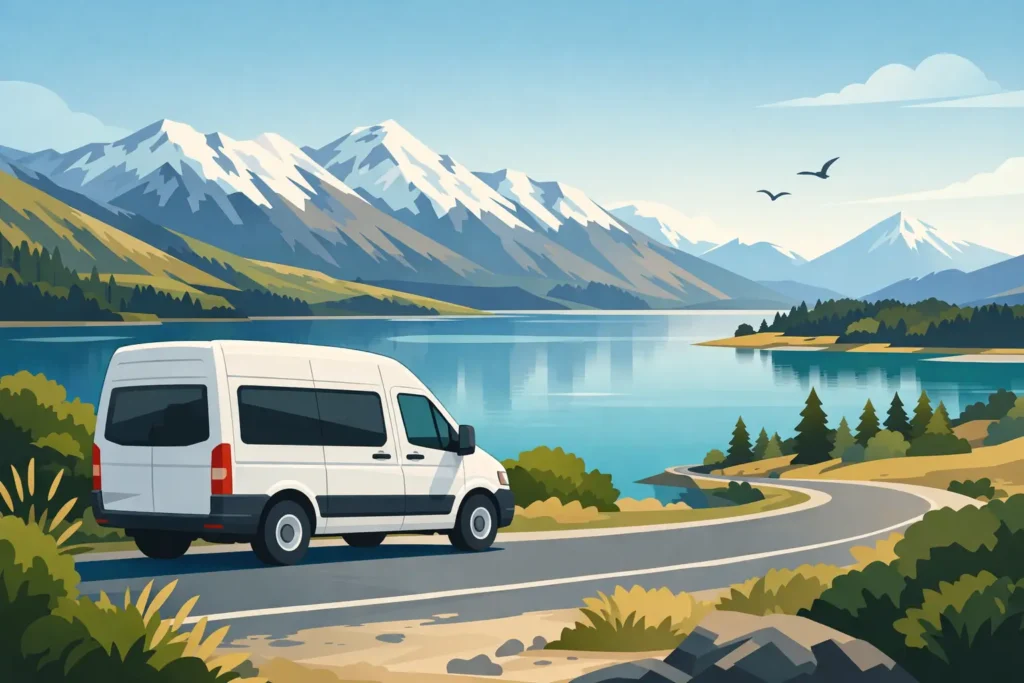
A van covered in rental decals changes the feel of a road trip. It can make every grocery stop, trailhead, and small-town cafe feel a little less like your own journey. A discreet campervan rental NZ travelers can use comfortably offers a different kind of freedom: a practical road-trip home that blends into everyday South Island travel without pretending to be something it is not.
For many couples and independent travelers, that matters more than a giant motorhome, a complicated control panel, or a long list of extras they will barely use. The best discreet campervan is simple to drive, easy to sleep in, and ready for the places you actually want to go.
What discreet campervan rental means in NZ
Discreet does not mean secret, and it definitely does not mean ignoring camping rules. It means choosing a van with a clean, low-key exterior rather than oversized graphics, loud fleet colors, and the obvious look of a large rental company. It should look at home in a Christchurch parking lot, outside a Wanaka bakery, or on the road through the Mackenzie Country.
That lower-profile setup has real benefits. Compact vans are less intimidating on narrow roads, easier to park in busy towns, and more comfortable for drivers who are new to driving on the left. They also tend to suit the way most people travel the South Island: moving often, stopping for a hike or swim, cooking a simple meal, then settling in for the night at a legitimate campsite.
There is a trade-off. A compact campervan will not give you the standing room, indoor bathroom, or sprawling lounge of a full-size motorhome. If you are traveling with children, carrying bikes and ski gear, or planning to spend several rainy days indoors, larger may be better. But for two people who want a straightforward base for the road, smaller usually means easier.
Why a low-key van suits the South Island
The South Island rewards travelers who can change plans. A clear morning in Lake Tekapo might send you toward Aoraki Mount Cook. A weather window on the West Coast may be the reason to leave early for Franz Josef. A compact campervan makes those decisions less of a production.
You can pull into a standard parking space, take a break without hunting for motorhome bays, and navigate fuel stops without feeling like you are piloting a bus. That matters on a trip that can include mountain passes, gravel access roads, winding coastal stretches, and busy holiday-town parking.
A discreet exterior also keeps the focus where it belongs: on the place you are visiting. You are not looking for attention. You are looking for a warm bed after a long walk, a working kitchen for breakfast, and a reliable vehicle that gets you to the next view.
Easy driving is part of the experience
New Zealand distances can look short on a map and still take longer than expected. Roads are scenic, but they are not built for rushing. Curves, one-lane bridges, changing weather, roadworks, and photo stops all add time.
A Nissan NV350-sized campervan is a sensible middle ground. It provides enough room for a proper sleeping setup and basic travel gear while remaining familiar enough for people used to driving a regular vehicle. That can make the first day after picking up in Christchurch feel far less stressful.
Before you leave, take time to learn the van’s dimensions, mirrors, fuel type, and basic systems. Ask questions at pickup. A good owner-operated rental business will talk you through the things that matter rather than hand you a generic brochure and send you on your way.
What you actually need for a good road trip
The best campervan layout is not the one with the most features. It is the one that works when you are tired, wet from a hike, and hungry at the end of the day. For most South Island trips, that means a comfortable bed, useful storage, a simple cooking area, ventilation, lighting, and the equipment required for responsible self-contained travel.
Look closely at the practical details. Can you access your clothes without unpacking the whole van? Is there space for food, jackets, and bags? Can you make coffee in the morning without moving bedding around for twenty minutes? Is the mattress genuinely comfortable enough for a week or two, not just a quick showroom test?
A hand-built campervan can be especially good at this because its design is shaped by real travel rather than a factory checklist. The layout may be more modest than a high-end motorhome, but thoughtful storage and a simple setup often make it more pleasant to live with.
At Kim Campers, the focus is on exactly that kind of practical, traveler-built setup: compact vans with the road-trip essentials, direct communication, and no heavy rental branding.
Do not confuse discreet with off-grid anywhere
A low-key van gives you flexibility, but it does not give you permission to camp wherever you can fit. New Zealand has clear rules around freedom camping, and those rules vary by location. Some areas require certified self-contained vehicles, while others prohibit overnight stays entirely or direct travelers to designated sites.
Plan to use holiday parks, Department of Conservation campgrounds, and approved overnight areas. Check local signs when you arrive, not just an old social media post or a map saved before your trip. Leave no trace, use proper waste facilities, and never assume a quiet roadside pull-off is an acceptable place to sleep.
This is not about making travel less spontaneous. It is how you protect the places that make the South Island worth visiting in the first place.
Choosing the right discreet campervan rental NZ travelers can trust
Start with the basics: clear daily pricing, what is included, insurance details, pickup location, and support if something goes wrong. A cheap headline rate can look less appealing once extra fees for bedding, kitchen gear, additional drivers, or mileage appear. Honest pricing saves time and awkward surprises.
Then consider the route you want. Christchurch is a practical starting point for a full South Island loop, with access to the mountains, east coast, and the ferry route north if your plans continue. Queenstown can work well for travelers beginning or ending around Central Otago, Fiordland, and the lower South Island. Your pickup point should reduce backtracking rather than force it.
It also helps to rent from people who understand how travelers use the vehicle. Direct owner contact is valuable when you need a real answer about road conditions, a feature in the van, or a sensible place to stock up before heading into a remote area. Personal service is not about being fancy. It is about getting useful information when you need it.
A few habits that make van travel easier
Keep your first driving day short. Arrive, get familiar with the campervan, buy groceries, and stay somewhere nearby rather than attempting a long mountain drive immediately after a flight. You will sleep better and start the trip more confidently.
Pack soft bags instead of hard suitcases if possible. They are much easier to store in a compact interior. Shop for a few days at a time, especially if your route includes smaller towns, and keep a simple backup meal in the van for late arrivals or rainy evenings.
Finally, leave room in the plan. The South Island is full of reasons to stay an extra night: a clear forecast, a good campground, a trail you did not expect to find, or a town that feels worth slowing down for. A discreet campervan is at its best when it supports that kind of travel – independent, respectful, and uncomplicated.
Choose a van that feels easy from the driver’s seat to bedtime, follow the local camping rules, and let the road decide a little of the rest.