
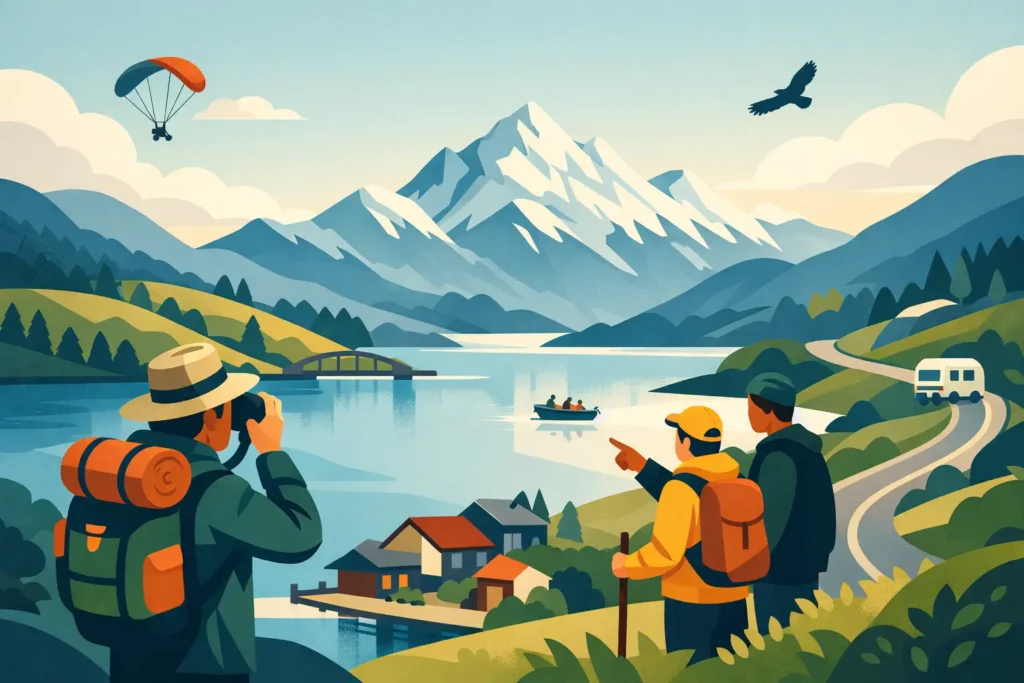
The best South Island days rarely start with a packed itinerary. They start with a weather check, a coffee from a small-town bakery, and enough room in the plan to stop when a river, trailhead, or handwritten roadside sign catches your eye. To travel like a local NZ visitor, think less about collecting famous stops and more about settling into the pace of the place.
New Zealand is easy to travel through, but it rewards people who leave space between destinations. The roads are slower than they look on a map, the weather can change quickly, and some of the best moments happen outside the big-name highlights. A compact campervan gives you the freedom to follow that rhythm without turning every night into a race for a hotel check-in.
Travel Like a Local NZ: Start With Fewer Plans
A two-week South Island trip can look short on paper. It is not. The distance from Christchurch to Queenstown may seem manageable, but mountain roads, photo stops, hikes, and changing conditions make travel days longer than most first-time visitors expect.
Instead of planning a new town every night, choose a loose route and stay two nights in places that feel good. This works especially well around Aoraki/Mount Cook, the West Coast, Wānaka, and the Catlins. A second night means you can hike in the morning, wait out rain, or take the road you skipped the day before without losing your next booking.
Locals do not treat every destination as a box to check. They take the scenic route when time allows, pull over safely when the light is good, and accept that a windy beach walk can be more memorable than another rushed attraction. The South Island has plenty of headline views. You do not need to force them all into one loop.
Let the Weather Choose the Day
This is one of the simplest ways to make your trip feel less touristy. Check the forecast each morning and be ready to switch plans. A clear day in Mount Cook is worth prioritizing. A wet day may be better for hot pools, museums, a long lunch, or driving toward the next region.
The key is not chasing perfect weather everywhere. It is using the good windows well. Keep a few options nearby rather than building a schedule that falls apart if clouds roll in.
Drive for the Road, Not Just the Destination
South Island driving is part of the trip. It is also where visitors can get caught out. Roads narrow, corners keep coming, one-lane bridges are common, and conditions change fast after dark or in rain. Give yourself more time than a navigation app suggests.
Driving a smaller, straightforward campervan helps. You can fit into ordinary parking spaces, handle winding roads with less stress, and avoid the feeling of piloting a large motorhome through a small town. That matters when you want to stop for groceries, find a quiet viewpoint, or pull into a campground without a complicated setup.
Fill up before remote stretches, especially on the West Coast, through Central Otago, and around the Mackenzie Country. Keep drinking water on hand and avoid relying on cell service in the backcountry. These are not dramatic precautions. They are simply how experienced road-trippers stay relaxed.
Also, do not drive tired. A late arrival is not a badge of honor. If you have been hiking, swimming, or driving all day, find a legal overnight option before the last light disappears. The next morning will be better for it.
Sleep Where You Add Something to the Place
Freedom camping is part of New Zealand road-trip culture, but it is not a free pass to park anywhere. Rules vary by area, and many popular spots are restricted or reserved for certified self-contained vehicles. Signs matter. So do local bylaws, nearby residents, and the basic fact that public places still need looking after.
The local approach is simple: use the right place, leave it cleaner than you found it, and do not make a campsite out of a parking lot. A paid campground is often the better call when you need a proper shower, laundry, kitchen, or a reliable place to recharge. Department of Conservation campgrounds can be a great middle ground – often simple, scenic, and more affordable than holiday parks.
Mixing your stays works well. Spend a few nights in basic campgrounds near trails and lakes, then take a night at a holiday park when you want a long shower, power, and laundry. You get the practical reset without losing the feeling of being out on the road.
A self-contained van makes this style of travel easier, but good habits matter more than the sticker on the window. Empty waste only at designated dump stations, use public toilets when available, and keep noise low. The places you want to enjoy are usually the places local communities are working hardest to protect.
Eat Like You Are Staying a While
You do not need restaurant reservations every night to eat well in the South Island. Start with local grocery stores, farmers markets when you find them, roadside fruit stands, bakeries, and small-town cafes. A warm pie after a cold walk, fresh bread for the next day, or fish and chips by the water can be exactly right.
Cooking a few meals in your van saves money, but it also gives the trip a different pace. Buy enough for two or three days rather than loading up for two weeks. Plans change, fridge space is limited, and you will want an excuse to stop in towns you had not planned on visiting.
Keep meals simple: eggs, vegetables, pasta, wraps, oatmeal, fruit, good coffee, and something easy for the first night after a long flight. Then leave room for the regional stuff. Try a local bakery in Geraldine, cheese or produce around the Mackenzie area, seafood on the coast, and a pub meal in a town where the forecast has told you to slow down.
Choose the Quieter Version of Famous Places
There is nothing wrong with seeing Milford Sound, Lake Tekapo, or Roys Peak. They are famous for a reason. But traveling locally means making small adjustments that change the experience.
Go early in the morning or later in the afternoon. Visit in shoulder season if your dates allow. Take a lesser-known walk after the main attraction. If a parking lot is full and the energy feels rushed, move on for a few hours. The South Island has enough lakes, beaches, tracks, and viewpoints that you do not need to stand in the busiest possible spot to have a great day.
For example, Wānaka does not have to mean only Roys Peak. Spend time by the lake, walk a shorter trail, swim if the weather is warm, or grab food and watch the town settle down in the evening. Near Queenstown, the big activities are there if you want them, but so are quieter valleys, local walks, and a slower day in nearby Arrowtown or Glenorchy.
The trade-off is that quieter places may have fewer services and less certainty. You may not have a café on every corner or a detailed plan for the afternoon. That is usually the point.
Talk to People, Then Use Your Judgment
The most useful road-trip advice often comes from the person behind the café counter, a campground host, or someone you meet on a trail. Ask where they would go if they had a free afternoon, which road is worth taking, or whether the weather is likely to clear.
Take recommendations seriously, but do not turn every tip into another obligation. A local may love a difficult mountain bike trail, a cold-water swim, or a remote gravel road that does not suit your confidence level. Be honest about your time, fitness, budget, and driving comfort.
This is where a small owner-led rental company can make a difference. At Kim Campers, the value is not a scripted handover or a giant fleet. It is getting practical advice from people who understand South Island travel and have built vans for the way travelers actually use them.
Leave Room for an Unplanned Day
The most local thing you can do is stop trying to optimize every hour. Keep one open day in your route, especially if you are traveling for a week or more. Use it for a weather window, a place you want to stay longer, a recovery day, or a road you heard about only after arriving.
New Zealand’s South Island is not asking you to rush through it. Get the basics right, drive with patience, camp responsibly, and stay curious enough to take the turn that was not in the original plan. That is usually where the trip becomes yours.