
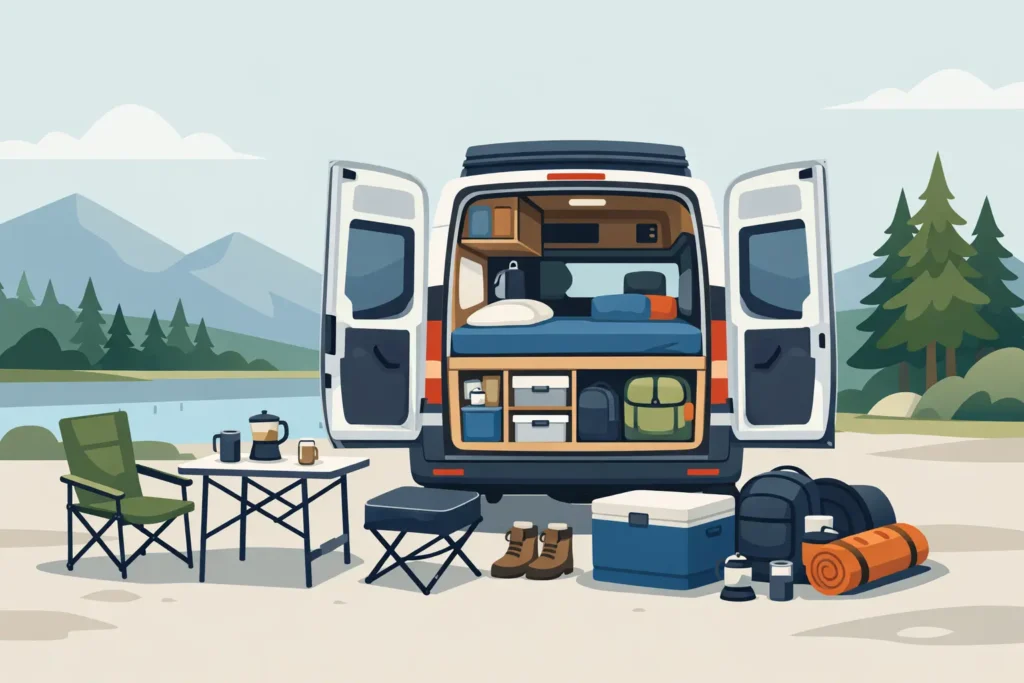
A compact van can take you from Christchurch to a quiet lake in the Mackenzie Country, up to a trailhead near Aoraki, and down the West Coast without feeling like you are driving a bus. But what fits in a compact campervan is a fair question, especially when two people are planning a week or more on the South Island road.
The honest answer is: more than you might expect, as long as you pack for the trip you are actually taking. A compact campervan has room for two adults to sleep comfortably, cook simple meals, store everyday gear, and carry the layers New Zealand weather demands. It does not have room for every outfit, a full-size hard-shell suitcase each, and enough equipment to stock a small apartment.
That trade-off is part of the point. A smaller van is easier to drive, simpler to park, less conspicuous at a campground, and better suited to narrow roads and changing plans. Good packing makes that freedom feel easy rather than cramped.
What fits in a compact campervan for two people
In a well-designed compact campervan, the sleeping area is the center of the layout. During the day, it may work as seating and a place to relax. At night, it becomes a proper bed for two. Bedding, pillows, and basic kitchen equipment are typically part of the van setup, so those are not things you need to squeeze into your own luggage.
Your personal items need to share the remaining storage space. For a couple, that usually means clothing for a week or two, toiletries, food for several days, rain jackets, hiking shoes, towels, charging cables, and a few small extras such as books, a camera, or a pack of cards. There should also be room for a daypack each, which is far more useful on the South Island than a big suitcase once you are on the road.
A compact Nissan NV350-based van, like the practical builds at Kim Campers, is designed around this reality. The goal is not to imitate a large motorhome. It is to give two travelers a dry, comfortable base with the essentials close at hand.
Luggage: soft bags win every time
The easiest way to make a small van feel spacious is to bring soft-sided luggage. Duffel bags, backpacks, or compressible travel bags can be tucked into cabinets, under a bed, or into open storage areas. Once unpacked, they can fold down or sit out of the way.
Hard-shell suitcases are the usual problem. They are awkward, noisy on bumpy roads, and keep their rigid shape even when nearly empty. If you already own one, it may still fit, but it will take up valuable room that could be used for food or outdoor gear.
For most couples, one medium soft bag each plus a daypack is a comfortable limit. Traveling for three weeks does not mean packing three weeks of clothes. Most campgrounds have laundry facilities, and doing one wash midway through a trip is easier than living around oversized bags every day.
Clothing for South Island conditions
New Zealand weather is known for changing quickly. You can be warm in a T-shirt at a lakeside campsite, then need a puffy jacket and waterproof shell an hour later. Pack layers, not duplicates.
A practical setup is a small selection of quick-drying tops, two pairs of pants or shorts depending on the season, warm mid-layers, underwear and socks for about a week, a rain jacket, and one warmer outer layer. Add swimwear for hot pools, beaches, or a lakeside dip. Hiking boots or trail shoes are worth bringing if walking is a priority, but try not to bring multiple bulky pairs of footwear.
If you are visiting in winter, the van can still be a great way to travel, but cold-weather gear takes more space. Bring what keeps you comfortable outside, then be more disciplined with casual clothing. A compact campervan can handle a winter road trip well when the packing list stays focused.
Food, cooking gear, and everyday supplies
Compact campervan kitchens are made for straightforward road-trip meals. Think coffee in the morning, eggs or oats for breakfast, sandwiches at a trailhead, pasta or stir-fry for dinner. You can carry cookware, plates, cups, utensils, and a basic cooking setup without filling the entire living space.
What you should not expect is pantry space for two weeks of groceries. Buy a few days of food at a time and restock as you move through towns. This keeps the fridge and cabinets organized, reduces waste, and gives you a good reason to stop at local stores along the way.
Choose ingredients that work across several meals. A bag of rice, pasta, tortillas, canned beans, vegetables, fruit, coffee, and a few snacks can go a long way. Keep loose food in one designated bin or bag so it does not migrate around the van every time you turn a corner.
Water storage is another place where real-world expectations matter. A campervan can carry enough water for normal cooking and washing between stops, but it is not an endless supply. Refill when you can and use it thoughtfully. The same goes for gray water and waste systems if your van is set up for self-contained travel.
The gear that earns its place
Outdoor gear is where packing needs a little judgment. The South Island rewards travelers who bring hiking gear, a rain layer, sunscreen, insect repellent, and a reusable water bottle. Those items earn their space because you will use them often.
Larger gear depends on your plans. Skis, snowboards, climbing equipment, fishing gear, surfboards, or mountain bikes can be possible, but they change the equation. A compact van can carry some specialist equipment, yet every large item affects how easily you can access the bed, kitchen, and daily essentials.
Before booking or packing, ask a simple question: will we use this at least three times? If the answer is no, consider renting it locally or leaving it behind. This is especially true for bulky sports gear that only serves one day of a longer trip.
Camping chairs, a small table, and basic outdoor items are useful when the weather is good, but they need a home when it is wet. Keep frequently used gear accessible and keep muddy boots contained in a bag or tray. A little organization prevents the interior from becoming a pile of damp jackets and trail dust.
What does not fit well in a compact campervan
Compact travel gets frustrating when travelers pack for every possible version of themselves. Large suitcases, several pairs of fashion shoes, full-size coolers, excess toiletries, and multiple bulky jackets are all hard to live with in a small space.
It is also worth being realistic about traveling with children. Some compact campervans are built specifically for two adults, and a cozy layout for a couple is not automatically suitable for a family. If you need child seats, extra beds, a stroller, or a large amount of family gear, a bigger vehicle may be the better call.
Likewise, a compact campervan is not the best fit for travelers who need to work full-time from the road with multiple monitors, office chairs, and extensive camera equipment. You can answer emails, charge devices, and edit a few photos, but the layout is made for travel first.
How to keep the van comfortable after day three
The first day is easy. The real test is whether the van still feels calm after several wet hikes, grocery stops, and early starts. Give everything a place from the beginning.
Keep clothes in packing cubes or separate bags. Store dirty laundry apart from clean items. Put your daily layers, toiletries, and chargers where you can reach them without unpacking the whole van. At night, move only the few things that need to shift for sleep, rather than rebuilding the interior from scratch.
Try a five-minute reset before bed: wash dishes, put food away, hang up wet gear where it can dry, and clear the bed area. It is a small habit, but it makes waking up on a rainy morning much more pleasant.
The best compact campervan trips are not about fitting more stuff into less space. They are about bringing the right things and leaving room for the view, the spontaneous detour, and an unhurried cup of coffee outside. Pack light enough that the van stays easy to live in, and it will take care of the rest.