
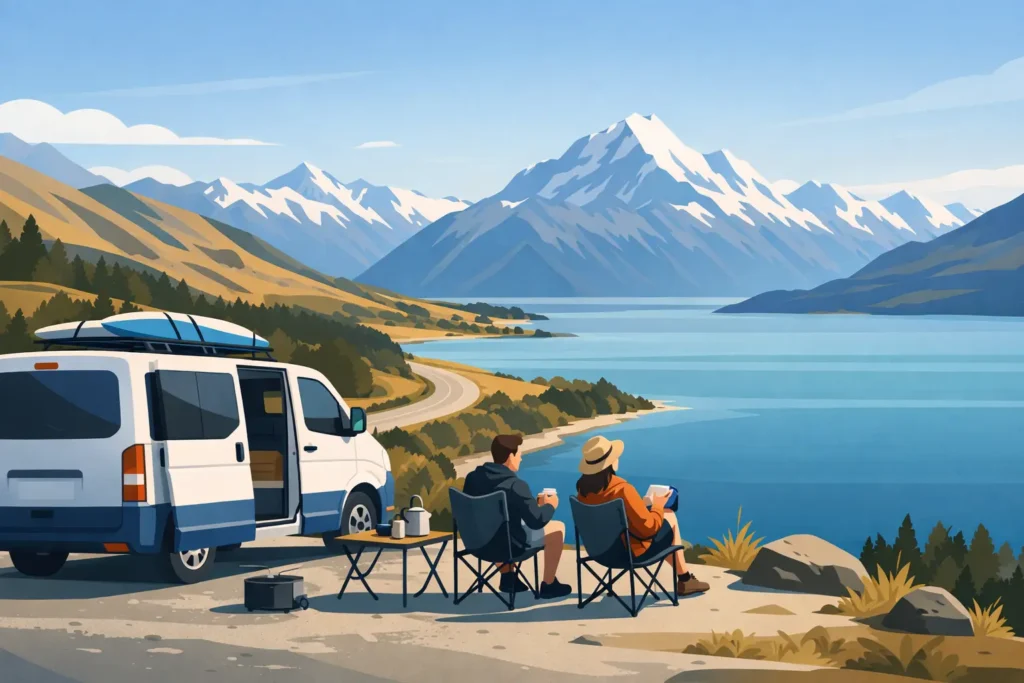
A good South Island road trip is not about seeing every famous viewpoint before sunset. It is about waking up somewhere quiet, making coffee without packing and unpacking a hotel room, and having enough time to take the track that was not in your original plan. This couple campervan road trip example follows a 10-day loop from Christchurch with realistic driving days, room for weather changes, and plenty of time to enjoy the places between the big names.
It suits couples who want an active trip without treating the road like a checklist. You will cover a lot of ground, but not so much that every afternoon disappears behind the wheel.
Before You Leave Christchurch
Pick up your campervan, get familiar with the basics, and do a proper grocery shop before heading inland. Christchurch has the best range of supermarkets and supplies, and stocking up here saves time in smaller towns where options can be limited or more expensive.
Keep your first night close enough that a delayed flight or pickup does not throw off the whole trip. A compact campervan is easy to drive on New Zealand roads, but the left side of the road, narrow bridges, and changing weather can take a day to feel natural. Start calmly.
Day 1: Christchurch to Lake Tekapo
The drive to Lake Tekapo takes around three hours without long stops, though it is worth allowing more. The scenery gets bigger as you leave the Canterbury Plains behind, and a bakery stop in Geraldine is an easy first-road-trip tradition.
Arrive with time for a walk along the lake and a simple dinner in the van. If the sky is clear, stay up for stargazing. Tekapo is well known for dark skies, but the best part is simply being outside after the crowds have thinned.
Day 2: Lake Tekapo to Aoraki/Mount Cook
This is a short driving day, which is exactly why it works. The road along Lake Pukaki is one of those drives where you will want to pull over more than once. Blue water, wide valleys, and Aoraki/Mount Cook ahead make the hour-long trip feel longer in a good way.
Spend the afternoon on the Hooker Valley Track if conditions allow. It is a popular walk for good reason: it gives you a lot of mountain scenery without requiring technical hiking experience. Bring layers even in summer. Alpine weather can turn cold quickly.
Stay nearby for the night rather than rushing onward. The landscape feels different in the early morning, before day visitors arrive.
Day 3: Aoraki/Mount Cook to Wanaka
Leave the mountains and head south through Twizel, Omarama, and the Lindis Pass toward Wanaka. Expect roughly three and a half to four hours of driving, plus stops. The road changes from alpine country to dry tussock land and then into Central Otago, so it never feels like one long straight transfer.
Wanaka is a useful place to reset. Restock food, do laundry if needed, and spend the late afternoon by the lake. If you have energy, take the short climb to the Mount Iron lookout. If you do not, save your legs. A campervan trip is better when every day does not need to be your biggest day.
The Middle of This Couple Campervan Road Trip Example
The next few days are where many couples try to do too much. Wanaka, Queenstown, Glenorchy, and Fiordland all deserve time. The smart move is choosing one or two experiences in each place rather than trying to squeeze in every hike, jet boat, winery, and scenic drive.
Day 4: Wanaka Your Way
Stay in Wanaka for a full day. This is your weather buffer and your chance to choose an activity based on how you feel.
For a bigger challenge, hike Roys Peak or Isthmus Peak, checking conditions and starting early. For something more relaxed, drive out to the Blue Pools area, explore the lakefront, or find a quiet spot for a swim. A rest day does not mean doing nothing. It means not spending four hours moving your bed from one town to another.
Day 5: Wanaka to Queenstown
The direct route is short, but take the scenic Crown Range Road if conditions are good and you are comfortable with steep, winding roads. It delivers wide views over the Southern Alps and drops you into Queenstown from above.
Queenstown can be busy, especially in peak season, so plan your overnight stop before arriving. Once parked, keep it simple. Walk the waterfront, cook dinner, or head out for one meal if that is part of the plan. You do not need to spend heavily here to enjoy the place.
Day 6: Queenstown to Glenorchy or Te Anau
This day depends on your priorities. If you want more mountain scenery and short walks, spend the morning driving to Glenorchy and exploring the lakeshore before heading toward Te Anau. If Milford Sound is a major goal, skip the detour and give yourself an easier run to Te Anau.
The drive from Queenstown to Te Anau is around two hours. It is not dramatic at every turn, but it is a welcome change of pace after Queenstown. Te Anau is the practical base for the next day, with supplies, fuel, and a quieter feel.
Day 7: Milford Sound Day Trip
Leave early. The road from Te Anau to Milford Sound is part of the experience, and there are enough stops to make a slow morning disappear. Waterfalls, short tracks, mirror lakes, and mountain valleys all sit close to the road.
A cruise on Milford Sound is worth considering if conditions are safe. Rain does not ruin this day. In fact, rain creates waterfalls everywhere and gives the fiord its full atmosphere. The trade-off is visibility on higher viewpoints, so stay flexible and focus on what the weather is giving you.
Return to Te Anau for the night. Do not attempt a long onward drive after Milford. You will be tired, and the road deserves your full attention.
Heading Back East Without Rushing
Day 8: Te Anau to the Catlins
This is the longest driving day in the itinerary, so get moving early and keep your expectations realistic. The route toward the Catlins takes you through Southland and into a quieter, wilder part of the island. It is less polished than Queenstown or Tekapo, and that is the appeal.
Choose one or two stops rather than chasing every waterfall and beach. Curio Bay, Cathedral Caves when tides permit, and Nugget Point are all strong options. Wildlife sightings are possible, but give animals space and do not block access roads for a photo.
Day 9: Catlins to Dunedin
Take the coast slowly toward Dunedin. The drive is manageable, leaving time for a lighthouse stop, a beach walk, or simply a long breakfast in the van. Dunedin gives you a different side of the South Island: old stone buildings, good food, and a proper city break after several nights in smaller places.
If you prefer nature to town, spend more time on the Otago Peninsula. Just remember that narrow roads and wildlife areas call for patience, not speed.
Day 10: Dunedin to Christchurch
The final drive north is around four and a half to five hours, depending on your route and stops. Break it up at Oamaru or Timaru, refuel before returning the van, and leave enough time for the handover.
This is not the day to add a major detour. A relaxed final morning and a clean, organized return feel much better than arriving late after one last rushed attraction.
What Makes This Route Work for Two People
A compact van is a practical choice for this kind of trip. It is easier to park, cheaper to fuel than a large motorhome, and less stressful on steep roads or in busy towns. The trade-off is limited indoor space, which matters on wet days. Couples do best when they pack lightly, keep gear organized, and accept that some evenings are for reading, cooking, and listening to rain on the roof.
Plan only the parts that need planning: your campervan, peak-season overnight stops, Milford Sound activities, and any must-do hike. Leave the rest open. New Zealand weather changes quickly, and the freedom to swap a mountain day for a lake day is one of the best reasons to travel by van.
Kim Campers is built around that simple kind of travel – practical vehicles, straightforward support, and enough comfort to stay out longer without carrying a house on your back.
The best version of this trip will not match this route exactly. It will be the one where you notice a quiet campsite, change plans for a clear forecast, and give yourselves permission to stay one more night when a place feels right.