
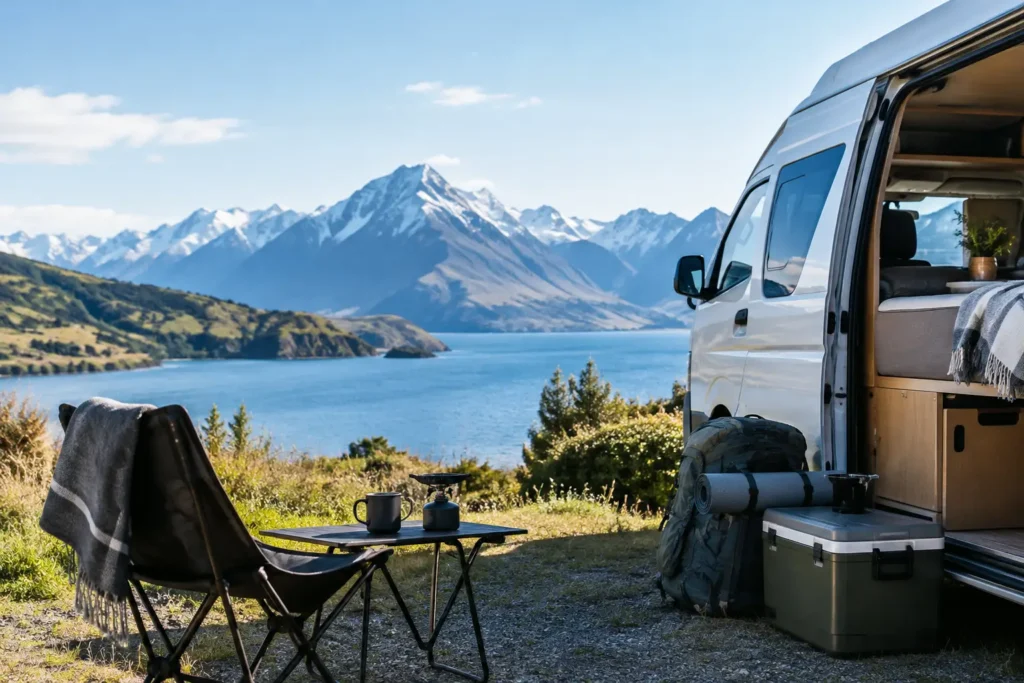
A South Island road trip can give you four seasons before lunch. You might wake beside a frosty lake near Tekapo, walk into a warm afternoon in Wanaka, then park up with rain tapping on the roof that night. The best campervan travel gear is not about filling every storage pocket. It is about bringing the few things that keep you warm, dry, fed, charged, and ready to change plans.
A compact campervan already covers the big basics: somewhere to sleep, a place to cook, and a simple way to move between the places that make the South Island worth the drive. Your personal gear should support that setup, not turn it into a cluttered gear shed.
Start with layers, not a giant suitcase
New Zealand weather is changeable, particularly in alpine areas and along the West Coast. A heavy winter coat is useful in the right season, but it is less flexible than a simple layering system you can adjust throughout the day.
Pack a warm mid-layer, a waterproof outer shell, a couple of quick-drying base layers, and a beanie. Add comfortable pants, sturdy walking shoes, and sandals or slip-on shoes for around the van. Even in summer, evenings can be cold once the sun drops behind the mountains.
Avoid bringing a different outfit for every day. Laundromats are easy enough to find in larger towns, and a smaller bag makes life much easier when you are accessing storage beneath the bed. Soft duffel bags work better than hard-shell suitcases in a campervan because they can be folded down or tucked into awkward spaces.
Bring footwear that matches your actual plans
For most travelers, one pair of broken-in trail shoes or light hiking boots is enough. They should be comfortable on gravel tracks, wet grass, and uneven campground ground. If you are planning a serious multi-day hike, pack for that specific trip. Otherwise, skip the oversized hiking boots that spend two weeks in the back of the van.
Flip-flops are useful for campground showers and lake swims, but do not rely on them as your only casual shoes. Wet, cold evenings are much more pleasant when you have dry socks and something warmer to put on your feet.
The best campervan travel gear earns its space
Small items can make a big difference when you are living out of a van. The useful ones solve ordinary problems without adding bulk or requiring a complicated setup.
A headlamp is one of the best examples. It makes it easier to find your way to a restroom after dark, cook outside, organize gear, or read without draining your phone battery. Choose one with a red-light setting if possible. It is less harsh inside the van and kinder to anyone trying to sleep.
A compact power bank is equally worthwhile. Campervans have charging options, but a power bank gives you a backup for long days away from the vehicle, hikes, or a night when everyone wants to charge a phone at once. Bring the right cable for your devices and keep both together in a small pouch.
Other compact items that consistently prove useful include:
- A reusable water bottle for drives, hikes, and campground refills
- A quick-dry microfiber towel for swimming, showers, or unexpected rain
- A small daypack for trail snacks, layers, and water
- A simple first-aid kit with blister pads, pain relief, and personal medication
- A dry bag or waterproof pouch for electronics on wet days
None of this is glamorous. That is exactly the point. Good road-trip gear quietly saves the day.
Do not overpack kitchen gear
If you are renting a road-trip-ready campervan, the kitchen essentials should already be there. Bringing your own pots, knives, plates, or a huge coffee setup usually creates more mess than value. Check what your van includes before you fly, then pack around it.
There are a few personal additions worth considering. A reusable coffee cup is handy for early starts. A small insulated food container can work for leftovers or a packed lunch. If you have dietary requirements, a few favorite spices or tea bags can make simple meals feel less repetitive.
For groceries, buy little and often. South Island roads reward spontaneity, and fresh food takes up space quickly in a compact fridge. Plan two or three dinners at a time rather than stocking up for a full week. You will waste less food and have more freedom to change direction when a local tip, clear weather window, or quiet campground catches your attention.
A cooler bag helps on long drive days
A fold-flat insulated bag is useful if you are planning a long drive between towns or want to take lunch to a trailhead. It is not essential, especially if your van has a fridge, but it can keep snacks, fruit, and drinks organized rather than rolling around with the rest of your supplies.
Gear for wet weather is gear for a better trip
Rain is part of the South Island experience, especially around Fiordland and the West Coast. Waiting for perfect weather can mean missing places that are still spectacular in cloud, mist, or a proper downpour. The goal is to stay comfortable enough to get out and see them.
A waterproof jacket with a hood is non-negotiable. An umbrella can be useful around town but is often awkward on exposed tracks and useless in strong wind. Waterproof pants are worth packing if you expect to hike regularly in shoulder season or visit Milford Sound when the forecast is wet.
Keep a small bag for damp gear so it does not spread through the living area. A few reusable plastic-free storage bags or a lightweight laundry bag are enough. At the end of the day, air things out whenever the weather allows. In a compact van, wet clothes left in a heap will make the whole space feel damp fast.
Make sleep and downtime easier
Road trips are not all trailheads and scenic pullovers. Some days are best spent reading while rain moves through, cooking slowly at a campground, or getting to bed early before an alpine sunrise. A couple of comfort items make those quieter hours better.
Bring a book, downloaded podcasts, or offline maps and playlists. Cell service can be patchy outside towns, and you do not want your evening entertainment to depend on a signal. Download anything important before you leave Christchurch or Queenstown.
Earplugs and an eye mask are small but smart additions. Campgrounds can be social, road noise happens, and sunrise arrives early in summer. They take almost no room and can turn an average night into a decent one.
If you like swimming, pack swimwear year-round. A cold lake dip is optional, but hot pools, hotel spas, and coastal beaches can appear when you least expect them. A lightweight sarong or quick-dry towel does double duty as a changing cover and extra blanket.
Navigation and safety should stay simple
Use your phone for navigation, but do not treat it as your only plan. Download offline maps before you head into remote areas, and carry a vehicle charger plus your power bank. A paper road map is not essential, though some travelers enjoy having one for the bigger-picture view that a phone screen misses.
Check road conditions and the forecast before committing to mountain passes, remote campsites, or longer hikes. Weather can close roads, snow can affect high routes, and a drive that looks short on a map may take longer than expected. Leave room in the itinerary for detours and slow travel.
For hiking, tell someone where you are going and when you expect to return. Bring water, food, warm layers, and rain protection even for a short walk if conditions look unsettled. The South Island is friendly to independent travel, but it still rewards basic preparation.
Leave room for the trip itself
The best campervan travel gear is often the gear you decide not to bring. You do not need a giant camera kit to remember Aoraki/Mount Cook, a portable office for every rainy day, or enough clothes to avoid laundry for a month. You need a setup that lets you move easily, find what you need, and feel at home in a small space.
At Kim Campers, the idea is simple: a practical van, direct support, and less rental-company fuss between you and the road. Pack light, bring warm layers, and leave a little empty space for groceries, wet boots, and the occasional roadside bakery stop. Those are the things that tend to make a road trip feel real.