
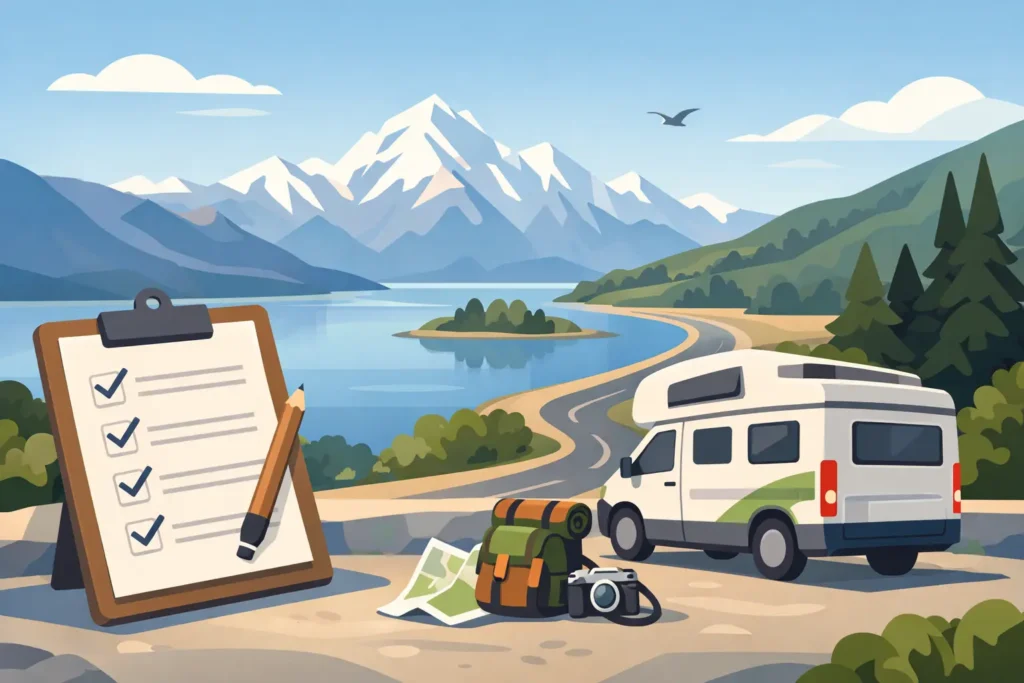
You notice bad packing choices fast in a campervan. It usually happens on night one, when the temperature drops, the phone battery is dead, and the one thing you need is buried under a pile of stuff you never should have brought. A good campervan checklist for road trip planning fixes that before you leave, especially in New Zealand’s South Island where weather, road conditions, and distances can shift quickly.
The trick is not packing more. It’s packing better. In a compact campervan, every item needs a job. If it keeps you warm, helps you cook, makes driving easier, or saves you from buying overpriced basics on the road, bring it. If it only feels useful in theory, leave it at home.
What a campervan checklist for road trip packing should actually do
A decent checklist is not just a list of objects. It should help you move through the trip without friction. That means fewer last-minute store runs, less clutter in the van, and fewer moments where simple tasks become annoying because you forgot one small thing.
For South Island travel, your checklist also needs to reflect how people actually road trip here. You might wake up in warm sun near the coast, then drive into cold alpine weather by afternoon. You may spend a few nights in towns, then head somewhere more remote where supplies are limited and mobile coverage gets patchy. Packing for that kind of trip is less about quantity and more about range.
Start with clothing that works in layers
Most overpacking starts with clothes. People imagine a different outfit for every day, then realize halfway through the trip they keep wearing the same warm fleece and weatherproof jacket. Bring clothing that layers well and dries reasonably fast.
For most South Island trips, that means a base layer, a couple of T-shirts, something warm like a fleece or sweater, a rain jacket, comfortable pants, and enough socks and underwear to get between laundry stops. If you’re traveling in cooler months or heading inland, thermal layers are worth the space. They do more than extra bulky clothes and take up less room.
Shoes are another place where simple wins. One comfortable pair for daily use and one pair for hikes or wet conditions is usually enough. Three or four pairs just eat storage. If you’re bringing sandals, make sure they’re actually useful for campsites or showers, not just an optimistic add-on.
Keep your documents and admin sorted from day one
This is the part nobody wants to think about until they’re standing in a parking lot searching for a passport or driver’s license. Keep all essential documents together in one small pouch or folder that stays easy to reach.
You’ll want your driver’s license, passport if relevant, payment card, travel insurance details, and any booking confirmations you may need. Even if most things live on your phone, don’t rely on that alone. A dead battery or weak signal is enough to turn a simple check-in into a headache.
It also helps to have a rough plan for fuel stops, groceries, and overnight parking before setting out on longer drives. Not every place has late opening hours, and some smaller South Island towns run on local timing rather than city convenience.
Food and kitchen basics make a bigger difference than people expect
A campervan trip gets expensive fast if you buy every coffee, breakfast, and snack on the road. You do not need a full mobile pantry, but you do need a smart food setup.
Start with basics that are easy to store and easy to turn into meals. Think pasta, rice, wraps, oats, coffee or tea, cooking oil, salt, pepper, and a few reliable snacks. Then add fresh food in smaller amounts so it stays manageable. Buying like you live in a house for the week is how van fridges get chaotic.
The best approach is to stock enough for simple breakfasts, a few easy dinners, and road snacks, then top up as you go. That gives you flexibility without overloading the van. It also means less food waste, which matters when storage is limited.
Don’t forget the small stuff that saves you every day: a reusable water bottle, dish soap, a sponge, paper towels, trash bags, and a lighter if your cooking setup needs one. These are the items people skip, then end up searching for in an unfamiliar store at the worst time.
Toiletries should be compact, not ambitious
A road trip is not the time to bring your whole bathroom shelf. A simple wash bag with travel-sized essentials is enough for most people. Toothbrush, toothpaste, deodorant, medications, sunscreen, lip balm, body wash, and a quick-dry towel cover the basics.
If you wear contacts, bring backups. If you take prescription medication, carry more than exactly what you need. If you have any item you use every day without thinking, put it on the list now rather than trusting memory later.
In New Zealand, sunscreen matters even when it feels cool or cloudy. That catches a lot of visitors out. The sun can be stronger than expected, especially if you’re outside for long drives, hikes, or time near the water.
Tech and power – bring less, but bring the right things
Most travelers do not need much tech in a campervan. What they do need is a reliable way to keep key devices charged and organized. Your phone, charging cable, power bank, camera if you use one, and any adapter you need should all stay in one place.
A power bank is more useful than a second gadget you may or may not use. So is an offline map setup. There are plenty of beautiful parts of the South Island where service gets weak, and navigation is not something you want to improvise.
If you’re working remotely during part of the trip, be realistic about space and power. A compact van can absolutely support a flexible travel style, but it helps to keep your setup simple. Laptop, charger, headphones, done. If your work gear starts taking over the sleeping area, you’ve packed for the wrong trip.
Safety and comfort are where good planning pays off
You do not need to treat every road trip like an expedition, but a few practical items make a real difference. A basic first aid kit is worth having, even if you only use it for blisters, headaches, or small cuts. A flashlight or headlamp is another easy win, especially for campsites after dark.
Beyond that, think in terms of small comfort items that solve real problems. Earplugs if you’re a light sleeper. A warm hat for cold mornings. Sunglasses for long drives. A small daypack for hikes or quick stops. These aren’t dramatic purchases, but they improve the trip more than fancy extras do.
If you’re renting a compact van, use the space the way it was meant to work. Soft bags are usually easier than hard suitcases. They fit better, store more neatly, and don’t turn into awkward boxes you have to move every night. That one choice alone can make a small van feel much more usable.
What not to pack in a campervan
This matters just as much as what to bring. Avoid bulky “just in case” items that duplicate things you won’t really use. Too many clothes, large suitcases, kitchen gadgets, extra shoes, and full-size toiletries all create clutter fast.
The same goes for trip planning in general. A tight, overbooked itinerary often works badly in the South Island. Weather changes, scenic stops take longer than expected, and some of the best parts of van travel happen when you leave room to adjust. A simple van setup works best with a bit of flexibility.
That’s part of why many travelers prefer a straightforward rental over a huge motorhome loaded with features they never asked for. If the van is practical, easy to drive, and already set up for real travel, your checklist becomes simpler too. That no-fuss approach is a big part of what makes Kim Campers appealing for people who want to travel light and keep things personal.
A simple road-trip packing mindset
The best campervan trips usually feel easy once they start. Not because everything is perfect, but because the essentials are covered and the van stays functional. You can cook, sleep, drive, and stop without constantly reorganizing your life in a tiny space.
So before you leave, run through your campervan checklist for road trip prep one more time and ask one question about every item: will this make the trip easier, warmer, safer, or more comfortable? If the answer is no, it probably stays behind.
Pack for the road you’re actually taking, not the fantasy version of it. You’ll have more space, less stress, and a better trip because of it.