
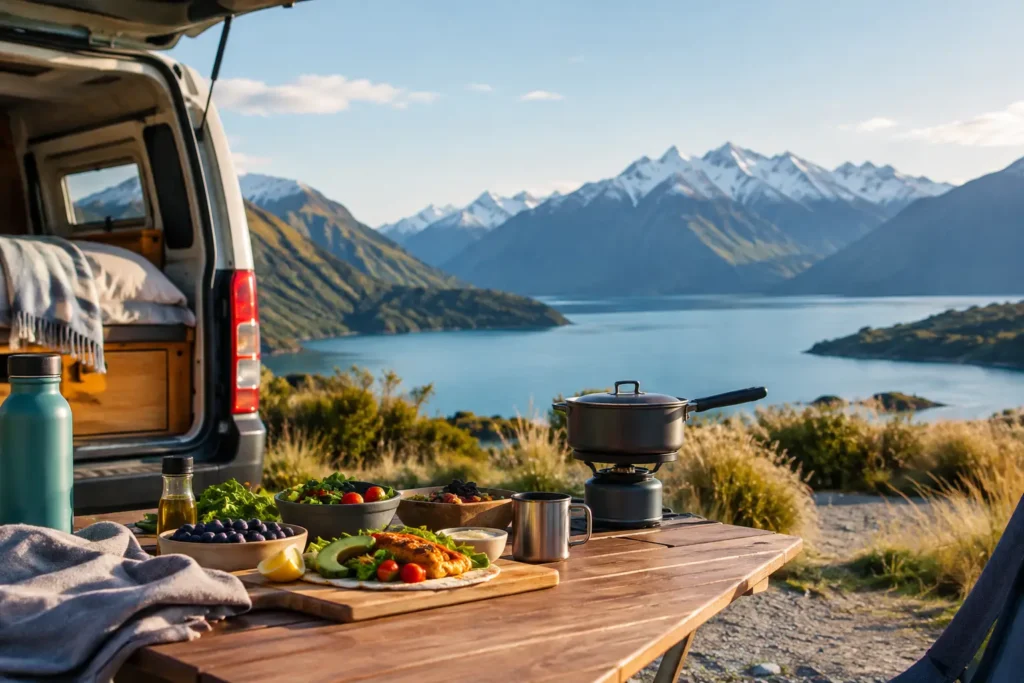
A good road-trip dinner should not require a full grocery cart, three pans, or an hour of cleanup while the wind is picking up outside. The best campervan meal ideas are simple enough for a compact kitchen, filling enough after a hike, and flexible enough to make with whatever looks good at the next supermarket.
New Zealand’s South Island is made for eating outside when the weather plays nice, then cooking something warm inside when it does not. Build your meals around a few reliable basics, buy fresh food as you go, and leave room in the plan for a bakery pie, a roadside fruit stand, or fish and chips by the water.
Start with a realistic campervan food plan
A compact van gives you freedom, but it also gives you limited fridge space, bench space, and dishwashing water. That is not a problem if you shop and cook accordingly. Plan for two or three days of food at a time rather than buying for a full two-week trip on day one.
Choose ingredients that can appear in more than one meal. A bag of spinach can go into eggs, wraps, pasta, and curry. Tortillas work for breakfast burritos, lunch wraps, and quick quesadillas. One block of cheese makes almost everything better and keeps well when stored properly.
It also helps to separate food into three groups: things that must stay cold, shelf-stable backups, and fresh produce that can handle a few days on the road. Keep your cold items practical. You do not need six sauces and a giant tub of yogurt taking up the space where tomorrow’s dinner should go.
Campervan meal ideas for easy breakfasts
Breakfast should get you moving without turning the first hour of the day into kitchen duty. If you are leaving a freedom camping spot early or chasing clear weather at a trailhead, fast is better than fancy.
Overnight oats with fruit and nuts
Oats, milk or a dairy-free alternative, chia seeds, cinnamon, and a spoonful of peanut butter make a solid no-cook breakfast. Add banana, apple, berries, or whatever fruit is in season. Make it the night before in a lidded container, and there is almost nothing to clean in the morning.
Eggs, spinach, and toast
This is the reliable option for a cooler morning near the mountains. Scramble eggs with spinach, tomatoes, and cheese, then pile them onto toast. If you have leftover cooked potatoes or roast vegetables, add those too. It is quick, warm, and far more satisfying than another cereal bar.
Breakfast quesadillas
Fill a tortilla with scrambled eggs, cheese, beans, and any leftover vegetables, then toast it in a dry pan. It works especially well when you need breakfast that can be eaten in the passenger seat after you have parked up safely for the day.
Yogurt bowls when you have fridge space
Greek yogurt, granola, fruit, and seeds require no cooking at all. This is a good first-day meal when the fridge is fullest. Just do not rely on it for every morning if you are traveling in warm weather and shopping less often.
Lunches that do not slow down the day
Lunch is usually a stop between walks, viewpoints, and drives. Keep it portable and make enough for two people without much fuss.
Wraps are hard to beat. Use hummus, cheese, salad greens, avocado, tuna, chicken, or leftover dinner ingredients. They travel better than overstuffed sandwiches and do not get crushed as easily in a daypack.
For a more filling option, make a couscous salad. Couscous only needs hot water, so it saves fuel and time. Mix it with chickpeas, chopped cucumber, tomatoes, feta, lemon juice, and olive oil. It can be eaten cold, which matters when your best lunch spot is a beach or a lake pull-off with no cooking setup.
A supermarket rotisserie chicken can carry several meals if you use it well. Have it with bread and salad for lunch, add it to wraps the next day, then stir the remaining pieces into pasta or fried rice. This is the kind of practical shortcut that makes van travel easier.
One-pan dinners worth making after a long day
The strongest campervan meal ideas earn their place because they use one pot or one pan, make little mess, and do not depend on exact measurements. You are cooking on the road, not filming a cooking show.
Tomato pasta with sausage and greens
Cook pasta in one pot, drain it, and set it aside. In the same pot, cook sliced sausage or plant-based sausage with onion and garlic, then add canned tomatoes, spinach, and the pasta. Finish with cheese and black pepper. It is fast, forgiving, and easy to scale for two hungry people.
Coconut chickpea curry
Cook onion, garlic, curry powder, and any vegetables you have on hand. Add a can of chickpeas and coconut milk, then let it simmer until the vegetables are tender. Serve it over rice, couscous, or flatbread. This is a useful meal to keep in mind near the end of a grocery cycle because most of the ingredients are shelf-stable.
Fried rice with leftover vegetables
Use pre-cooked rice, leftover rice, or microwave rice packets if you want the easiest version. Fry onion, carrot, broccoli, peas, corn, or whatever needs using up, then add rice, eggs, soy sauce, and a little sesame oil if you have it. It is not meant to be perfect. It is meant to clear the fridge and taste good.
Loaded baked potatoes
Potatoes are cheap, filling, and travel well. Cook them in a covered pan with a small splash of water, turning occasionally until soft, or bake them if your setup allows. Split them open and top with beans, cheese, salsa, avocado, and yogurt. For a cold, wet night, this is hard to beat.
Pesto gnocchi with vegetables
Shelf-stable gnocchi cooks quickly and takes up little space. Pan-fry it with zucchini, mushrooms, cherry tomatoes, and pesto, then add spinach at the end. It feels like a proper dinner without requiring a long ingredient list.
Taco bowls
Brown ground beef, turkey, or a plant-based alternative with taco seasoning. Add black beans, corn, salsa, rice, and cheese. If you have lettuce or avocado, great. If not, it still works. Taco bowls are particularly useful when tortillas have already been used up in lunches.
Keep a small pantry that does real work
You do not need a packed cupboard. A few dependable items will rescue a meal when you arrive late, a store is closed, or rain changes the plan. Keep pasta, rice or couscous, oats, canned beans, canned tomatoes, peanut butter, cooking oil, salt, pepper, coffee or tea, and a few spices.
Add one or two flavor boosters that make basic ingredients less repetitive. Soy sauce, hot sauce, pesto, curry paste, or a good seasoning blend all earn their space. Pick what you genuinely use. A van is not the place to carry twelve half-empty bottles.
Fresh produce should be chosen for durability. Apples, carrots, onions, potatoes, cabbage, and bell peppers usually hold up better than delicate berries and bagged salad. Buy fragile produce when you know you will eat it that day or the next.
Shop around the route, not all at once
Christchurch and Queenstown are easy places to stock up before heading into smaller towns, but there is no prize for carrying every meal from the start. Larger supermarkets are common in the main centers, while smaller towns can have fewer choices and higher prices.
Check your route before you head toward more remote areas such as Aoraki/Mount Cook, the Catlins, or the West Coast. Buy enough food for a couple of dinners before a long stretch, especially if you expect to arrive after stores close. Then restock when you return to a larger town.
Treat local food as part of the trip, not a failure of meal planning. Pick up fresh bread from a bakery, Bluff oysters when they are in season, stone fruit in Central Otago, or smoked salmon near the lakes. Cooking most meals keeps costs sensible, while the occasional local stop makes the trip feel less routine.
Make cleanup part of the recipe
The difference between an easy van dinner and an annoying one is often the washing up. Cook in one pan when possible, use a bowl as a mixing bowl and serving bowl, and wipe pans before food dries on them. Keep a small container for food scraps so they do not end up scattered through the van.
Use water carefully, particularly when you are away from serviced campgrounds. Wash dishes well away from lakes, rivers, and drains, and follow local campground rules. If the weather is awful, choose a meal that needs one pot and call it a win.
A simple setup is one reason a smaller, thoughtfully built van works so well. Kim Campers are designed for the kind of travel where you can make a real meal, clean up quickly, and get back outside before the light disappears.
The best meals on the road are rarely complicated. Cook something warm after a cold swim, eat breakfast with the doors open on a clear morning, and keep enough flexibility to let the South Island decide what is for dinner.