
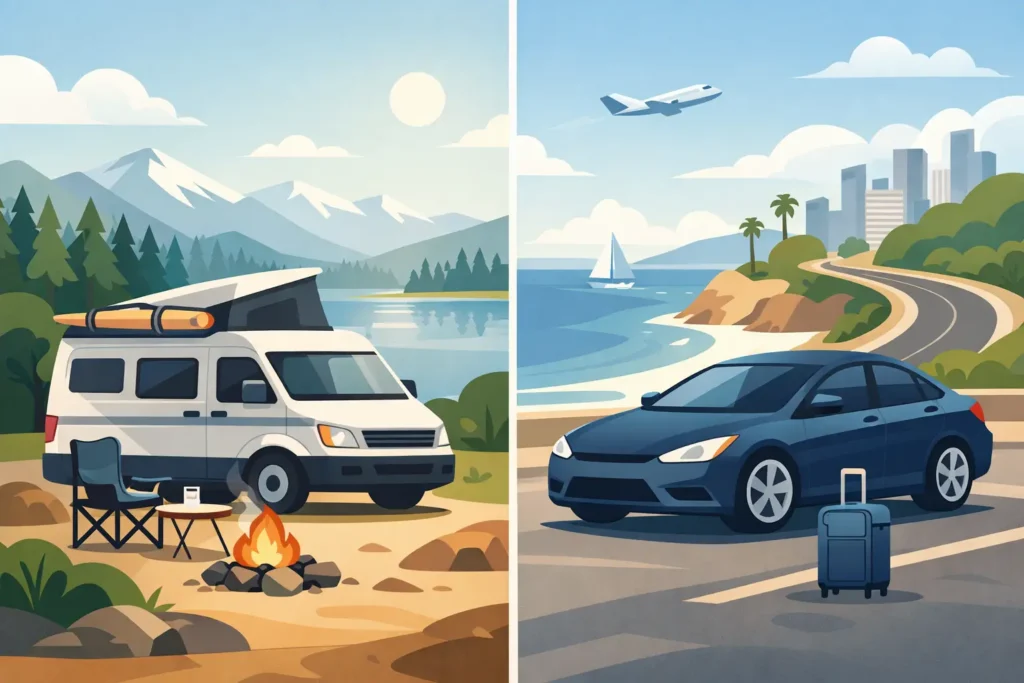
A South Island road trip can change quickly. You might wake up under clear skies in Lake Tekapo, spend the afternoon in rain near Franz Josef, and decide at dinner that tomorrow should be a hike instead of a long drive. Your vehicle affects how easily you can follow that feeling.
The campervan vs rental car decision is not really about choosing the “best” vehicle. It is about choosing the kind of trip you want. A rental car keeps things simple if you have a fixed route and accommodations booked. A campervan gives you your transport and sleeping setup in one compact, road-ready base.
For couples and independent travelers exploring New Zealand’s South Island, the better value often comes down to how you plan to sleep, how much flexibility you want, and how comfortable you are living a little more simply.
Campervan vs Rental Car: The Real Difference
A rental car gets you from place to place. You still need to arrange somewhere to sleep, eat, shower, and store your gear every night. That is perfectly workable, especially for travelers who enjoy hotels, private rooms, or a planned itinerary.
A campervan makes the road trip itself part of the accommodation plan. Your bed, basic cooking gear, and everyday essentials travel with you. Instead of checking in and out every afternoon, you can settle into a campground, make dinner, and wake up close to where you want to be.
That difference matters most on the South Island. Distances are manageable, but the scenery regularly makes you want to stop. A quiet lake, a good walking track, or a change in weather can turn a planned driving day into somewhere worth staying longer.
Neither option needs to be complicated. The question is whether you would rather book your nights in advance or carry your setup with you.
When a Rental Car Makes More Sense
A rental car is a strong choice when your trip is short, your route is fixed, or you already know you want conventional accommodation. If you are flying into Christchurch on a Friday, spending two nights in the city, then heading to a wedding in Queenstown, a car and booked rooms may be the most straightforward plan.
It can also work well for travelers who want full-service hotels, prefer eating out each night, or do not want to think about campground facilities. A car is generally easier to park in busy town centers and hotel lots, and it can feel familiar if you are not used to driving a larger vehicle.
For a family or group, a car can be practical too, though the accommodation math changes. Two people splitting a campervan and campsite is one calculation. Four people needing multiple rooms is another.
The trade-off is that a car rental rate is only one line of the budget. Add nightly lodging, restaurant meals, baggage transfers if needed, and the occasional last-minute room when plans change. During busy periods, a lack of availability can shape your route more than you expect.
Why a Campervan Works So Well on the South Island
The South Island rewards travelers who leave some space in the plan. Weather moves through fast. A trail may be closed, a road may be slower than expected, or you may find a place that deserves two nights instead of one.
With a campervan, changing direction does not automatically mean rebooking accommodation. You still need to use legal overnight options and check campground availability, but you have far more control over where the day ends. Holiday parks are useful when you want showers, laundry, a powered site, or a proper reset. Department of Conservation campgrounds can put you closer to beaches, forests, and trailheads, often with a more basic setup.
A compact campervan also cuts down the daily shuffle. You are not unpacking into a room, repacking in the morning, then figuring out where to find breakfast before you start driving. Make coffee, organize your day, and get moving.
That does not mean every night is glamorous. Rainy evenings in a small van require patience, and campground bathrooms vary. But for travelers who value freedom over polished hotel comforts, the trade is usually worth it.
You are paying for a bed as well as a vehicle
The biggest comparison is not campervan daily rate versus rental car daily rate. It is campervan plus campsite versus rental car plus accommodation.
A rental car may look cheaper at checkout, particularly for a single day. But a room in popular places such as Queenstown, Wanaka, Tekapo, or along the West Coast can quickly become the larger expense. Camping fees are often lower than a hotel or motel room, though costs vary widely by location, season, and facilities.
Food is another practical factor. A campervan gives you the option to cook simple meals. You do not have to cook every night, and South Island bakeries, cafes, and fish and chip shops are part of the trip. Still, being able to make breakfast or dinner when you are far from town helps keep spending under control.
A good budget leaves room for fuel, campground fees, groceries, activities, and the occasional paid stay. Campervan travel is not automatically cheaper in every scenario, but it can be better value over a multi-day or multi-week trip because it combines expenses that a car trip keeps separate.
Compact matters more than oversized
Some travelers hear “campervan” and picture a large motorhome. That is not the only way to travel. A compact van is easier to drive on winding roads, fit into ordinary parking spaces, and take through small towns without feeling like you are piloting a bus.
The South Island has plenty of narrow sections, one-lane bridges, steep access roads, and viewpoints where parking can be limited. You do not need a huge vehicle to have a comfortable road trip. In fact, a simple layout is often easier to live with: a proper bed, space for your bags, basic cooking equipment, and a setup that does not require a manual every time you stop.
This is the thinking behind Kim Campers: hand-built, compact vans with the practical essentials, without the oversized motorhome price or big-fleet branding.
The Trade-Offs to Be Honest About
A campervan offers flexibility, but it asks for a little more participation. You will need to refill water, keep the interior tidy, use designated waste facilities correctly, and think ahead about overnight parking. Self-contained travel is not permission to sleep anywhere. Respecting local rules, landowners, and other travelers is part of doing it properly.
A rental car gives you more separation between driving and resting. After a wet hike, you can return to a heated room, take a long shower, and leave the cooking to someone else. If that is what makes a vacation feel like a vacation, it is a valid reason to choose a car.
Weather is worth considering too. In summer, campervan life feels easy when evenings are long and campgrounds are lively. In the shoulder seasons, the van can still be a great choice, but you will appreciate warm layers, a flexible attitude, and an occasional holiday park night. In winter, road conditions, daylight, and your route deserve extra care regardless of which vehicle you choose.
Choose Based on Your Travel Style
Choose a rental car if you want a short, accommodation-led trip with fixed bookings, regular restaurant meals, and the comfort of a private room each night. It is also a practical option if your plans center on cities, events, or places where you do not expect to spend much time outdoors.
Choose a campervan if you want to move at your own pace, wake up closer to nature, and avoid building the whole trip around check-in times. It is especially well suited to couples traveling for a week or more, people who enjoy simple camp cooking, and anyone who would rather spend on experiences than nightly rooms.
Before booking either one, sketch out a realistic route. Do not try to drive Christchurch to Queenstown, then Milford Sound, then the West Coast in a few rushed days. The South Island looks compact on a map, but roads are slower, stops are frequent, and that is part of the point.
Leave a few nights unplanned. Keep your driving days reasonable. When the forecast clears over Aoraki Mount Cook or a quiet campsite feels better than the next destination, give yourself permission to stay.