
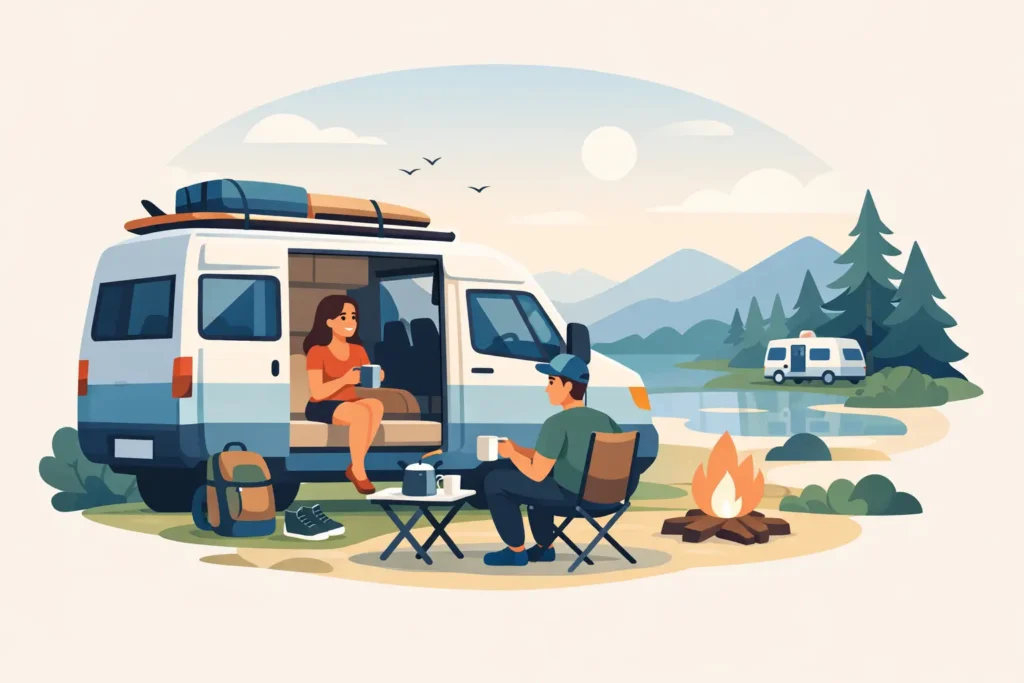
The real test is not whether two people can physically sleep in a van. It’s whether they can share a small space for days or weeks without getting on each other’s nerves, running out of storage, or turning every rainy day into a minor crisis. So, can two people live in campervan life full-time or for a long road trip? Yes, absolutely – but comfort depends less on square footage and more on layout, routine, and how you travel together.
For a couple exploring New Zealand’s South Island, a compact campervan can work surprisingly well. You’re usually outside more than inside. You’re hiking, driving scenic roads, cooking with a view, or stopping in small towns. The van becomes your base, not your entire world. That’s a big difference, and it’s why many two-person setups feel much better on the road than they look on paper.
Can two people live in campervan comfort?
They can, but “comfortable” means different things to different travelers. If you expect apartment-level space, a compact campervan will feel tight fast. If you want a simple, easy-to-drive setup that covers the essentials and lets you move freely, it can be exactly right.
Most couples do well in a campervan when they agree on the basics before the trip starts. How much gear are you bringing? Do you both wake up early? Are you cooking most meals or eating out often? Do you need room to work remotely, or are you using the van only as a travel base? Those details matter more than glossy photos.
A good two-person van doesn’t need to be huge. It needs to be practical. A bed that’s easy to set up, storage that doesn’t require unpacking everything to find one jacket, and a layout that lets one person move around without climbing over the other all make a real difference.
What makes a two-person campervan actually livable
The first thing is the bed. If two people are sleeping poorly, the whole trip feels harder than it should. A decent mattress and enough width to sleep without fighting for space matter more than fancy extras. A compact van can still work well if the sleeping setup feels reliable and quick.
The second thing is storage. Two people can live in a campervan quite happily when every item has a place. They usually struggle when bags are piled on the bed, food is mixed with clothing, and cooking gear has to be unpacked every time you stop. Simple storage beats a complicated interior every time.
The third thing is ease of use. This gets overlooked. If making coffee means moving three bags, folding a seat, and opening two compartments, small frustrations build quickly. The best van setups are the ones that make everyday tasks feel easy. That’s especially true on longer trips.
Ventilation is another big one. Two people sleeping in a compact space create warmth, condensation, and stale air fast. Good airflow keeps the van more comfortable overnight and helps a lot in mixed weather.
Finally, there’s driveability. A large motorhome can sound appealing until you’re dealing with narrow roads, parking, fuel costs, and the stress of maneuvering somewhere unfamiliar. For many couples, a smaller campervan feels more livable simply because it’s easier to use every day.
The biggest challenges when two people live in a campervan
Space is the obvious one, but it’s not the only one. Privacy can be hard to come by, especially if one person wants quiet time and the other wants to talk, cook, or reorganize the van. You don’t get many separate rooms in van life. Sometimes you don’t get any.
Bad weather is another challenge. A compact van feels fine when the doors are open and the trip is active. On a cold, wet day, it shrinks quickly. If you’re both stuck inside for hours, the layout either works or it doesn’t.
Clutter also becomes a bigger problem than most first-time renters expect. In a hotel room, clutter is annoying. In a campervan, it gets in the way of sleeping, cooking, getting dressed, and finding things. Couples who travel light usually have a better time.
Then there’s decision fatigue. Where to park, when to cook, when to shower, what to do if plans change – all of that lands on you. Some people love the freedom. Others find it tiring. That doesn’t mean van travel is wrong for them, only that it works best when both travelers are flexible.
How couples make campervan life work
The couples who enjoy van travel most are not always the ones with the biggest budget or fanciest setup. They’re usually the ones who keep things simple and communicate well.
Pack less than you think you need. Bring clothing that layers well, shoes you’ll actually wear, and gear that earns its space. If something only works for one very specific scenario, leave it behind.
Give each person a defined storage area. It sounds small, but it avoids a lot of friction. One shelf, one bag zone, one section for daily essentials – whatever the setup is, make it clear.
Have a loose routine. That might mean one person handles breakfast while the other packs bedding, or one sorts the route while the other tidies up. You don’t need military precision. You just want the basics to feel smooth.
It also helps to spend time outside the van on purpose. Go for a walk after driving. Sit at a picnic table instead of staying inside. Use the van as a base, not a box. This is a big reason compact campervans work so well for South Island trips. The landscape does most of the heavy lifting.
Is a compact campervan enough for long trips?
Usually, yes. For a one- to three-week road trip, a well-designed compact van is often the sweet spot. You get a proper travel setup without the cost, bulk, and fuel use of something much larger.
Longer trips depend more on mindset. If you enjoy moving often, spending time outdoors, and keeping your setup simple, a compact van can feel great for weeks. If you need personal space, lots of gear, or room to work inside every day, you may want something bigger.
This is where honest expectations matter. A compact van is not pretending to be a luxury apartment on wheels. It’s a practical base for people who want to travel well, sleep comfortably, and keep the road trip flexible. For many couples, that’s more than enough.
Why New Zealand is well suited to two-person van travel
New Zealand, especially the South Island, makes campervan travel feel natural. The drives are scenic, distances are manageable, and the whole experience rewards flexibility. You can wake up near the mountains, stop by a lake in the afternoon, and end the day somewhere quiet without needing to repack every night.
That kind of travel suits a two-person campervan setup. You’re not trying to recreate home. You’re moving through great places with what you need close at hand. A smaller van also feels less intimidating on local roads and easier to park in towns or at trailheads.
This is one reason businesses like Kim Campers focus on simple, hand-built vans instead of oversized, overcomplicated rentals. For two people who want a practical road-trip setup, the basics done well usually beat extra bulk.
Who should think twice before living in a campervan together
Not every pair is going to love it, and that’s fine. If one person needs a lot of personal space, if you both overpack, or if you’re expecting the van to feel spacious in bad weather, it may be a rough fit.
The same goes for travelers planning to spend long hours working inside the van. Two adults, two laptops, limited elbow room, and changing weather can make the space feel smaller than expected. It’s doable, but not ideal for everyone.
And if your relationship is already strained, a campervan won’t hide that. Small-space travel tends to make good teamwork better and bad habits more obvious.
So, can two people live in campervan life and enjoy it?
Yes – and a lot of couples do. The key is choosing a van that is designed well, packing with some discipline, and treating the van as a smart base for travel rather than a full-size living room. When the setup is practical and your expectations are realistic, two people can travel comfortably, cheaply, and with a lot more freedom than they’d get from fixed accommodation.
If you’re the kind of traveler who values flexibility, simple routines, and waking up closer to where you actually want to be, a campervan makes a lot of sense. The best trips usually come from keeping it simple, leaving some room for weather and whim, and picking a setup that works in the real world – not just in photos.