
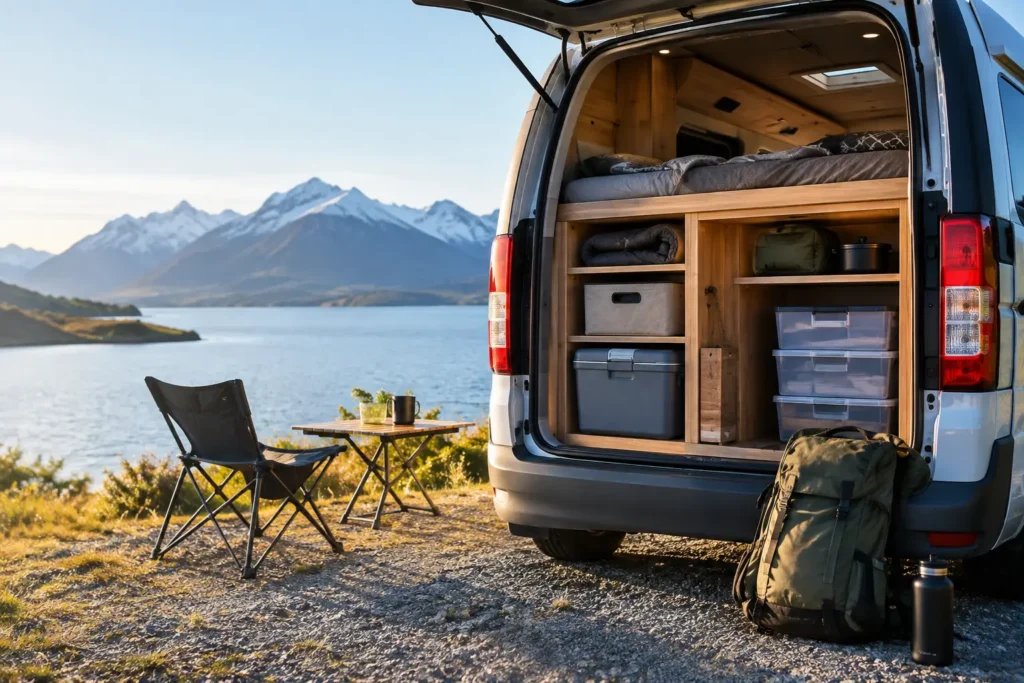
A compact van feels brilliant when you are parked beside a lake in the Mackenzie Country or waking up before the crowds on the West Coast. It feels much less brilliant when wet jackets, snack wrappers, charging cables, and three days of laundry have taken over the bed. These compact campervan storage tips are about keeping the small stuff under control, so the van stays easy to live in from Christchurch to Queenstown and everywhere between.
Start by packing for the van you actually have
A compact campervan gives you what you need for a real road trip, not a spare room on wheels. That is part of the appeal. It is easier to drive, simpler to park, and less expensive to run than a large motorhome. The trade-off is that every item needs to earn its place.
Before you leave, spread everything out and make three groups: daily-use gear, occasional gear, and things you are bringing just in case. The last group is usually where space disappears. If you have not used something on past trips, leave it behind unless it is genuine safety equipment.
1. Pack in soft bags, not hard suitcases
Hard-shell suitcases are awkward in a campervan. They do not compress, rarely fit neatly in narrow spaces, and quickly become something you have to move every night. Use soft duffel bags, packing cubes, or backpacks instead. Once empty, they can fold down or tuck into a cabinet.
For a South Island trip, one medium soft bag per person is usually enough. You can do laundry on the road, and fewer clothes mean less time digging through piles to find a clean shirt.
2. Build outfits around repeat wear
New Zealand weather can change quickly, especially around alpine areas and the coast. The answer is layers, not a separate outfit for every possible plan. Bring clothes that work together: a warm mid-layer, waterproof outer layer, comfortable walking shoes, and a small rotation of quick-drying basics.
A jacket you wear daily should not live in a storage compartment. Give it an easy-access spot near the door, ideally on a hook or in a designated tote. That keeps muddy or damp gear away from bedding and food.
3. Keep one bag for active gear
Hiking gear, swimwear, towels, sunscreen, and insect repellent are often used in the same part of the day. Keep them together in one waterproof bag or plastic bin. When you stop at a trailhead or a swimming spot, you can grab one item rather than unpack half the van.
This is especially useful after a wet walk. Put damp shoes in a separate bag or tray before they come inside. A small van dries slowly when everything is wet.
Compact campervan storage tips for daily life
The best storage setup is not the one that holds the most. It is the one that lets you find what you need without turning the van upside down. Think in zones: sleep, cook, clothes, and outdoor gear.
4. Give every item a home
Loose items create the feeling that a campervan is too small. Sunglasses, headlamps, keys, passports, and cables need one regular home, not a new spot every time you stop.
Use a small pouch or tray for valuables and essentials. Keep it in the same place whenever you drive or sleep. This simple habit also makes a rushed morning departure much easier.
5. Store by frequency, not by category
It is tempting to organize everything perfectly by type, but access matters more than labels. Coffee, mugs, breakfast food, and a lighter should be close together if you use them every morning. Spare food, extra batteries, and less-used cookware can go farther back.
The rule is straightforward: daily gear stays at hand height or near the door, while backup gear can live in deeper storage. You will avoid the frustrating routine of pulling out five things to reach one.
6. Use packing cubes as drawers
Campervan cabinets do not always behave like bedroom drawers, particularly on uneven ground. Packing cubes give clothing structure and stop it from spreading through a compartment. One cube for underwear and socks, one for tops, and one for warmer layers is enough for most couples.
Choose cubes with different colors or labels so each person knows which is theirs. That may sound minor, but it cuts down the small daily messes that make close quarters feel crowded.
7. Keep the kitchen lean
Road-trip meals do not need a full home kitchen. Buy food in smaller quantities, especially fresh produce, and restock every few days. Large bulk purchases can save a little money but take up valuable room, spoil before you use them, and make cabinets harder to manage.
Decant snacks into reusable bags or small containers where possible. Cardboard packaging is bulky, and it tends to collapse and scatter in transit. Keep one clear food zone so you know what needs to be eaten before the next grocery stop.
8. Make a spot for trash before it becomes a problem
Trash is one of the fastest ways to make a clean van feel chaotic. Use a small lined container or reusable bag near the kitchen area, then empty it whenever you fuel up, shop, or visit a campground.
Separate recycling if practical, but do not let half-empty bottles and cans pile up inside. New Zealand’s roads are too good for carrying your own clutter from one viewpoint to the next.
9. Protect the bed space
In a compact layout, the bed is often also your lounge, reading spot, and place to sort gear. Treat it as a clean zone. Keep clothes, shoes, and food off it during the day, even if that means taking an extra minute to put things away.
A simple rule helps: if an item is not used while lying down, it should not be stored on the bed. Keeping the sleeping area clear makes the evening setup feel like a break, rather than another chore.
Use the outside of the day to reset the inside
You do not need to maintain a perfect van. You do need a quick reset routine. Five minutes each morning and evening makes a major difference over a week or two on the road.
10. Reset before driving
Before starting the engine, put away all loose items, close cabinets, and return cooking gear to its place. New Zealand roads include plenty of winding sections, gravel access roads, and steep approaches to trailheads. Anything left on a bench will eventually slide, rattle, or fall.
This is also the moment to move daypacks, jackets, and water bottles where they are easy to reach at your next stop.
11. Dry gear whenever the weather allows
South Island weather rewards travelers who take every dry window they can get. Air out towels, rain jackets, and shoes during a sunny lunch stop or while you are parked at a campground. Do not seal damp gear into a packed compartment overnight if you can avoid it.
If conditions stay wet, prioritize drying the gear you need tomorrow. Everything else can wait. Comfort beats perfect organization when the rain has been following you for two days.
12. Do a small restock check every few days
Every few days, take ten minutes to check food, water, laundry, toiletries, and trash. This prevents a big cleanup from landing on your final day. It also helps you avoid buying duplicates because something was buried at the back of a cabinet.
Kim Campers is built around practical travel, and that is the point here: a simple system beats clever storage gadgets you will never use. Bring less, put it back after use, and leave some room for the things you pick up along the way.
Make space for the trip, not just your belongings
A tidy campervan is not about being overly organized. It gives you more freedom to pull over for a walk, cook dinner without clearing a counter first, and settle in quickly when the weather turns. Pack light enough that the van can still feel like a place to travel in, not just a place to store your stuff.