
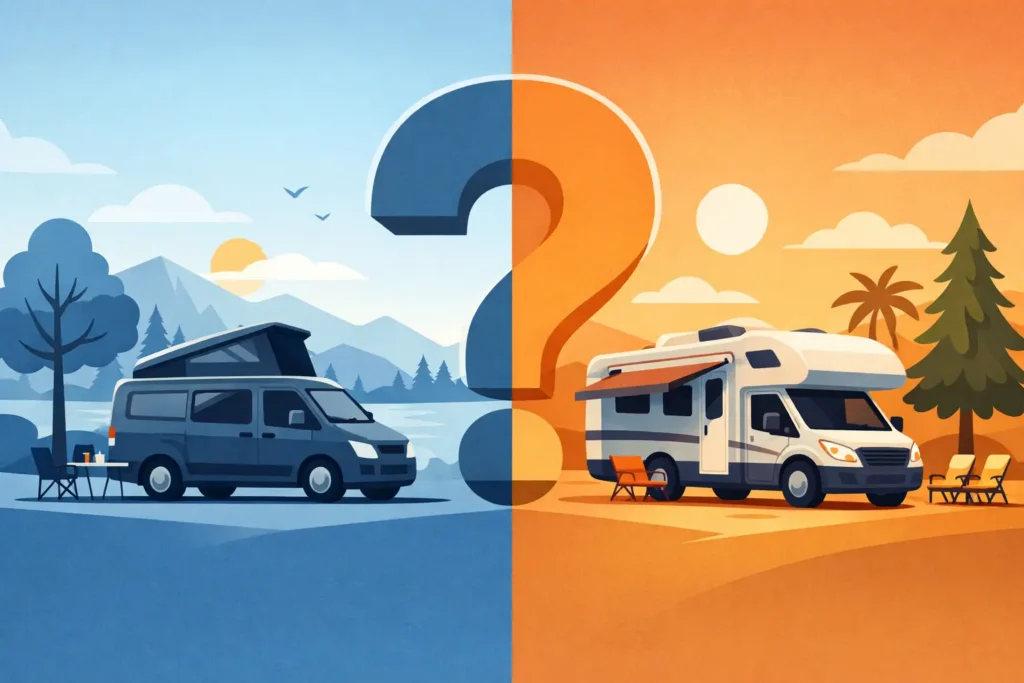
You feel the difference on the first narrow road. A compact van or motorhome might look like the same kind of trip on paper, but once you are driving through the South Island, parking in a small town, or pulling into a lakeside campsite after dark, the choice becomes very real. One feels easy and flexible. The other can feel roomy, but sometimes heavier in every sense – on the road, at the pump, and on your budget.
If you are planning a New Zealand road trip, this is less about which option is better in general and more about which one actually fits how you want to travel. For a lot of independent travelers and couples, smaller usually wins. But not always.
Compact van or motorhome: what is the real difference?
A compact camper van is built around a standard van body, usually with a simple bed setup, storage, basic cooking gear, and the essentials for life on the road. It is closer to driving a regular vehicle, which matters more than people think when you are covering long distances or dealing with winding roads.
A motorhome is larger and more house-like. You usually get more interior height, more built-in features, and more separation between cooking, sleeping, and storage areas. That extra space can be great if you plan to spend long stretches inside or want a more traditional RV experience.
The trade-off is that a motorhome asks more from you. It is bigger to drive, harder to park, usually more expensive to rent, and often less relaxed in places where roads, lots, and campsites are tighter.
For South Island travel, that difference matters. A lot of the best days on the road involve small stops, scenic pullovers, quiet campgrounds, and places where being in a discreet, easy-to-handle van feels like a real advantage.
Why many travelers choose a compact van over a motorhome
The biggest reason is simple – ease. A compact van is less intimidating from the first hour behind the wheel. If you are flying in from the US and adjusting to driving on the left, that matters. A van that feels manageable lets you settle into the trip faster instead of spending the first few days gripping the steering wheel.
Parking is another big one. Towns like Wanaka, Tekapo, or smaller coastal stops are much easier to enjoy when you can slide into a normal parking space or pull over without turning it into a whole maneuver. With a larger motorhome, even coffee stops can become logistical.
There is also the question of cost. Bigger vehicles generally cost more to rent and more to fuel. If you are trying to stretch your trip by a few extra days, that difference adds up quickly. Many travelers would rather put that money toward better campsites, activities, or simply more time on the road.
Then there is the feeling of the trip itself. A compact van tends to suit travelers who want freedom without fuss. You sleep in it, cook simple meals, keep your gear organized, and get moving. It is practical in a good way. Not stripped back, just honest.
When a motorhome makes more sense
A motorhome can absolutely be the right choice, especially if space is your top priority. If you are traveling with kids, carrying a lot of gear, or planning a trip in colder months where you expect to spend more time indoors, the extra room can be worth it.
Some people also just prefer standing height and a more separate living setup. If the idea of converting a bed, working around compact storage, or cooking in a smaller space sounds frustrating rather than fun, a motorhome may suit you better.
The key is being honest about what kind of discomfort actually affects your trip. Some travelers are perfectly happy with a smaller footprint if it means easier driving and lower costs. Others know they need more room to feel settled. Neither choice is wrong. It depends on whether your priority is mobility or interior space.
Driving the South Island changes the equation
This is where the compact van really starts to make sense for a lot of people. New Zealand’s South Island is full of scenic roads, but scenic does not always mean wide, flat, and easy. You get mountain passes, weather changes, gravel access roads, one-lane bridges, busy holiday towns, and plenty of stops you decide on in the moment.
A smaller van gives you more confidence in those situations. It is easier to reverse, easier to park, and easier to take into everyday places without feeling like you are bringing a bus. That flexibility changes the rhythm of a road trip. You stop more often, take more detours, and generally travel with less friction.
That matters just as much as the sleeping setup. A road trip is not only about where you sleep. It is about every hour between campgrounds too.
Cost, comfort, and what you actually use
A lot of travelers pay for space and features they barely touch. That is common with larger motorhomes. A bigger kitchen, extra seating area, or more built-in systems can sound appealing during booking, but on the road, many people end up using only the basics.
If your routine is simple, a compact van often covers what you really need. A comfortable bed, practical storage, cooking gear, and enough setup to stay self-contained for multi-day travel will take you a long way. You do not need a rolling apartment to have a good trip.
That said, there is a line. If the van is too cramped, badly laid out, or overloaded with gimmicks, it stops being practical. Good compact design matters. The best vans feel intentional, not squeezed together as an afterthought.
That is part of why smaller, traveler-built setups often work so well. They tend to focus on the things that make daily life easier instead of packing in every possible feature.
Compact van or motorhome for couples
For couples, this decision usually comes down to travel style more than budget. If you both pack light, like being outdoors, and want a trip that feels flexible, a compact van is usually the sweet spot. It is enough space to sleep well, cook, and move through the country without turning every stop into an operation.
If one of you needs more personal space, wants a full indoor living area, or is nervous about bad weather and close quarters, a motorhome may be worth the extra cost.
Still, many couples find that a compact van feels more natural once they are actually on the road. You spend less time managing the vehicle and more time being where you came to be. That is a fair trade.
What to check before you book
Do not book based on photos alone. Ask how the van sleeps, how much storage is realistically usable, and whether the cooking setup is simple enough to use every day. A flashy layout is not always a functional one.
You should also think about pickup location, support, and how direct the booking process feels. With smaller operators like Kim Campers, the experience can be much more straightforward because the people behind the vans actually know how they work and what the trip is like. That tends to matter when plans shift or questions come up on the road.
It is also worth asking yourself how often you will be moving. If you plan to change locations every day or two, compact usually makes more sense. If you are parking up for longer stretches and want a larger indoor setup, a motorhome becomes more appealing.
The better question is not bigger or smaller
The better question is this: do you want to travel with less friction, or do you want more room around you? A compact van gives you simplicity, lower cost, easier driving, and a more low-key way to move through the South Island. A motorhome gives you space, separation, and a more home-like setup.
For most independent travelers, especially couples, a well-designed compact van hits the balance better. It is easier to live with, easier to drive, and usually more aligned with the kind of trip people imagine when they picture New Zealand – moving freely, stopping often, and keeping things simple.
If that sounds like your style, trust that instinct. The best road trips are not built around the biggest vehicle. They are built around how easily you can get out there and keep going.