
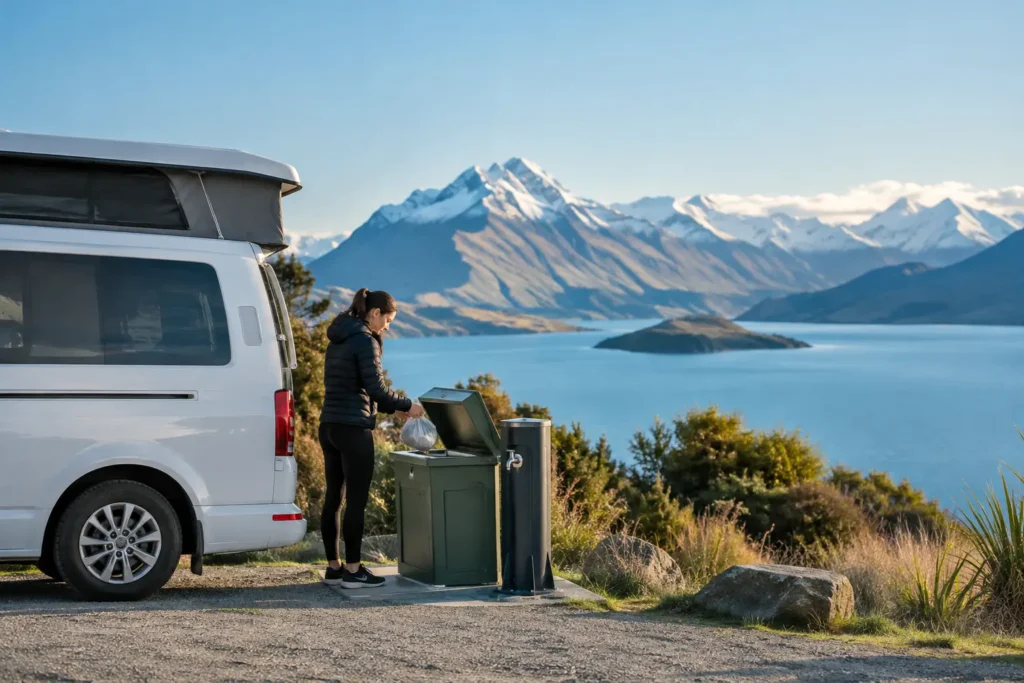
A great South Island road trip leaves you with photos, muddy boots, and maybe a few sandfly bites – not a mess at a roadside stop. This campervan waste disposal guide covers the practical side of life on the road: where your toilet waste, gray water, recycling, and everyday trash should go when you are traveling around New Zealand.
It is not complicated once you know the system. The key is to deal with waste regularly instead of waiting until every tank, bag, and storage pocket is full. A five-minute stop at the right facility is a lot easier than trying to find one after dark in a small town.
What counts as campervan waste?
Most campervan waste falls into three groups: toilet waste, gray water, and solid waste. They need different disposal points, even when they all seem like “just water” or “just trash.”
Toilet waste comes from a portable toilet or cassette toilet. It contains chemicals and human waste, so it must go into a designated dump station toilet disposal point. Gray water is the used water from washing dishes, brushing teeth, or basic cleaning. It can contain food scraps, grease, soap, and bacteria. Solid waste includes food packaging, cans, bottles, paper, and anything else that belongs in a trash or recycling bin.
Keeping these separate protects waterways, keeps public facilities usable, and helps preserve the freedom camping areas that make the South Island such a good place to travel.
Campervan waste disposal guide: use dump stations properly
Dump stations are purpose-built facilities for campervan toilet and wastewater disposal. You will find them at many campgrounds, some gas stations, holiday parks, and selected public facilities. They are often marked with a campervan or wastewater symbol.
If your van has a portable toilet, empty it only at the toilet waste inlet or clearly marked disposal point. Do not tip it into a public restroom toilet unless the facility specifically says it is allowed. Public toilets are not always designed for cassette chemicals or large-volume disposal, and nobody wants to find a blocked toilet at the end of a long drive.
Take your time and keep the process clean. Wear disposable gloves if you prefer, open the correct cap, empty slowly, and rinse the cassette only where the station allows it. Secure every cap before getting back on the road. A loose toilet cassette cap is one lesson nobody needs to learn twice.
For gray water, use the marked wastewater drain, not the toilet inlet. If your campervan has a gray-water tank, wait until you reach a proper facility and empty it there. Never drain gray water onto grass, gravel, a parking area, or into a stormwater drain. Stormwater drains commonly lead straight to local waterways.
Some dump stations have separate rinse hoses. Treat them as facility equipment, not drinking-water hoses. Keep drinking-water filling points clean and separate from waste disposal tasks.
Do not wait for an emergency
The practical rhythm is simple: check your toilet level and gray-water capacity every day or two, especially when you are staying away from holiday parks. Empty before a remote stretch of road, a multi-night stay, or a bad-weather day when you may not want to move the van.
The West Coast, Mackenzie Country, and parts of Fiordland can feel wonderfully remote. That is the point. It also means the next dump station may be farther away than you expect. If you see a suitable facility while your tanks are only partly full, it can be worth stopping.
Handle dishes and gray water with less fuss
You can reduce gray water without turning your trip into a survival exercise. Scrape leftover food into the trash before washing dishes, use a small basin if your setup has one, and avoid pouring cooking oil or greasy pan water down the sink. Let oil cool, wipe it from the pan with paper towel, and put that towel in the trash.
Use biodegradable products thoughtfully. “Biodegradable” does not mean it is fine to empty dishwater outside. Soap, food residue, and toothpaste still do not belong in lakes, rivers, roadside drains, or campground bushes.
If you are parked overnight without a gray-water drain nearby, keep the water in the van until you reach one. This is one reason a simple campervan setup works well: you know where everything goes, and there is less complicated gear to manage.
Trash and recycling on South Island roads
New Zealand takes recycling seriously, but bin rules can vary between districts. What is accepted in Christchurch may not be accepted in every small town. Read the labels on public bins and campground stations rather than guessing.
As a general habit, keep a small trash bag and a separate bag for clean recyclables in the van. Rinse food containers when practical, flatten cardboard, and do not put loose trash into recycling bins. If a bin is full, do not balance bags beside it. Take them with you to the next facility or ask a campground host where waste can be dropped off.
Public bins are for normal day-to-day rubbish, not for clearing out a whole campervan after a week on the road. Large bags, camping gear, broken chairs, and bulky items need an appropriate transfer station or campground arrangement. Leaving them beside a bin is still illegal dumping, even if the bin was already overflowing.
Food waste deserves a little extra care. Seal it well, particularly around beaches, trailheads, and overnight sites. It attracts birds and pests, and kea are smart enough without learning that campervans sometimes contain snacks.
Know the difference between a campsite and a dump point
Not every campground has a dump station, and not every dump station has overnight camping. It is easy to assume that a place with toilets will have a wastewater facility, but that is not always the case.
Before settling in for the night, check what is actually available. A Department of Conservation campground may have basic toilets and trash bins but no place to empty a cassette or gray-water tank. A holiday park will usually have more services, though access and fees can vary. If you are unsure, ask before using anything. A quick question saves an awkward conversation and helps keep shared facilities clean.
Freedom camping also comes with responsibility. Rules differ by area, and some locations restrict camping to certified self-contained vehicles or prohibit overnight stays altogether. Waste disposal is part of that responsibility. Being self-contained means holding onto your waste until it can be disposed of properly, not finding a quiet corner to get rid of it.
Build waste stops into your route
The easiest way to stay on top of waste is to make it part of your normal travel day. When you stop for fuel, groceries, or a coffee, take a look at your supplies and waste levels. Top up fresh water when appropriate, empty waste at designated points, and start the next leg with less to think about.
This matters most on popular routes where facilities can be busy: Christchurch to Lake Tekapo, Queenstown to Glenorchy, Wanaka to the West Coast, and the road toward Milford Sound. In peak season, arrive at dump stations with patience. Someone may be learning the system for the first time, and that is fine as long as everyone leaves the space ready for the next traveler.
Kim Campers is built around the kind of straightforward road trip where you spend more time outside and less time figuring out a complicated vehicle. A short handover is the right time to ask how the specific van’s toilet and water setup works. There is no prize for pretending you already know.
A few habits that make a real difference
Keep a pair of gloves, hand sanitizer, and a small roll of paper towels with your waste gear. Store trash securely while driving, particularly if you are carrying wet food packaging or takeout containers. And after using a dump station, do a quick visual check: caps closed, hoses put back, no spills, nothing left behind.
That small bit of care is what keeps South Island campervan travel practical for everyone. Use the right facility, leave it cleaner than you found it when possible, and get back to the reason you rented a van in the first place: the next quiet beach, mountain pass, or roadside view is waiting.