
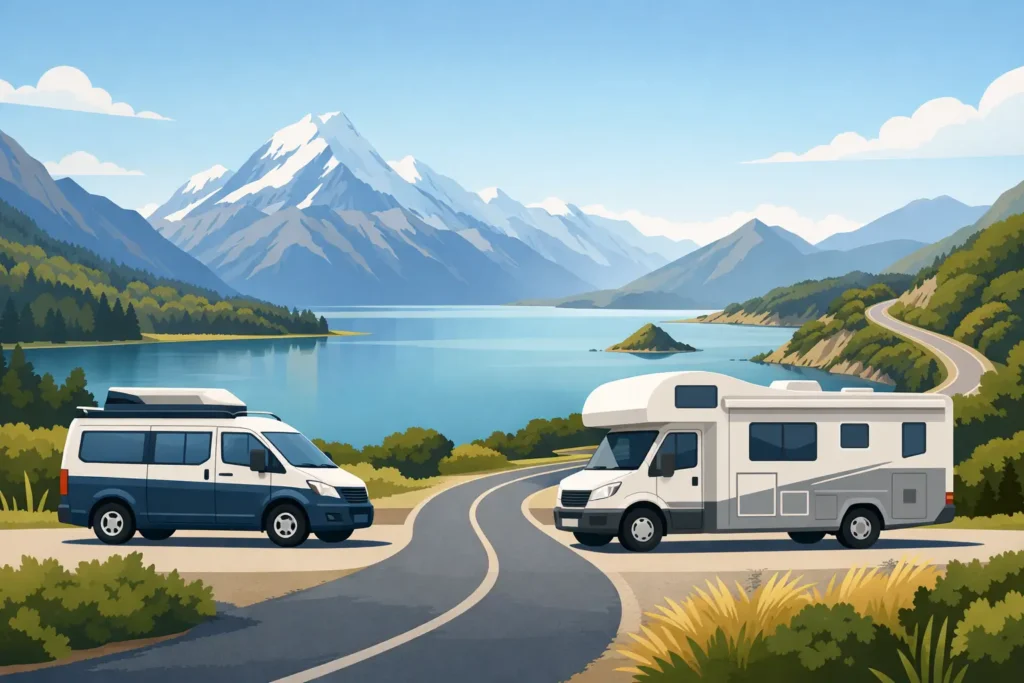
The small campervan versus large motorhome question usually gets real the moment you picture driving into a tight South Island campground after a long day on the road. New Zealand looks wide open on a map, but many of its best stops involve narrow roads, small-town parking, steep driveways, and campsites where a compact setup makes life easier.
A larger motorhome can offer more room, more storage, and more home-like comfort. A small campervan gives you freedom to move, park, and travel without making every stop feel like a maneuvering exercise. Neither is automatically better. The right choice depends on how you want your road trip to feel.
Small Campervan Versus Large Motorhome: The Real Difference
The main difference is not just vehicle length. It is the way each vehicle changes your days.
A large motorhome creates a more settled base. You may have a proper bathroom, a larger kitchen, standing room, and space to spread out when the weather turns wet. That can be a good fit for families, travelers carrying lots of gear, or anyone planning long stays in holiday parks.
A small campervan is built around simple, flexible travel. It gives couples and independent travelers a comfortable place to sleep, cook a basic meal, and keep their gear organized, without carrying around a full apartment on wheels. You spend less time thinking about where the vehicle will fit and more time deciding where to go next.
For many South Island trips, that difference matters more than the number of cupboards.
Driving the South Island in a Smaller Vehicle
The South Island rewards travelers who leave room for unplanned stops. You might pull over for a lake view near Tekapo, find a quiet beach outside Dunedin, or take a detour toward a trailhead when the weather clears. A compact campervan makes these moments easier.
Small vans generally feel more familiar to drive, especially for visitors used to cars rather than large recreational vehicles. They are easier to place on winding roads, simpler to reverse, and less stressful in busy parking areas. That is useful in places like central Queenstown, small coastal towns, and popular lookout points where parking can be limited.
This does not mean a motorhome cannot handle a South Island road trip. Plenty do. But it asks more of the driver. You need to think ahead about parking, turning space, vehicle height, and whether a road or campground suits a bigger rig.
If you are flying into Christchurch, collecting your vehicle, and heading straight out to explore, an easy-to-drive van can make the first day feel much less daunting.
The weather factor
South Island weather can change quickly. Rain, wind, and cooler alpine nights are all part of the experience. A large motorhome gives you more indoor room when you decide to stay put for an afternoon.
But size is not the only answer to bad weather. A well-designed small campervan lets you close the door, make dinner, read, and sleep comfortably without dealing with a complicated onboard system. For travelers who plan to spend most daylight hours outside, the extra living space of a motorhome may go unused more often than expected.
Cost: Look Beyond the Daily Rental Rate
A large motorhome often costs more to rent, but the total difference can go beyond the booking price. Bigger vehicles generally use more fuel and may cost more to take on ferries, park in certain places, or stay at powered sites when you want full use of their features.
A small campervan is typically lighter on fuel and easier to use at a broad range of campgrounds. It also encourages a simpler travel style: fewer systems, less water to manage, and less pressure to book sites solely because you need to plug in or service the vehicle.
That said, a large motorhome can represent good value for a family. If four people are traveling together, paying for a bigger vehicle may be more sensible than renting multiple small vans or booking accommodation every night. For two people, the calculation often changes. A compact van can provide what you genuinely need while leaving more room in the budget for hikes, food, activities, and staying longer in places you enjoy.
The useful question is not, “Which vehicle has more?” It is, “What will we actually use every day?”
Living Space and Comfort on the Road
Motorhomes win on physical space. There is no getting around it. If you want to stand up, cook a larger meal indoors, bring several large bags, or separate sleeping and living areas, a big motorhome has clear advantages.
For a couple traveling light, though, more space can come with more vehicle than you need. Most road trips follow a simple rhythm: drive, stop for a view, walk, cook, sleep, repeat. When your days are full of lakes, trails, cafes, and scenic roads, a compact interior is often enough.
The key is layout, not just size. A practical small campervan should have a bed that is genuinely comfortable, storage that keeps bags off the floor, basic cooking equipment, lighting, and a setup that does not require a manual every time you make coffee. Thoughtful simplicity beats unnecessary features that you need to troubleshoot halfway through your trip.
Kim Campers is built around that idea: self-built, road-ready vans with the essentials for real South Island travel, without the oversized feel or fleet-rental branding of a larger motorhome.
How much stuff are you bringing?
Your gear can make the decision for you. Two backpacks, a few layers, and hiking shoes fit easily into a compact van when packed sensibly. Add a stroller, multiple hard-shell suitcases, ski equipment, climbing gear, or supplies for several people, and extra storage starts to matter.
Be honest about your packing style before booking. If you tend to travel light, do not choose a large motorhome simply because it has room for things you do not need. If you are bringing specialized gear or traveling with children, avoid squeezing everyone into a van that will feel cramped by day three.
Campgrounds, Parking, and Overnight Flexibility
New Zealand has excellent campgrounds, from simple scenic sites to holiday parks with showers, kitchens, laundry, and powered spots. Both small campervans and large motorhomes can use them, but compact vehicles usually give you more flexibility.
At busy campgrounds, smaller vans are easier to fit into standard sites and easier to position without blocking views or worrying about overhanging trees. They also make grocery runs and town stops far more relaxed. You can park closer to a trailhead, pull into a normal parking space where permitted, and navigate fuel stations without a second thought.
A motorhome is better suited to travelers who want to spend several nights in one place and enjoy the vehicle as part of the destination. If you are planning to settle beside a lake for three days, cook every meal inside, and use a full bathroom, the added space may be worth the trade-off.
If your route is more of a moving journey through Christchurch, Aoraki Mount Cook, Wānaka, Queenstown, the West Coast, and back again, a smaller vehicle can feel more natural.
Who Should Choose a Large Motorhome?
A large motorhome makes sense when comfort at camp is a central part of the trip rather than a place to rest between adventures. Families with young children often appreciate the extra room, private facilities, and larger kitchen. It can also suit travelers with limited mobility, people taking a slower trip with longer stops, or groups who need space for substantial luggage.
There is also a simple personal preference factor. Some travelers love the feeling of having a complete home with them. If that is what makes you relax, the additional size may be worth paying for.
Just plan your route with the vehicle in mind. Check campground access, avoid treating every roadside pull-off as an option, and give yourself extra time for parking and driving.
Who Should Choose a Small Campervan?
A small campervan is a strong choice for couples, solo travelers, and friends who want a practical base without a complicated vehicle. It suits people who want to get off the plane, pick up the keys, and feel comfortable driving the same day.
It is especially well matched to travelers who prioritize scenery and flexibility over indoor square footage. You can wake up near a trail, make breakfast, pack up quickly, and move on without turning departure into a project.
Compact vans also fit the independent style many people come to the South Island for. They are discreet, straightforward, and less conspicuous than a large branded rental vehicle. You still have a bed and the basics, but the journey feels closer to driving your own vehicle than operating a bus.
Make the Choice Based on Your Actual Trip
Before booking, picture a normal day rather than the idealized version of camper travel. How far will you drive? Will you spend rainy afternoons inside? Are you carrying sports gear? Do you need room for children? Are you comfortable driving a larger vehicle on unfamiliar roads? How often will you move campsites?
A large motorhome is worth considering when indoor comfort, family space, and longer stays are at the top of the list. A small campervan is often the better call when you want easy driving, lower running costs, simple overnight travel, and the freedom to follow the road wherever it looks good.
The South Island does not require a giant vehicle to feel extraordinary. Pick the camper that makes you confident behind the wheel, comfortable at night, and ready to take the next turn without overthinking it.